
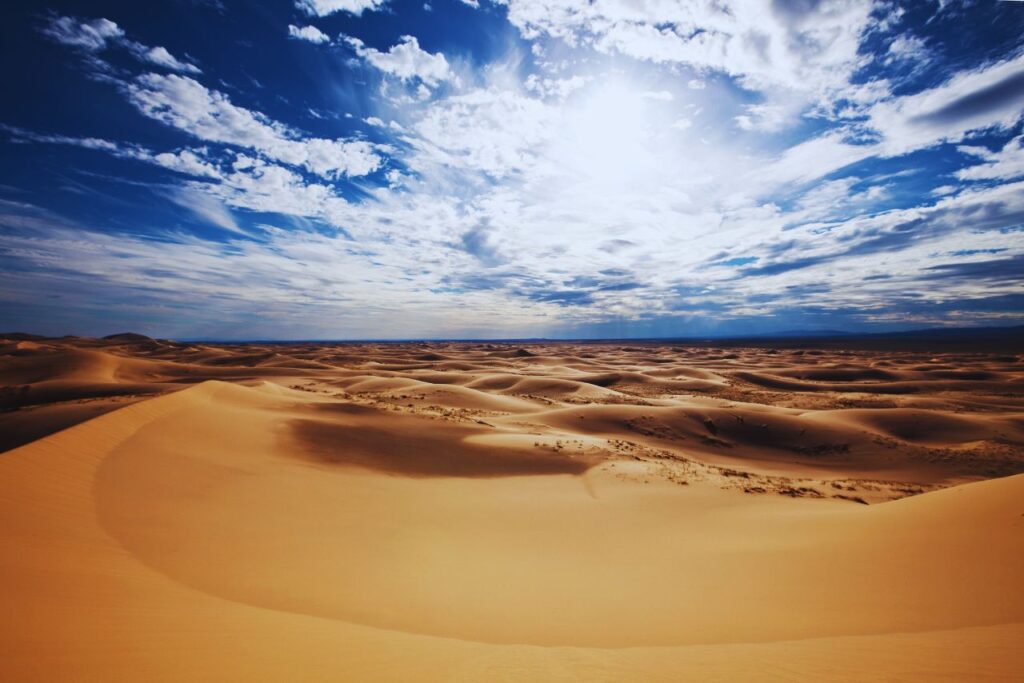
There is a common mistake people make when they first start planning a trip into an African desert. They imagine a single, endless expanse of empty yellow sand dunes with a lonely camel walking toward the horizon. They worry that desert travel is either a punishing survival ordeal or an overpriced luxury gimmick. You’re thinking right to hesitate.
The reality is far more thrilling. Africa’s deserts could not be more different from one another if they tried.
The Namib is an eighty-million-year-old wilderness of 300-meter terracotta dunes that tumble directly into cold Atlantic surf. The Kalahari is a fossil-dune acacia savanna where black-maned lions roam and meerkats warm their bellies in the morning sun. And Ethiopia’s Danakil Depression feels less like Earth and more like a neon-yellow moon with bubbling sulfur springs and active lava lakes.
You don’t need an army surplus wardrobe to experience them. The desert has never cared what outfit you wear. Leave the expedition vanity at home, pack light, respect the sun, and let’s find the landscape that actually matches your journey.
That changes everything.
Sahara, Namib, or Kalahari? Choosing the Landscape That Fits Your Journey
Before booking flights, decide on the kind of experience you actually want. Each desert demands different driving skills, different seasons, and entirely different budgets. Here is how Africa’s major arid landscapes compare side by side:
| Desert & Region | Signature Landscape | Wildlife & Highlights | Best Travel Months | Primary Gateway Hub |
|---|---|---|---|---|
| Namib Desert (Namibia) | Towering iron-red dunes (Big Daddy) & Deadvlei clay pan | Oryx, desert-adapted elephants, dark-sky stargazing | May – October | Windhoek (WDH) |
| Sahara Desert (North Africa) | Endless golden sand seas (Ergs) & palm-fringed oases | Camels, fennec foxes, Berber desert camps | October – April | Marrakech (RAK) / Cairo |
| Kalahari Desert (Botswana / Namibia) | Red fossilized dunes & semi-arid acacia savannas | Black-maned lions, meerkats, San Bushmen tracking | May – September | Maun (MUB) / Gaborone |
| Danakil Depression (Ethiopia) | Neon sulfur pools, active volcanoes & vast salt pans | Dallol hydrothermal springs, Erta Ale lava lake | November – February | Semera (SZE) / Mekele |
| Karoo Desert (South Africa) | Vast arid plains, jagged kopjes & succulent biomes | Springbok, mountain zebras, Sutherland observatory | March–May & Sept–Nov | Cape Town (CPT) |
| Chalbi Desert (Northern Kenya) | Blinding white salt flats & ancient dried lakebed | Camel caravans, Lake Turkana, Gabbra cultural safaris | July – October | Nairobi (NBO) / Lodwar |
| White Desert (Western Egypt) | Surreal wind-carved chalk and limestone mushroom monoliths | Chalk sculptures, desert camping under the Milky Way | October – March | Cairo (CAI) |
| Nubian Desert (Sudan / Egypt) | Rugged sandstone plateaus bordering the Nile River | Ancient Nubian pyramids of Meroë, Nile cataracts | November – February | Khartoum / Aswan |
| Ténéré Desert (Niger / Chad) | Vast flat sand ocean & prehistoric dinosaur fossil beds | Tuareg salt caravans, Aïr Mountains rock art | November – February | Niamey (NIM) / Agadez |
| Grand Bara (Djibouti) | 30-kilometer flat cracked white clay basin | Extreme land sailing, sandboarding, mirage photography | November – March | Djibouti City (JIB) |
1. The Namib Desert (Namibia)
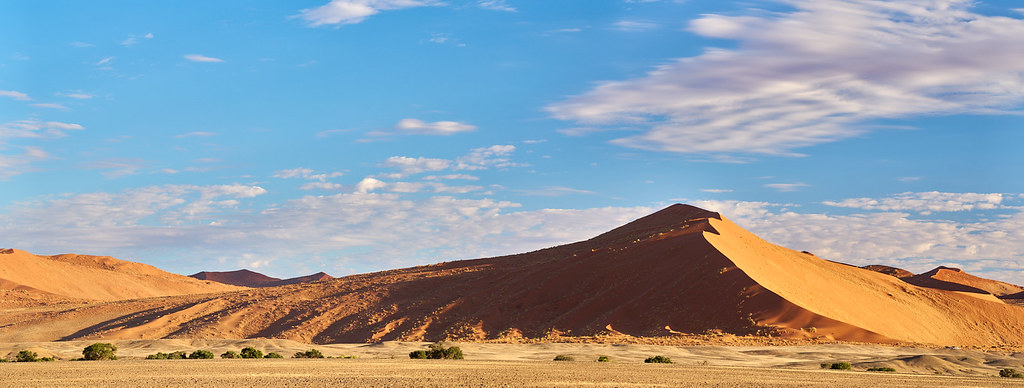
Dating back more than 55 million years, the Namib is widely considered the oldest living desert on Earth. What strikes you first is the sheer scale of the colors. Iron-rich sand oxidizes over millennia into deep crimson and burnt orange, sculpted by Atlantic coastal winds into knife-edge ridges that rise over 300 meters into spotless blue skies.
At Deadvlei, you step onto a bone-white clay pan where 900-year-old camel thorn trees stand scorched pitch-black by the sun, preserved like statues in the dry air. The silence is absolute. Climb Big Daddy at sunrise, feel the freezing morning sand turn warm under your boots, and run down the sheer dune slipface. Namibia makes desert overlanding accessible, clean, and profoundly beautiful.
For travelers wanting to explore the iconic clay pans and climbing routes on foot, our comprehensive guide to exploring Sossusvlei’s towering dunes and coastal towns breaks down gate timings and 4×4 permits.
2. The Sahara Desert (North Africa)
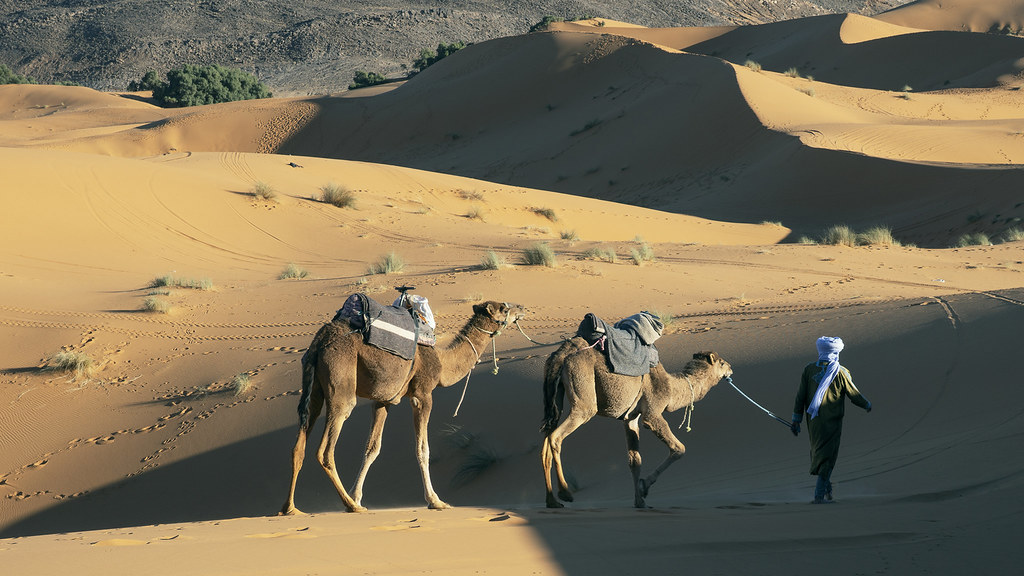
The Sahara is so massive that it defies human perception. Stretching across eleven countries and covering over nine million square kilometres, it is roughly the size of the entire United States. But travelers rarely experience “the whole Sahara”, they experience its distinct gateway edges, particularly the dramatic sand seas (Ergs) of southern Morocco and Tunisia.
At Erg Chebbi near Merzouga, golden dunes ripple like frozen ocean waves. Arriving here by 4×4 or camel as the sun drops behind the dunes is one of the world’s great rituals. Night brings clear skies and traditional Berber campfire hospitality: mint tea poured from high above the glass, acoustic oud music echoing off the dunes, and shooting stars cutting across the Milky Way.
3. The Kalahari Desert (Botswana, Namibia, South Africa)
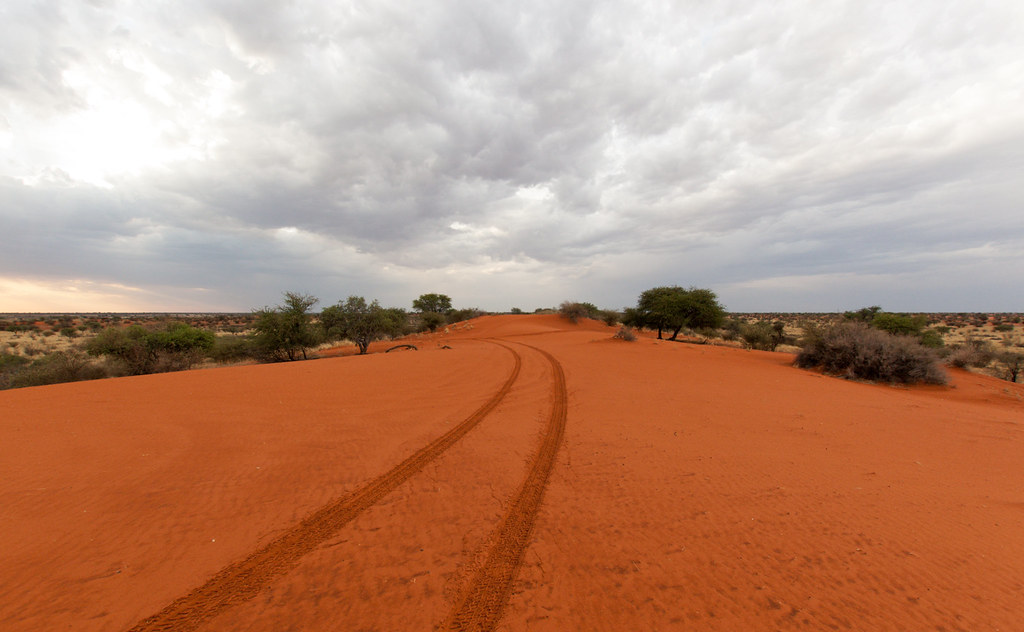
Here is the Kalahari’s best-kept secret: it is not a true desert by rainfall standards. Geologists classify it as a semi-arid fossil desert because vast underground water tables and seasonal summer rains nourish golden grasses, thorny acacia woodlands, and ancient riverbeds.
Because of this vegetation, the Kalahari supports astonishing wildlife. This is the kingdom of the black-maned Kalahari lion, sleek cheetahs hunting across red sand plains, and habituated meerkat colonies that wake at sunrise and use your head as a lookout post. Spending a morning walking through the red dunes with indigenous San bushmen trackers will completely dismantle how you view survival and animal awareness in the wild.
The semi-arid fossil river valleys create ideal sightlines for predators, making the reserve renowned for tracking cheetahs across Botswana’s open scrublands.
Because the Kalahari forms the dry counterbalance to the Okavango Delta, many travelers pair both landscapes on Southern Africa safaris connecting Kalahari sands to river deltas.
4. The Danakil Depression (Ethiopia)
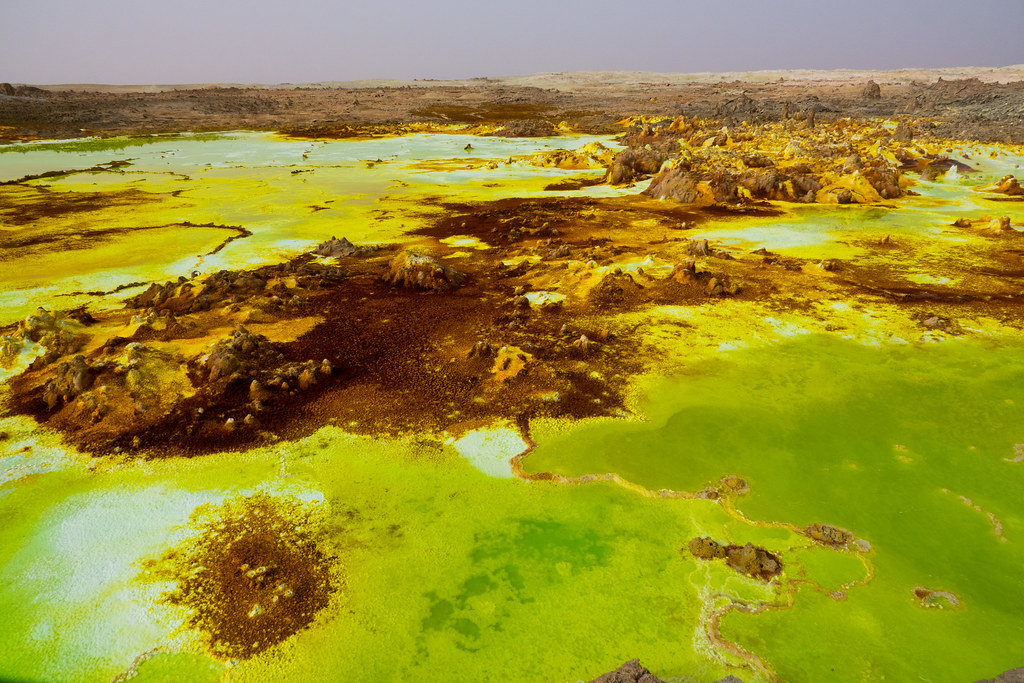
If you crave wild, untamed raw Earth, nowhere compares to the Danakil Depression. Dropping 125 meters below sea level in northern Ethiopia, this tectonic rift is officially one of the hottest inhabited places on the planet.
Dallol’s hydrothermal field looks like a fantasy painted in neon yellow, lime green, and burnt orange, where acidic bubbling brine springs form surreal mineral towers. Nearby, the active basalt volcano of Erta Ale glows red under the night sky with a churning lava lake. This requires sturdy 4×4 convoys and local Afar guides. But for intrepid overland travelers, standing on these salt flats at sunset feels like stepping onto another planet.
5. The Karoo Desert (South Africa)
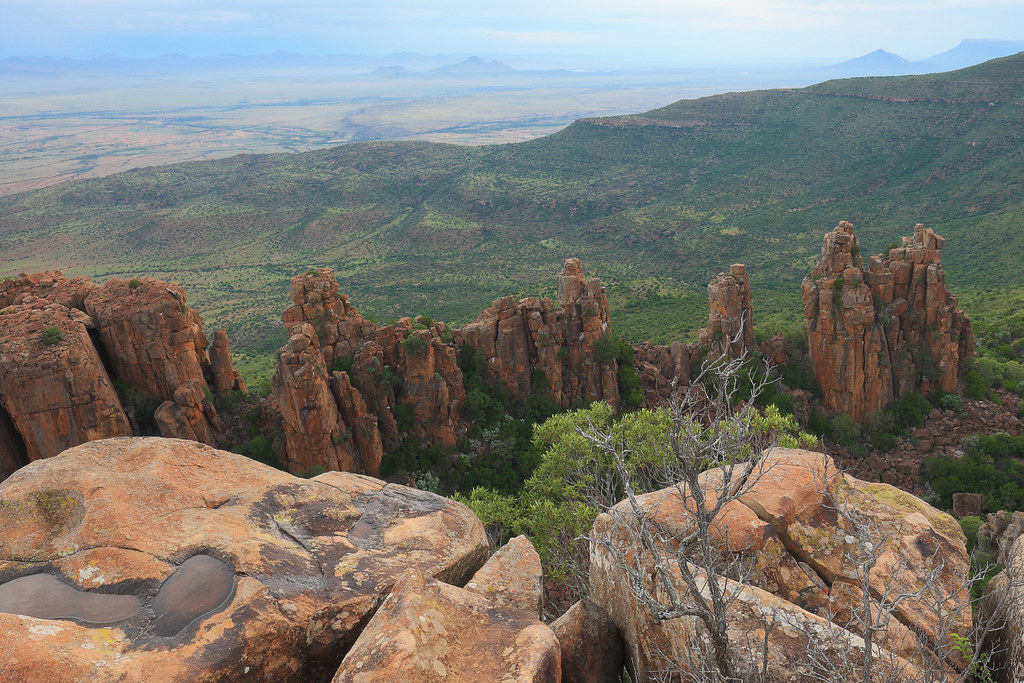
The Karoo is South Africa’s vast, beloved heartland. Stretching across the arid plateau between Cape Town and Johannesburg, it is divided into the succulent-rich Little Karoo and the wide open plains of the Great Karoo.
This is a road-tripper’s dream. Flat-topped hills (koppies) rise above dry river valleys dotted with Victorian country towns, olive orchards, and heritage sheep farms. The Karoo is famous for two things: tender roasted Karoo lamb paired with local wine, and some of the clearest night skies in the southern hemisphere. At the small observatory town of Sutherland, the Southern African Large Telescope (SALT) gazes into galaxies millions of light-years away.
6. The Chalbi Desert (Northern Kenya)
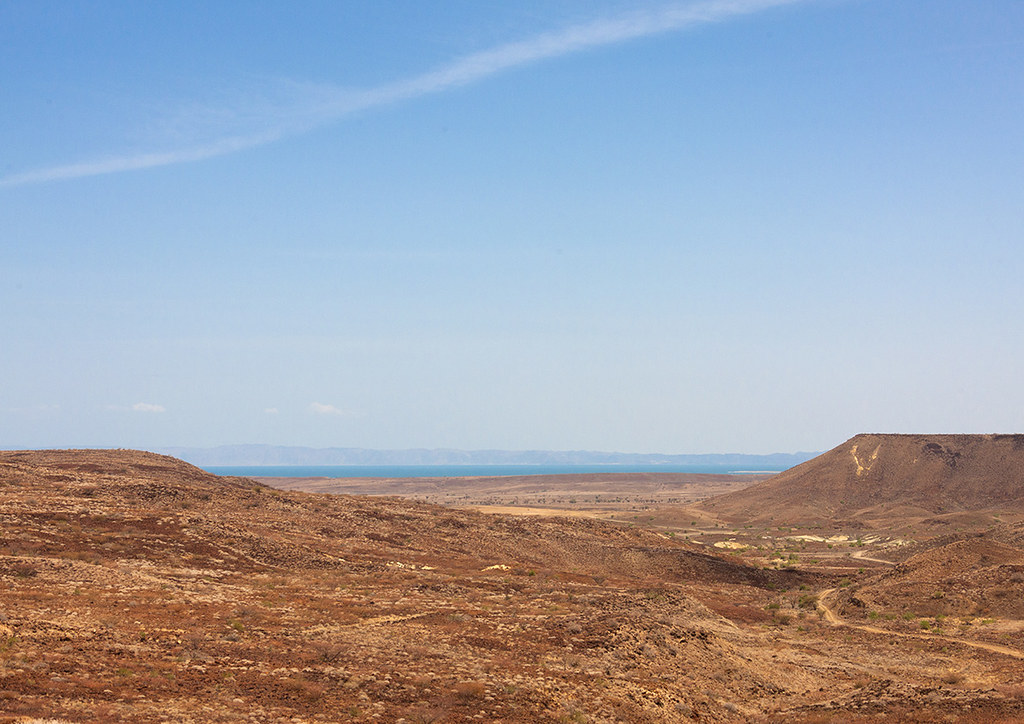
East of the Jade Sea (Lake Turkana) lies the Chalbi, a stark, blinding-white desert formed from an ancient lakebed. Surrounded by volcanic lava flows and jagged hills, the dry salt crust crackles under your vehicle’s tires.
What makes the Chalbi unforgettable is the cultural encounter. Nomadic Gabbra and Rendille pastoralists lead long camel caravans across the salt pans between natural desert oases like Kalacha. Traveling here demands a skilled local 4×4 driver, flash rains can turn the pan into sticky clay in hours, but reaching the shores of Lake Turkana across this wilderness is one of East Africa’s grandest adventures.
Connecting Lake Turkana to northern wildlife reserves requires sturdy overland logistics, featured in our handbook to East Africa safari circuits from the Rift Valley to northern savannahs.
7. The White Desert (Western Egypt)
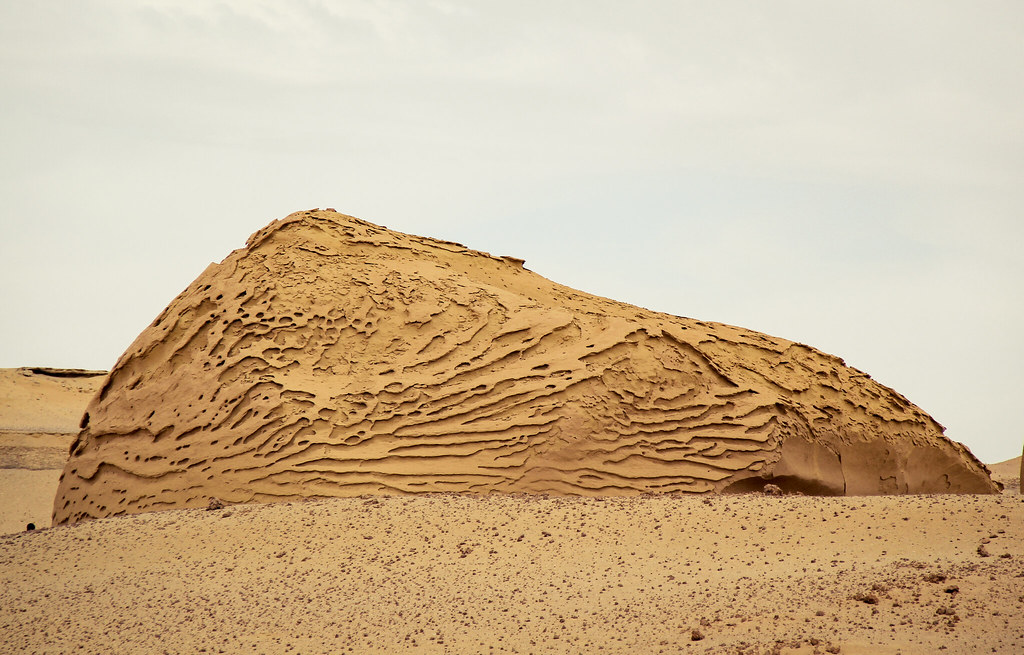
Located in Egypt’s Farafra depression about four hours southwest of Cairo, the White Desert (Sahra al-Beida) looks like an outdoor sculpture gallery carved entirely from chalk and limestone.
Over tens of thousands of years, howling desert sandstorms have sculpted giant white calcium monoliths into shapes resembling mushrooms, hawks, and melting icebergs. Camping here overnight is surreal: as twilight turns to deep night, the chalk towers glow ghost-white under the moon, creating a landscape that feels like winter snow in the middle of North Africa.
Visiting the chalk formations of Farafra is widely considered one of the most unique overland adventures across Egypt, especially when combined with overnight Bedouin camps.
8. The Nubian Desert (Sudan & Egypt)
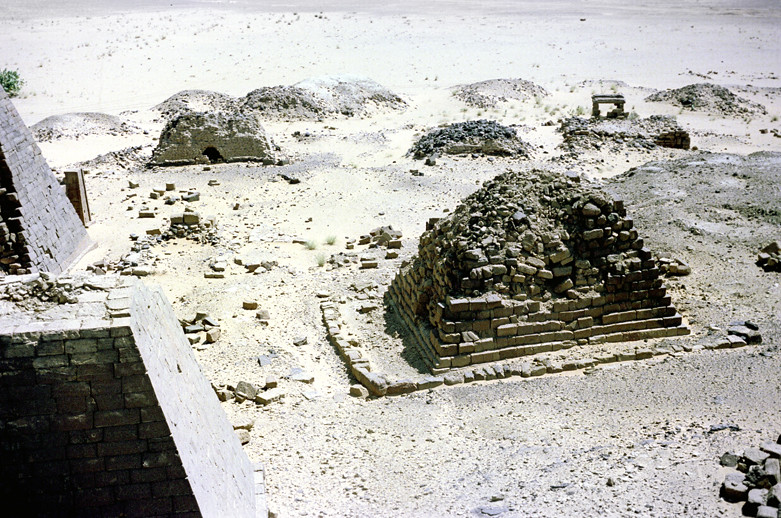
Bordering the eastern banks of the Nile River, the Nubian Desert combines rugged sandstone plateaus with some of the most extraordinary ancient architecture in human history.
At Meroë in northern Sudan, over forty steep-sided sandstone pyramids rise directly out of windblown orange sand dunes. Unlike the crowded complexes of Giza, here you are often the only traveler standing among the royal tombs of the Black Pharaohs of the Kingdom of Kush. The silence is magnificent. Respect local advisories before planning visits to Sudan.
9. The Ténéré Desert (Niger & Chad)
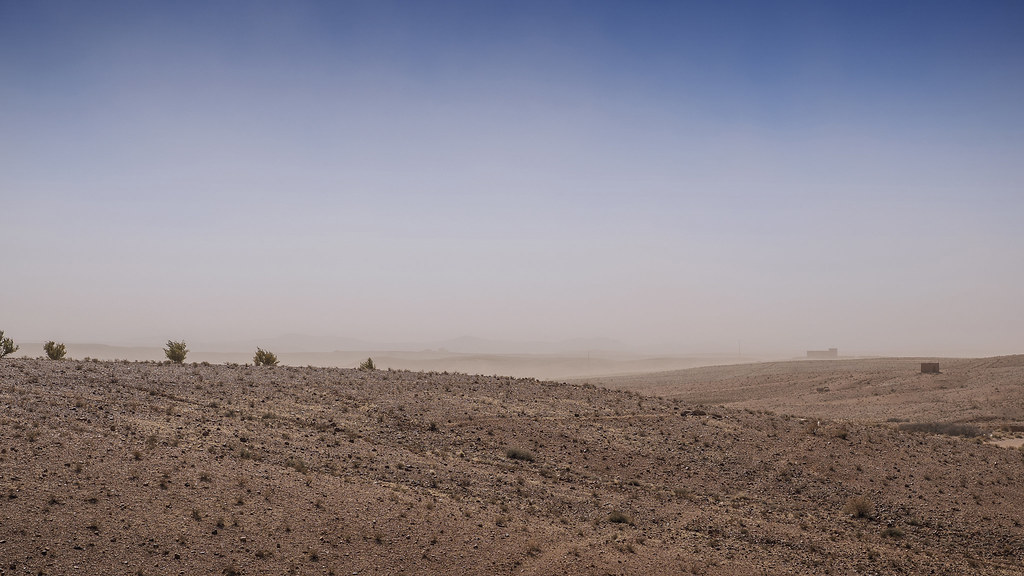
The Tuareg people refer to the Ténéré simply as “the desert within the desert.” Spanning south-central Niger and Chad, this vast sand ocean is renowned for its prehistoric dinosaur fossil beds and Neolithic rock carvings in the Aïr Mountains.
Centuries-old salt caravans still navigate this wilderness, traveling between the oasis trading city of Agadez and the remote salt pans of Bilma. The Ténéré represents the deep, contemplative soul of the Sahara, which is untouched, isolated, and profoundly quiet.
10. The Grand Bara Desert (Djibouti)
Covering nearly thirty kilometers of southern Djibouti, the Grand Bara is a completely flat desert floor composed of sun-baked white clay that has dried and cracked into intricate geometric patterns.
With virtually no trees or hills to interrupt the horizon, it is celebrated for mirror-like optical mirages that shimmer under the midday sun. It is also an adrenaline playground: land sailors mount wheeled karts with sails and skim across the hard clay flats powered entirely by desert winds at speeds up to 80 kilometers per hour. Located just a two-hour drive from Djibouti City, it offers an easy, thrilling day trip into raw desert terrain.
Myth vs. Insider Reality: African Desert Travel
Before you pack your bags, let’s clear up two big misconceptions that trip up first-time desert travelers:
Myth: “African deserts are scorching hot all the time.”
Reality: While daytime temperatures can top 40°C (104°F), dry desert sand does not retain heat after dark. Nighttime temperatures frequently drop close to freezing (0°C / 32°F) in the Namib, Sahara, and Kalahari during winter months. Always pack warm layers for campfires.
Myth: “Deserts are lifeless wastelands with nothing to see.”
Reality: The Namib and Kalahari support extraordinary wildlife. Desert-adapted lions, elephants, meerkats, and oryx have evolved unique behavioral traits to thrive without standing water. You will see more wildlife in the Kalahari than in many humid rainforests.
What Desert Overlanding Actually Costs in Reality
Budgeting for an African desert expedition depends on whether you choose a self-drive 4×4 camper or a guided safari lodge itinerary.
Here is what realistic daily expenses look like for popular desert routes in Namibia and Morocco:
- National Park Entry Permits: $10 – $15 USD (150 – 250 NAD) per person per day.
- Equipped 4×4 Rental (with Rooftop Tent): $85 – $140 USD per day with unlimited kilometers and complete camping kitchen gear.
- Mid-Range Desert Lodge Accommodation: $120 – $280 USD per night including breakfast and dinner.
- Guided Desert Excursion / Dune Shuttle: $45 – $75 USD per person for specialized 4×4 transfers into deep dune basins.
- Estimated Daily Total (Self-Drive Camping): $110 – $160 USD per person per day for vehicle, fuel, campsites, and self-cooked meals.
Before committing to a long-distance 4×4 rental, review our realistic African safari and overland budget breakdown covering daily fuel surcharges and camp fees.
Practical Sand Smarts: Safety and Preparation
Safe desert travel requires grounded common sense. Always follow these essential rules:
- Tire Pressure Comes First: Deflate 4×4 tires to 1.2–1.4 bar as soon as you transition from gravel to soft sand. It widens the tire footprint and keeps you floating over sand instead of digging in. Always carry a 12V air compressor.
- Water Redundancy: Carry at least 5 liters of drinking water per person per day, plus an emergency reserve of 10 liters per vehicle that stays untouched.
- Climb Early: Never hike large dunes in the middle of the day. Start at first light when the sand is cool, the air is crisp, and the golden morning light creates breathtaking shadows for photography.
- Download Offline Maps: Cell reception disappears the moment you leave the tar road. Download offline mapping apps such as Tracks4Africa or Maps.me before leaving your gateway city.
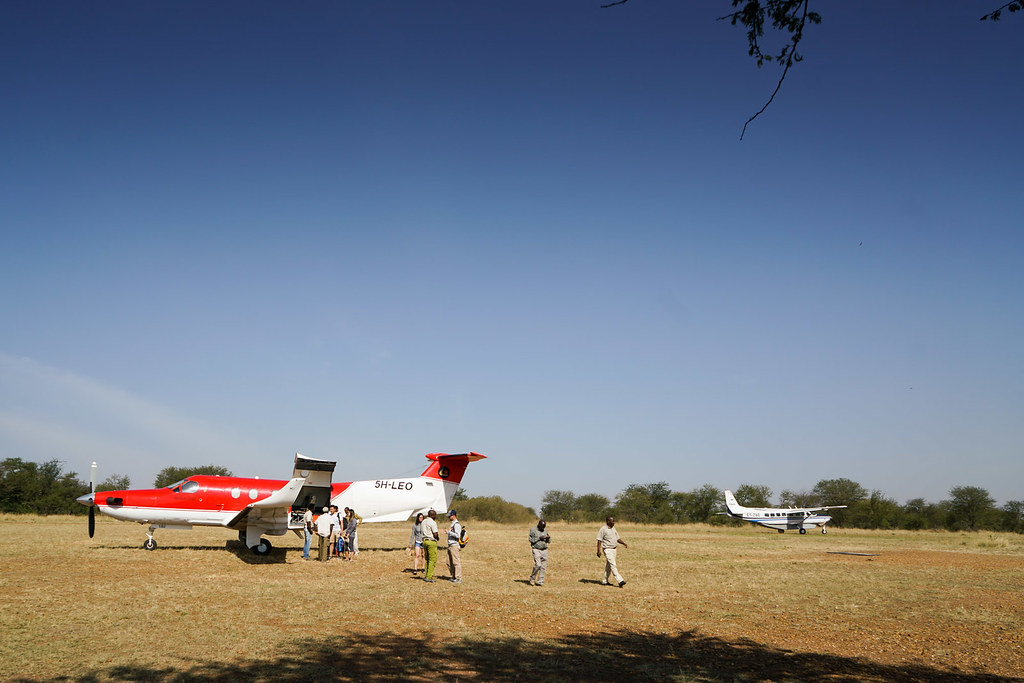
Desert dust and fine sand penetrate standard luggage zippers quickly, making safari packing and light-aircraft luggage guidelines essential for protecting cameras and gear.
Frequently Asked Questions
Which African desert offers the best stargazing and dune photography?
Namibia’s Namib Desert is the premier destination for astrophotography and soaring dunes. Home to the NamibRand Nature Reserve, an official International Dark Sky Reserve, which boasts near-zero light pollution and the iconic 300-meter red dunes of Sossusvlei, perfect for sunrise photography.
When is the best season to visit the Namib vs Sahara to avoid extreme heat?
To avoid dangerous daytime temperatures exceeding 45°C (113°F), travel between May and September for the Namib (Southern Hemisphere winter) and October to April for the Sahara (Northern Hemisphere winter). Both windows offer warm sunny days and cool, comfortable nights around the campfire.
What is the easiest African desert for a self-drive road trip?
Namibia is widely recognized as the easiest and safest country in Africa for a self-drive desert expedition. It features well-maintained gravel highways, clear road signage, reliable 4×4 rental fleets in Windhoek, and an extensive network of secure, well-equipped campsites and lodges.
The Desert That Stays With You
Africa’s deserts do something strange to people. When you first arrive, the sheer silence can feel overwhelming. But after a couple of days beneath vast open skies, watching golden dunes shift with the wind and listening to the crackle of evening campfires, the noise of ordinary modern life simply falls away.
Take your time. Step outside your vehicle, feel the desert sand under your feet, and let the wilderness do what it has done for millions of years: remind you how wonderful it feels to simply be alive.
Related African Safari & Overland Expeditions
- Experience tracking desert-adapted elephants in Namibia.
- Explore our Nouakchott and Sahara desert travel guide.
- Discover 20 essential things about Namibia desert journeys.


One Response
You made some decent points there. I did a search on the issue and found most guys will agree with your blog.