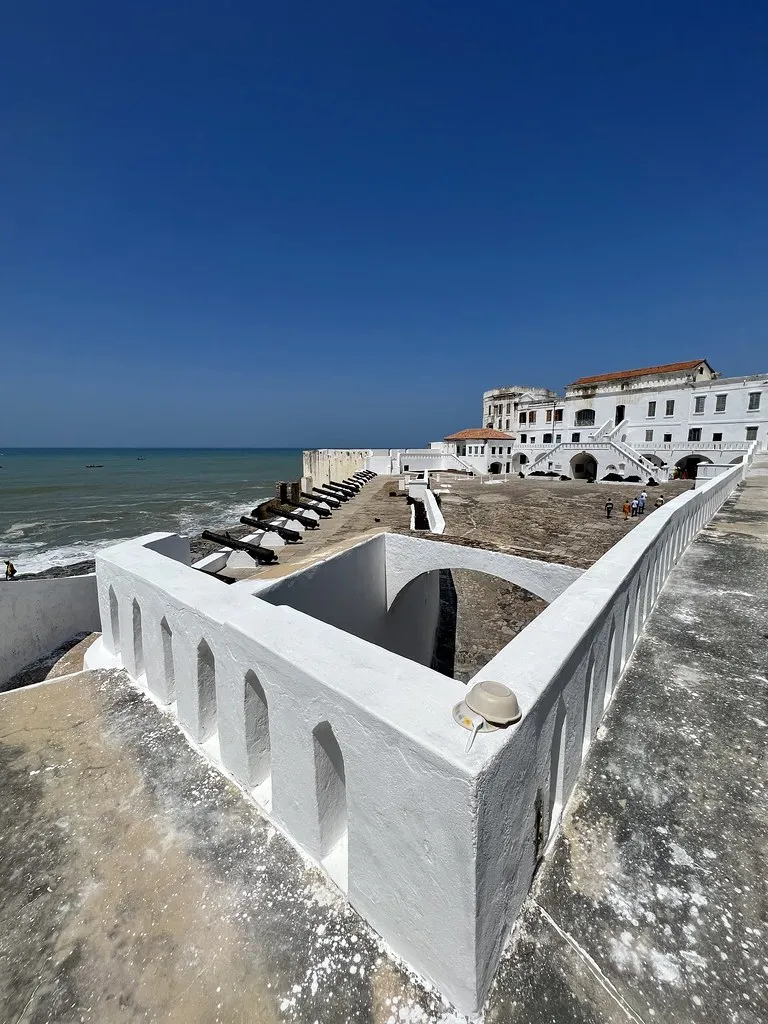
The scent of salt brine, woodsmoke, and fried plantains hits you long before you spot the whitewashed stone bastions. Cape Coast does not ease you in.
Most travelers head down this coast to confront the transatlantic slave trade, and they should. But the biggest mistake you can make is treating this coast like a fast day trip from the capital. Accra tour operators love selling 14-hour whirlwinds that cram two castles and a rainforest into one exhausting day.
Do not do it.
You will spend eight hours trapped in Kasoa highway gridlock, rush through sacred dungeons under the blistering midday sun, and head back with a migraine. Give this coastline two full days. It deserves that respect.
Getting to Cape Coast Without the Highway Chaos
Let us start with how you actually get here.
If you book a private taxi or an organized tour bus from Accra, you will easily pay between $100 and $200 USD. For that price, you still get stuck in the exact same bottleneck crawling past Kasoa.
There is a much better way.
Head to the Intercity STC terminal on Ring Road West in Accra and buy a ticket for the morning coach to Cape Coast. It costs GH₵ 80 to GH₵ 85, roughly $6.50. You get air conditioning, dedicated luggage bays, and a guaranteed seat that actually leaves when scheduled.
Catch the 6:00 AM departure.
Leaving early lets the coach slip past Kasoa before the morning markets wake up, shaving two hours off the trip. You roll into the Cape Coast terminal around 9:30 AM, rested and ready.
Shared minivans—trotros—run continuously from Kaneshie station in Accra for about GH₵ 50. But trotros wait until every single seat is crammed before moving, and your bag sits on your knees.
Save trotros for short hops along the coast. On the highway, STC wins every time.
To see how regional transit costs fit into your broader spending plan, review our realistic Ghana travel cost breakdown.
Two Fortresses, Two Very Different Experiences
Cape Coast Castle and Elmina Castle sit just twelve kilometers apart along the Atlantic shore. Travelers constantly ask whether they need to see both.
The answer is an unequivocal yes.
The two fortresses tell fundamentally different chapters of the same brutal history, and their architecture reflects it.
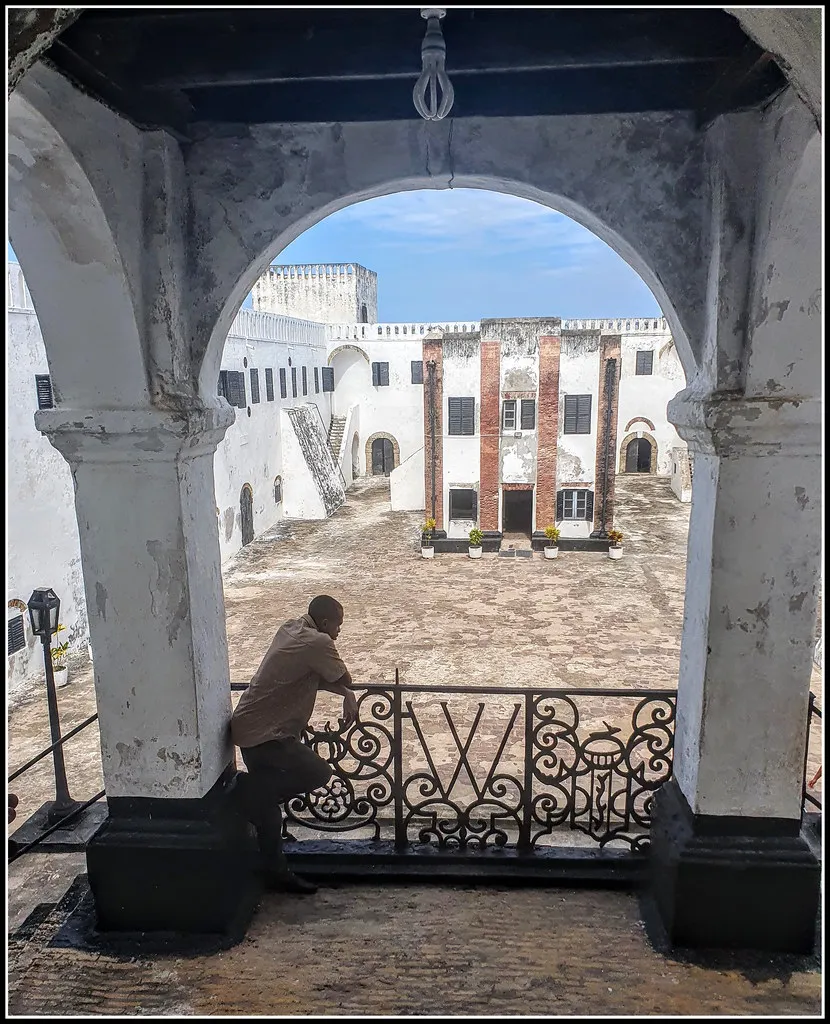
Elmina Castle—formally São Jorge da Mina—is the older sibling. Erected by Portuguese traders in 1482, it is the oldest European building south of the Sahara. It began as a fortified trading post for gold and ivory before the Dutch seized it in 1637 and expanded the subterranean dungeons to warehouse human beings.
Elmina is compact, weathered, and claustrophobic. Outside its gates, the Benya Lagoon churns with the raw energy of Ghana’s largest artisanal fishing harbor. Hundreds of wooden pirogues, painted with flags and biblical proverbs, unload silver herring directly under seventeenth-century Dutch cannons.
The contrast is striking.
Twelve kilometers east, Cape Coast Castle presents a completely different silhouette. Originally built by Swedish traders in 1653, it was captured and massively expanded by the British in 1665. Cape Coast served as the administrative nerve center of British colonial power on the Gold Coast for more than two hundred years.
Cape Coast feels sprawling, bureaucratic, and imposing. Its heavy stone courtyard houses the country’s premier historical museum on the transatlantic trade and hosts the official Door of Return ceremonies.
Seeing Elmina gives you raw, intimate antiquity. Cape Coast reveals the cold industrial scale of British colonial administration.
Gate Tickets and Resident Guide Realities
Entrance fees across both castles are standardized by the Ghana Museums and Monuments Board (GMMB).
Foreign adult visitors pay GH₵ 80 at the gate for each castle, about $6.50 to $7.00 USD. If you carry a valid student or volunteer photo ID, that drops to GH₵ 60. Ghanaian adults pay GH₵ 20.
Ignore third-party booking sites charging $60 or $80 for castle entry.
Every standard ticket purchased at the gate already includes a certified resident GMMB guide. You cannot walk through the underground dungeons alone anyway, both for historical preservation and physical safety.
The resident guides are exceptional historians. Many have spent decades studying the records and oral traditions of the Central Region. They lead 45-to-60-minute walks through the courtyards, governor quarters, and dark cells.
Tipping is customary.
Handing your guide GH₵ 30 to GH₵ 50 after the tour is a respectful, direct way to support the scholars preserving these sites. Both castles open daily from 8:30 AM to 4:30 PM.
Bring physical cash notes for your tickets. Rural card terminals frequently drop connection when coastal squalls roll in.
For local vendor payments, guide gratuities, and cold coconuts along the road, check our guide to handling currency, cash, and mobile money in Ghana.
Central Region Stops and Key Benchmarks
This quick comparison lays out the key stops, gate costs, and transit times across the Central Region circuit.
| Site / Landmark | Distance from Accra | Non-Resident Adult Fee | Optimal Visiting Window | Essential Ground Reality |
|---|---|---|---|---|
| Cape Coast Castle | 165 km (3.5–4.5 hrs) | GH₵ 80.00 (~$6.70) | 9:00 AM – 11:00 AM | Certified resident guide is included in ticket. |
| Elmina Castle | 175 km (3.7–5.0 hrs) | GH₵ 80.00 (~$6.70) | 2:00 PM – 4:00 PM | Built in 1482; sits right beside fishing harbor. |
| Kakum National Park | 195 km (33 km north) | GH₵ 130.00 (~$10.80) | 6:30 AM – 7:30 AM | Arrive at dawn to beat heat, lines, and crowds. |
| Assin Manso Slave River | 205 km (40 km north) | GH₵ 50.00 (~$4.15) | 10:00 AM – 3:00 PM | The sacred ‘Last Bath’; shoes removed at water. |
| Elmina Posuban Shrines | 175 km (Elmina Old Town) | Free (guide tip GH₵ 30–50) | Morning or late afternoon | Traditional military shrines along town streets. |
The Brutal Reality of the Accra Day Trip
Tour companies will tell you that a day trip to the Central Region is easy.
It is not.
The physical distance between Accra and Cape Coast is only 165 kilometers. On an open highway, that would take two hours. But the road west out of Accra passes directly through Kasoa, one of the most congested transit choke points in West Africa.
If you leave Accra at 8:00 AM, you will easily spend four hours choking on exhaust fumes before reaching the Central Region border.
You arrive at Cape Coast around midday when the tropical sun is directly overhead. The stone ramparts radiate fierce heat. You rush through Cape Coast Castle, grab a rushed lunch, drive over to Elmina, hurry through a second fortress, and then try to drive inland to Kakum before the gate closes.
By the time you turn back toward Accra, evening rush hour has set in. You spend another four hours creeping through traffic in the dark.
Fourteen hours of travel for two hours of rushed sightseeing is a terrible trade.
Stay overnight in Cape Coast or Elmina instead. You can find peaceful beachfront guesthouses along the coast where you fall asleep to Atlantic surf. You can wake up early, reach Kakum at dawn, and explore the castles unhurriedly.
Slowness changes everything.
For a realistic view of how everyday prices and transport fares scale across the country, consult our guide to local purchasing power and spending across Ghana.
Walking Kakum’s Canopy Walkway Before the Crowds Arrive
Thirty-three kilometers north of Cape Coast, coastal savanna gives way to dense Upper Guinean rainforest. This is Kakum National Park.
Kakum’s famous draw is its 350-meter canopy walkway, suspended 40 meters above the forest floor across seven rope bridges.
Timing here is everything.
Arrive at the gate at 6:30 or 7:00 AM. When you hike up the red-clay trail at dawn, morning mist still hangs in the hardwood trees. The forest canopy is alive with hornbills, turacos, and the distant call of mona monkeys. Walking across the suspension bridges in quiet solitude is breathtaking.
By 10:30 AM, that serenity evaporates.
School buses and tour vans arrive in droves. Hundreds of visitors line up on the wooden platforms. The narrow suspension bridges bounce under dozens of footsteps, and the wildlife retreats deep into the interior.
Entry for the canopy walkway costs GH₵ 130 for non-resident adults (around $10.50 USD), plus GH₵ 20 if you take the guided ground nature trail.
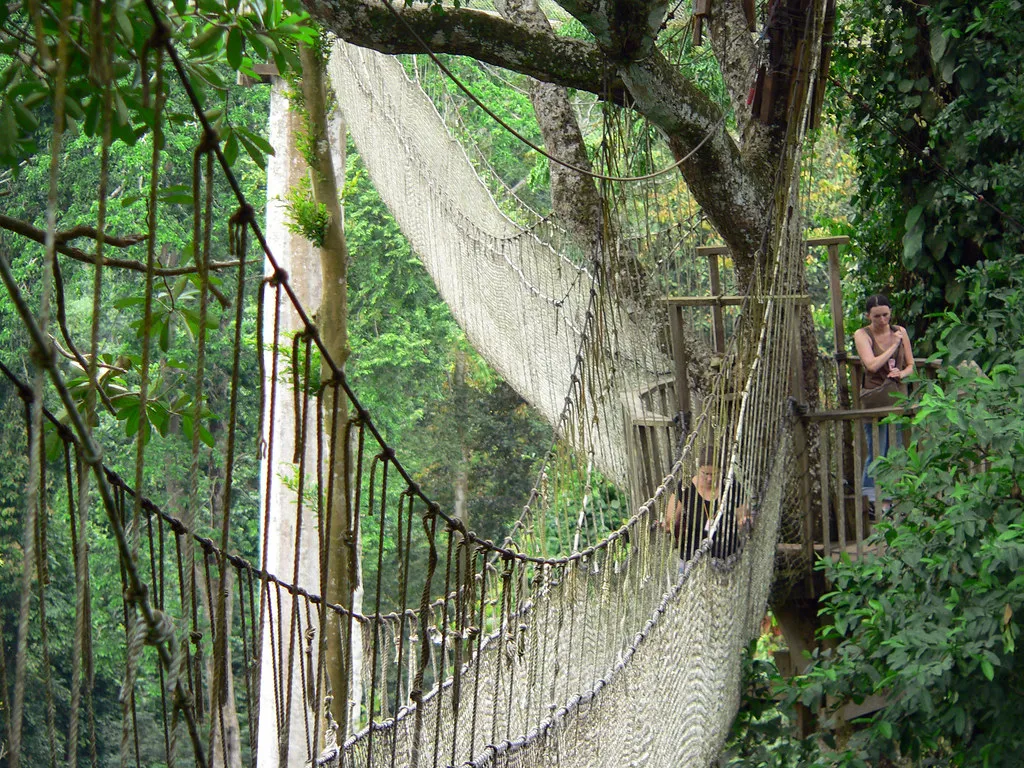
The twenty-minute uphill trail to the bridges is moderately steep and rocky. Wear running shoes or hiking sandals with genuine grip. After overnight rain, the wet clay is remarkably slick.
If you struggle with severe vertigo, stick to the forest floor trails. Once you step onto bridge number one, there is no turning around until bridge number seven.
Standing Before the Door of No Return
For travelers of the African diaspora, walking into the dungeons of Cape Coast and Elmina is not sightseeing. It is an ancestral pilgrimage.
Nothing fully prepares you for the transition from the sunny courtyard into the subterranean cells.
As you step through the arched brick doorway, daylight disappears. The air turns cool, damp, and heavy with the scent of five-hundred-year-old stone masonry. In these narrow trenches, hundreds of captives were held in darkness for months, waiting for ships to anchor offshore.
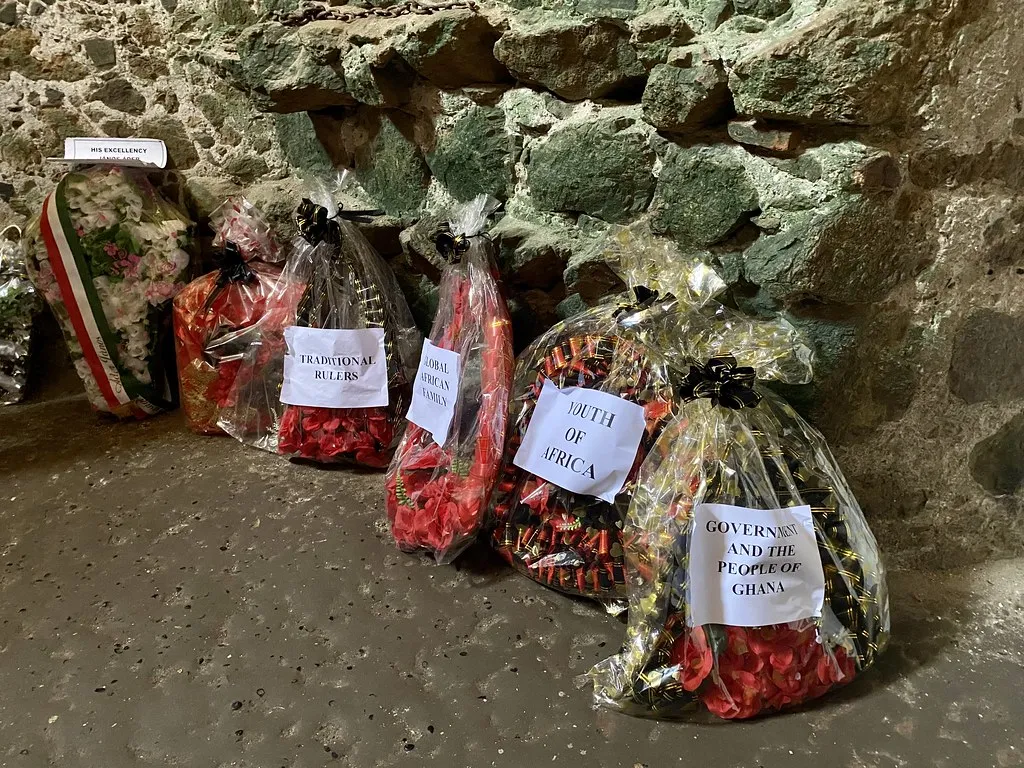
The most jarring detail is architectural.
Directly above the male dungeon ceiling at Cape Coast Castle sits the Anglican chapel. European officers sang hymns and conducted Sunday services while human beings starved directly beneath their floorboards.
At the seaward end of the lower passage stands a narrow portal opening onto the Atlantic surf: the Door of No Return.
Generations of captured Africans took their final steps on their homeland through this doorway before being loaded onto slave vessels. Today, walking through that portal reveals a commemorative wooden plaque on the ocean side reading: The Door of Return.
Take all the time you need here.
If you need ten minutes of silent reflection, tell your resident guide beforehand. They understand and will give you space.
When you walk back out into the open courtyard, the sudden brightness and ocean wind will hit you hard. The beach outside is noisy with fishermen and children calling out. It is a disorienting shock.
Do not schedule a busy afternoon after the castles. Give yourself an evening to process what you just saw.
Asafo Shrines and Sacred Rivers Beyond the Walls
If you stay overnight, you have time to discover what the single-day crowds drive straight past.
In Elmina’s historic old quarters, walk along the lanes behind the lagoon to see the Posuban shrines. These are colorful, multi-story concrete monuments erected by local Asafo companies—traditional Fante warrior societies. Decorated with life-sized statues of soldiers, clock towers, leopards, and European ships, each shrine carries symbolic proverbs and community pride.
If you hire a local guide in Elmina for GH₵ 30 to GH₵ 50, they will walk you between the shrines and explain the historical rivalry between the warrior companies.
Forty kilometers north of Cape Coast along the highway toward Kumasi lies Assin Manso Ancestral Slave River Park, known locally as Donkor Nsuo.
This was the site of the “Last Bath.” Captive Africans who had survived weeks of forced marching from the northern interior were brought to this riverbank to be washed and inspected before their final march to the coastal fortresses.
Before walking down to the river, visitors remove their shoes out of respect. Standing barefoot by the quiet stream under giant bamboo groves is one of the most moving moments in Ghana.
If you are heading north into the Ashanti Kingdom in Kumasi, Assin Manso makes an essential stop on your journey.