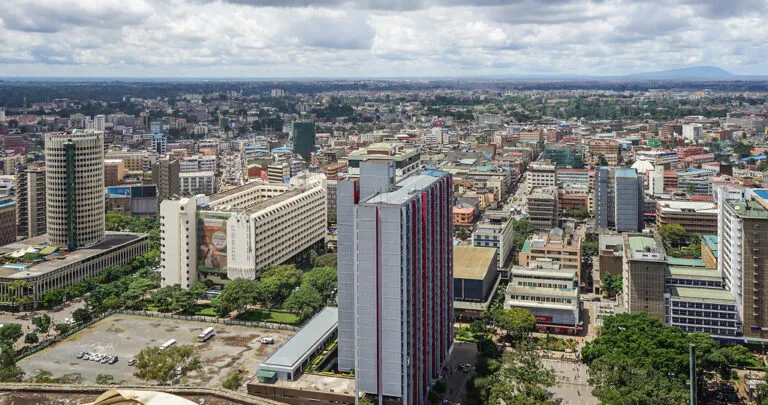
Change a crisp $100 bill at a Kenyan forex counter today and you will walk away with roughly 13,000 Kenyan Shillings.
That is still a solid pocket of money. But it buys noticeably less than it did in early 2024.
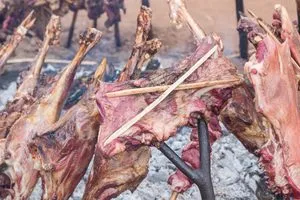
For local living, $100 is solid spending power—easily covering two to three days of city meals, matatu fares, and a clean guesthouse, a scenic train ride to the Indian Ocean, or a 48-hour stay in Lamu Old Town. At street level, even 100 Shillings covers two short matatu hops or a freshly grilled beef mishkaki skewer, though international safari park fees and resort dining sit in another league.
The Shilling Rebound: Why Outdated Guides Leave Travelers Short
In early 2024, travel forums and YouTube clips buzzed about an unprecedented milestone: the US Dollar surged toward 163 Kenyan Shillings. Budget travelers were trading greenbacks for record-breaking local purchasing power.
Those days are gone.
After holding below 130 for over two years, official Central Bank of Kenya quotes crossed the KES 130.00 mark per dollar in late November (~130.00 to 130.10 market mid-rate) following a $656 million weekly drop in forex reserves. For dollar-carrying visitors, that shift nudges a hundred-dollar exchange slightly higher to a clean 13,000 Shillings.
Despite the symbolic break above 130, Kenya’s remaining $13.95 billion reserve buffer still covers roughly 5.6 months of imports against a four-month statutory minimum. Downtown forex desks keep competitive buy quotes near CBK mean rates, so everyday street prices remain predictable rather than erratic.
If you arrive in Nairobi planning your daily budget around 2024 peak rates, you still face an immediate shortfall of around 3,300 Shillings per hundred dollars. That gap is the price of an extra guesthouse night or several hearty local dinners.
How to Convert Dollars Without Losing Ground to Card Fees
Tapping your home debit or credit card for daily incidentals is the quietest way to bleed travel funds.
Most foreign banks tack on a 3% to 3.5% foreign transaction fee on every swipe, and occasional merchant terminals add processing markups. When those fees compound, your effective rate quickly drops toward 124 to 125 Shillings per dollar.
Airport arrival desks take an even heavier slice.
Exchanging cash right after baggage claim at Jomo Kenyatta International (JKIA) typically yields 5% to 8% less than licensed bureaus in Westlands or Nairobi’s Central Business District. Bring crisp, uncreased bills printed after 2013 downtown, and register a Safaricom SIM card for M-Pesa immediately.
Skip retail commercial bank cash windows too if you are holding physical USD. Downtown licensed forex bureaus pay roughly 129.50 to 129.70 Shillings per dollar for crisp $50 and $100 bills (12,950 to 12,970 KES per $100), beating commercial bank cash counters (126.50 to 129.00 KES) by 100 to 350 Shillings on every hundred-dollar note.
The same downtown bureau edge holds when changing British Pounds (~170 to 171 KES) or Euros (~142.7 KES) in Kenya. Avoid handing over small $10 or $20 bills, because both bureaus and banks discount denominations under $50 down toward 126 KES per dollar.
| Amount Exchanged | CBK Benchmark (~130 KES) | Downtown Forex Bureau Cash Payout | Real-World Purchasing Power |
|---|---|---|---|
| 100 KES (~$0.77 USD) | 100 KES | Street Coin / Note | Two short Nairobi matatu hops, a roadside coconut, or 1 mishkaki skewer |
| $20 USD (Small Bills) | ~2,600 KES | ~2,520 KES (~126/USD discount) | 3 to 4 casual Nyama Choma lunches plus local urban rides |
| $50 USD ($50 Bill) | ~6,500 KES | ~6,475 to 6,485 KES (~129.7/USD) | 1 Madaraka Express First Class ticket (KES 4,500) plus city transfers |
| $100 USD ($100 Bill) | ~13,000 KES | ~12,950 to 12,970 KES (~129.7/USD) | 2–3 comfortable days in Nairobi or 48 hours in Lamu Old Town |
| $500 USD ($100 Bills) | ~65,000 KES | ~64,750 to 64,850 KES (~129.7/USD) | Multi-day coastal stay, regional flight, and guided local excursions |
Commercial banks still suit wire transfers and large corporate trades, whereas specialized downtown bureaus consistently win on walk-in cash payouts.
If you use an ATM instead, decline the Dynamic Currency Conversion (DCC) prompt asking to convert into your home currency. Domestic Kenyan machines typically tack on 6% to 8% DCC markups, so always choose “Without Conversion” for wholesale bank rates.
Local ATM withdrawal fees vary by bank across Nairobi and the coast. Major retail banks like Equity Bank often charge minimal local access fees on foreign cards, whereas other commercial banks add KES 400 to 500 per withdrawal.
If you plan to set up an M-Pesa line at the airport, plan around desk hours: while the customs hall is open 24/7, the official Safaricom KYC desk in Terminal 1A typically closes around 9:00 PM. Travelers on late-night flights will need to visit an in-city Safaricom shop the following morning with their physical passport to activate mobile money.
In Kenya, mobile money is king.
Matatu conductors, vegetable vendors, and neighborhood diners rarely take plastic cards, but nearly all of them accept M-Pesa on the spot.
Once your Safaricom line is active, remittance services like Wise, WorldRemit, or Remitly let you send Dollars directly into your M-Pesa wallet near mid-market rates. Pairing digital wallet top-ups with one cash swap downtown cuts down repeated ATM fees and keeps you from carrying thick stacks of cash.
Living on 13,000 Shillings Across Nairobi
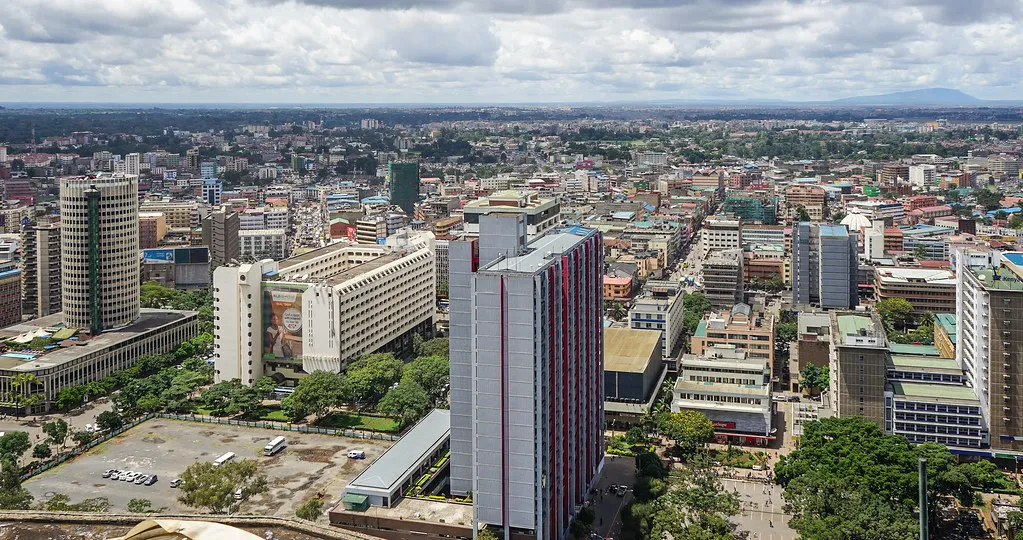
In the capital, 13,000 Shillings gives you comfortable breathing room if you balance where and how you spend it.
A single careless afternoon in upmarket malls will burn through that balance by sunset. But if you base your daily meals around neighborhood spots and mix your transport modes, those funds stretch across three full days—making it a stronger value for remote workers choosing Nairobi over Kigali on daily food costs.
| Expense Category | Typical Item | Estimated Cost (KES) | Estimated Cost (USD) |
|---|---|---|---|
| Casual Local Dining | Plate of Nyama Choma & Ugali at neighborhood joint | KES 600 – 900 | $4.65 – $6.95 |
| Mid-Range Cafe Meal | Espresso & breakfast bowl in Westlands | KES 1,200 – 1,800 | $9.25 – $13.90 |
| Urban Transport | Short matatu commute within Nairobi | KES 50 – 100 | $0.40 – $0.75 |
| Ride-Hailing Ride | Off-peak Uber across town (CBD to Kilimani) | KES 450 – 750 | $3.50 – $5.80 |
| SIM & Connectivity | Safaricom line with 10GB data bundle | KES 1,000 | $7.70 |
| Cultural Admission | Karura Forest trail entry (non-resident adult, via eCitizen) | KES 850 | $6.55 |
How you move around Nairobi makes the biggest dent in your cash.
Ride-hailing apps like Uber and Bolt are convenient, but peak-hour traffic jams will run the meter up quickly. Travelers who ride daytime matatus for simple point-to-point hops and reserve cabs for late-night journeys save enough Shillings to fund museum entries and forest walks.
Balancing transit costs against street awareness is just as practical as tracking exchange spreads. During daylight hours, riding a matatu along main arteries like Ngong Road or Waiyaki Way costs just KES 50 to 100 ($0.40 to $0.80).
After 9:00 PM, walking or waiting at unlit stops creates avoidable exposure. Budgeting KES 600 to 900 ($5 to $7) for an Uber or Bolt back to Westlands or Kilimani—alongside the habits in our Kenya and East Africa travel safety guide—protects both your gear and cash.
Taking the Madaraka Express to Mombasa on a Hundred-Dollar Note
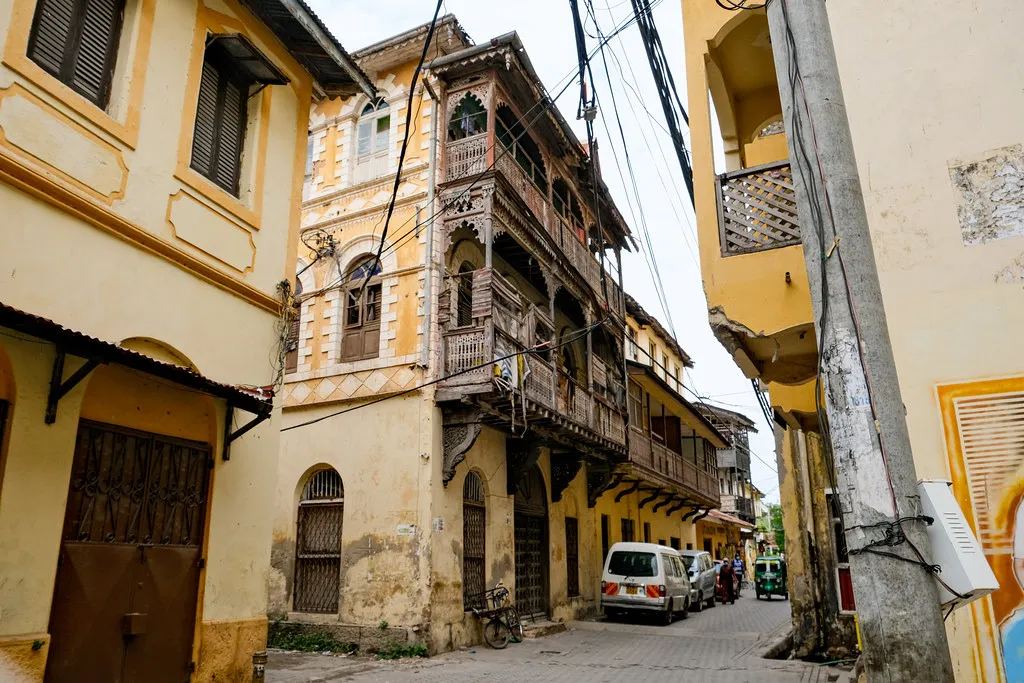
Crossing between Nairobi and the coast by train is one of the best value journeys in East Africa. Check live schedules and seat inventory on the official Kenya Railways portal before heading to Syokimau Terminus.
The Madaraka Express SGR splits passenger cabins into Economy, First Class, and Premium Class alongside dedicated commuter rail and shuttle links at both termini. Children aged 3 to 11 ride Economy and First Class at half fare, while toddlers under 3 travel free.
| Madaraka Express (SGR) Service | Cabin or Transfer Option | Official Fare (KES) | Approx. USD |
|---|---|---|---|
| Nairobi (Syokimau) to Mombasa (Miritini) | Economy Class (Adult) | KES 1,500 | ~$11.55 |
| Nairobi (Syokimau) to Mombasa (Miritini) | First Class (Adult) | KES 4,500 | ~$34.60 |
| Nairobi (Syokimau) to Mombasa (Miritini) | Premium Class (One-Way / Return) | KES 12,000 / KES 20,000 | ~$92.30 / ~$153.85 |
| Child Tickets (Ages 3–11) | Economy / First Class | KES 750 / KES 2,250 | ~$5.75 / ~$17.30 |
| Nairobi CBD to Syokimau Terminus | KRC Commuter Train / Bolt or Uber | KES 60 / KES 950–1,500+ | ~$0.46 / ~$7.30–$11.55 |
| Miritini Terminus to Mombasa CBD | Kenya Railways Shuttle Bus / Matatu | KES 100 | ~$0.77 |
Economy takes roughly 11.5% of a $100 bill and leaves KES 11,500 for coastal stays, whereas Premium Class absorbs almost your entire hundred-dollar budget. Skipping a highway taxi by boarding the KES 60 commuter link train from Nairobi Central Station puts you directly inside Syokimau on schedule.
Tuk-Tuk Fares and Street Food Realities Along the Coast
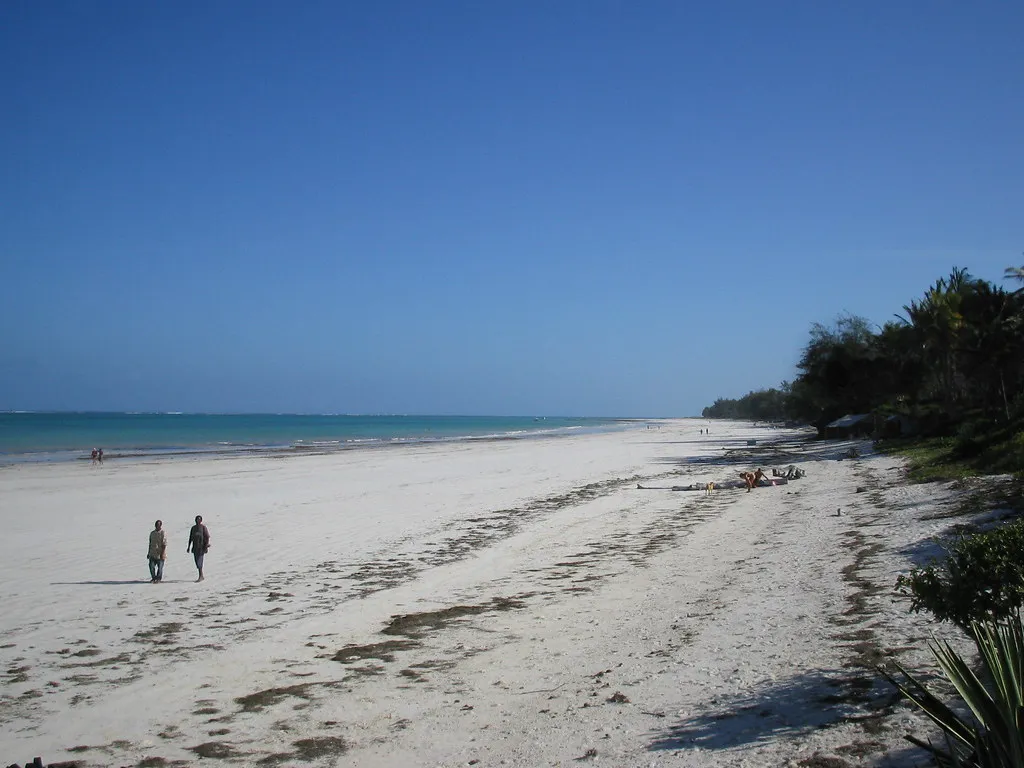
At the coast, your money behaves very differently depending on which side of the beach road you walk on.
Beachfront hotel bars and boutique dive centers price directly in foreign currency or use steep in-house exchange rates. If you stay entirely within the resort bubble, a hundred dollars disappears by lunch on day two.
Walk two blocks back from the water into Swahili town neighborhoods, and your money regains its footing.
A generous plate of spiced chicken biryani or goat pilau at an open-air coastal kitchen costs between KES 350 and 500 ($2.70 to $3.85). Fresh chilled coconuts from roadside handcarts go for KES 50, and evening skewers of grilled beef mishkaki cost KES 100 each.
Getting around Diani and Mombasa revolves around tuk-tuks and boda-boda motorbikes.
Retail petrol sits near KES 224 per liter on the coast and KES 227 in Nairobi, so drivers will not accept the bargain-basement fares listed in old guidebooks. Standard short hops settle between KES 150 and 300 ($1.15 to $2.30), keeping your daily transit costs remarkably low.
The Lamu Archipelago Paradox: Is Island Travel Beyond Budget Reach?
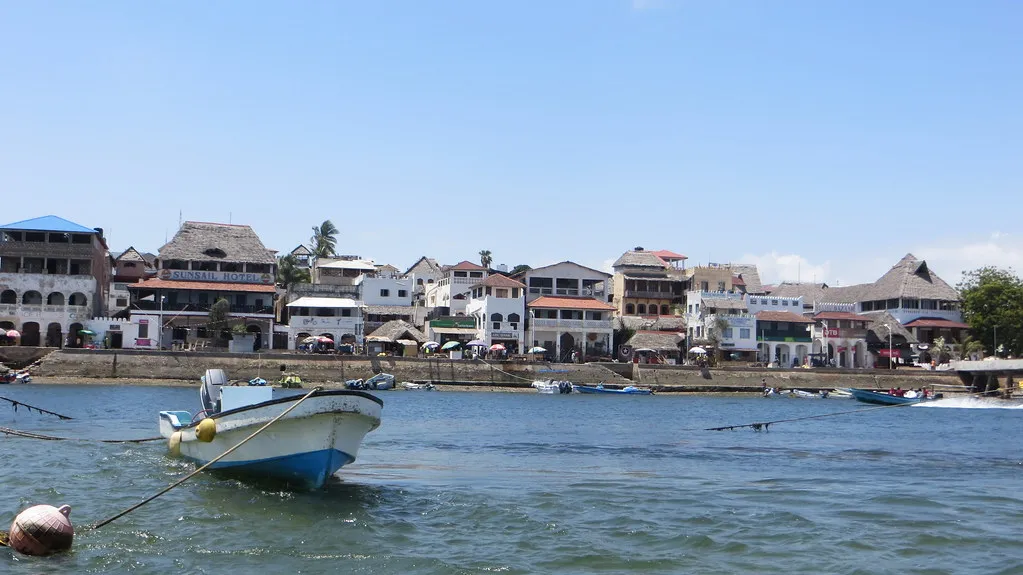
Many travelers skip Lamu Island because they assume its UNESCO World Heritage prestige comes with prohibitive prices. In reality, as we explored in our guide on reasons to visit Lamu, the biggest expense is simply getting there.
A one-way flight to Manda Airport from Nairobi Wilson typically runs between $120 and $180 booked ahead (climbing past $250 last-minute), which exceeds your hundred-dollar budget before landing. Yet once your feet hit the jetty, daily life splits into two completely different realities.
Shela Village caters primarily to luxury visitors, where restored stone mansions and beachfront dining easily run $35 for an evening seafood meal.
Lamu Old Town is the opposite.
Among the most authentic islands along Kenya’s coast, Old Town offers some of the most accessible heritage living anywhere in East Africa. There are no cars on the island, meaning zero transit costs inside town, while a shared wooden boat to Shela beach costs just KES 150 to 200 ($1.15 to $1.50).
| Expense Category | Item / Activity in Lamu Old Town | Estimated Cost (KES) | Estimated Cost (USD) |
|---|---|---|---|
| Heritage Accommodation | Two nights in a simple stone Swahili guesthouse | KES 5,850 | $45.00 |
| Authentic Coastal Dining | Six local meals (pilau, grilled fish curry, tamarind juice) | KES 2,850 | $22.00 |
| Channel Water Transit | Four shared boat shuttles between Old Town and Shela Beach | KES 650 | $5.00 |
| Sunset Sailing Excursion | Shared traditional dhow sunset cruise along the mangroves | KES 1,950 | $15.00 |
| Cultural Heritage Entry | Lamu Fort or Lamu Museum single-site ticket (via eCitizen) | KES 1,300 | $10.00 |
| Street Snacks & Spiced Chai | Mahamri, samosas, roasted cassava, and spiced ginger tea | KES 400 | $3.00 |
One hundred dollars in Lamu Old Town comfortably covers a full 48-hour stay, including two nights in a stone guesthouse, fresh Swahili cooking, and an evening sail on a wooden dhow. The secret is simply staying anchored in town rather than booking beachfront resorts.
Regional Perspective: How Kenya Compares to Nigeria and Ghana
Kenya’s steady exchange rate contrasts sharply with other benchmarks in our guide on what $100 buys across Africa.
In Lagos, as we documented when analyzing what $100 buys in Nigeria, a hundred dollars fetches roughly 140,000 Naira. That gives travelers extraordinary mileage when eating at local kitchens and traveling overland.
In Accra, where a hundred dollars trades for roughly 1,210 to 1,245 Ghanaian Cedis, high import costs keep electronics and specialty goods pricey even while basic meals stay affordable—see our street-level price report on what $100 buys in Ghana. A glance at what $100 buys in Uganda also shows how regional cross-border costs shift the moment you leave Kenya.
If you are pairing city exploration with an overland wildlife safari, comparing these daily urban numbers against our comprehensive safari cost breakdown will help you budget park fees, 4×4 vehicle hire, and camp stays with complete clarity.
Clear budget boundaries still matter because international fees listed by the Kenya Wildlife Service and county reserves—$80 per day at Nairobi National Park via eCitizen and $100 to $200 at the Maasai Mara—consume a $100 note immediately. Independent city dining, SGR rail transit, and Swahili coastal towns remain where your shillings go furthest.
For remote workers and consultants planning an extended stay in Nairobi or along the coast, see our field guide to Kenya’s Class N Work Permit and digital nomad regulations.