There is something exciting about getting ready to live and work remotely from Southern Africa. You have probably spent weeks picturing the open horizons, the dramatic coastal fog at Swakopmund, and working from a quiet veranda in Windhoek with a fresh cup of coffee. But you have also thought about the logistics. You have probably realized that applying for a remote work visa in Africa is not quite like packing for a standard holiday. When you begin reading embassy notices and expat forums, the paperwork can feel intimidating. Sifting through conflicting threads about certified bank statements, medical forms, and police checks often makes people abandon the journey before they even apply.
What I can tell you from examining the statutory framework is that Namibia offers one of the most practical and straightforward remote work permits on the continent. The paperwork looks intimidating at first glance. It is not. Once you know the specific documents reviewers look for, the application is surprisingly sensible. Namibia gives you a structured legal residency path for six months, dependable infrastructure, and none of the rolling power cuts that plague neighboring regions. That changes everything.
What to Expect from Namibia Remote Work Permit
The Namibia Digital Nomad Visa was created to welcome freelancers, consultants, and full-time remote employees whose income originates outside the country. The permit grants you a legal residency period of six months. If you wish to stay longer, you can apply to renew the permit for another six-month block through immigration authorities in Windhoek.
The baseline financial benchmark is clear. The primary applicant must demonstrate an average monthly income of at least $2,000 USD over the preceding six months. If you travel with family, the statutory regulations require an additional $1,000 USD per month for an accompanying spouse and $500 USD per month for each dependent child. For example, a married remote worker with one child must show a consistent monthly cash flow of $3,500 USD.
One of the biggest anxieties travelers voice centers on double taxation. People worry whether living in Windhoek for half a year makes them liable for local income taxes. The tax position here is forgiving. Under Namibian tax law, foreign-sourced income earned by temporary remote workers during their six-month stay is not subject to local Namibian personal income tax. You continue paying taxes in your home tax jurisdiction.

Proving Your Offshore Income Without Headaches
Proving your income is where most initial applications run into delays. Reviewers are looking for clear, unambiguous proof that your earnings originate from outside Namibia and will reliably sustain you throughout your stay. A single screenshot of your account balance will not suffice.
If you are a salaried remote employee, you must submit six consecutive months of certified bank statements showing regular salary deposits, accompanied by an official letter from your employer. The letter must confirm your job title, your monthly compensation in your home currency, and explicit permission to perform your duties remotely from Namibia.
Freelancers and independent business owners face a slightly different process. You must provide six months of business or personal bank statements reflecting inbound client payments, your company registration papers or trade license, and active client contracts or recurring retainer agreements. Ensuring your statements clearly reflect the required $2,000 monthly threshold eliminates back-and-forth email inquiries. Nobody is keeping score of minor currency fluctuations. Just show consistent deposits above the line.
Monthly Living Costs Across Windhoek and Swakopmund
Deciding where to establish your base usually comes down to two distinct lifestyles: the sunlit highland capital of Windhoek or the cool, coastal town of Swakopmund. Windhoek functions as the commercial center, offering modern shopping centers, active coworking spaces, and leafy residential neighborhoods like Klein Windhoek and Kleine Kuppe. Swakopmund, perched between the Atlantic Ocean and the dunes, offers crisp marine air, German colonial architecture, and a slower seaside rhythm.
The local currency is the Namibian Dollar (NAD), which is pegged 1:1 to the South African Rand (ZAR). South African Rand banknotes are accepted alongside Namibian notes in every grocery store and restaurant across the country. Dual-currency pricing helps put the expense level in perspective.
| Monthly Expense Category | Windhoek (NAD / USD) | Swakopmund (NAD / USD) | Practical Notes |
|---|---|---|---|
| 1-Bedroom Furnished Apartment | NAD 9,500 – 14,000 ($520 – $770) | NAD 8,500 – 13,000 ($470 – $715) | Modern secure complexes in Klein Windhoek or central Swakopmund |
| Uncapped Fiber Internet (30–50 Mbps) | NAD 900 – 1,250 ($50 – $70) | NAD 900 – 1,250 ($50 – $70) | Paratus or MTC Spectra optical fiber connections |
| Monthly Coworking Desk | NAD 2,200 – 3,200 ($120 – $175) | NAD 1,800 – 2,800 ($100 – $155) | Includes backup solar power and conference rooms |
| Groceries and Everyday Dining | NAD 4,500 – 7,000 ($250 – $385) | NAD 4,200 – 6,500 ($230 – $360) | High quality fresh beef, game meats, and imported goods |
| Compact Rental Car or Fuel | NAD 5,000 – 8,000 ($275 – $440) | NAD 4,500 – 7,500 ($250 – $415) | Essential for weekend road trips beyond town limits |
| Estimated Monthly Total | NAD 22,100 – 33,450 ($1,215 – $1,840) | NAD 19,900 – 31,050 ($1,100 – $1,710) | Comfortable independent lifestyle well below the income threshold |

Medical Clearance and Chest X-Ray Requirements
Namibia’s Ministry of Home Affairs, Immigration, Safety and Security (MHAISS) enforces strict public health screening protocols for all long-stay visas. These requirements are non-negotiable and must be completed in your home country before you travel. You cannot defer this screening until you arrive at Hosea Kutako International Airport in Windhoek. Missing health paperwork will prevent the issuance of your pre-approval letter, meaning airlines will refuse boarding.
The statutory clearance involves two standard official forms sourced from the MHAISS document repository:
- Medical Certificate (Form 3-1/0003): A comprehensive health examination form that must be completed, signed, and stamped by a licensed general practitioner or medical doctor in your home country. It certifies that you are in sound physical and mental health and free from contagious conditions.
- Radiological Report (Form 3-1/0004): A specialized chest X-ray screening report confirming that you do not have active pulmonary tuberculosis (TB). This report is mandatory for all applicants aged 12 and older and must be signed and stamped by a qualified radiologist or physician.
- Comprehensive Travel Health Insurance: Proof of medical insurance with international coverage valid in Namibia for the entire duration of your six-month stay, including emergency hospital treatment and medical evacuation.
Book your doctor appointment and chest X-ray three to four weeks before submitting your digital dossier. Having these completed forms signed, dated, and clearly stamped removes the single most frequent bottleneck applicants face.
Five Steps from Document Dossier to Airport Stamp
Applying for the Namibia Digital Nomad Visa does not require booking an embassy interview or navigating a complex automated portal. The entire application process is administered digitally through the Namibia Investment Promotion and Development Board (NIPDB) in coordination with immigration authorities. Following a systematic document workflow ensures prompt processing.
- Assemble Your Digital Document Dossier: Compile clean PDF scans of your valid passport (with at least six months remaining validity), six months of certified bank statements, remote employment verification or freelance contracts, police clearance certificate from your country of residence, completed Medical Certificate (Form 3-1/0003), completed Radiological Report (Form 3-1/0004), proof of comprehensive travel insurance, and your initial flight or accommodation booking.
- Submit Application by Email to NIPDB: Email your complete application dossier directly to the official digital nomad desk at
nomadvisa@nipdb.com. Include a concise cover letter summarizing your remote role and intended arrival date. - Await Application Review: The NIPDB and immigration officials review your submission. Standard processing time typically ranges from two to three weeks. If any document requires clarification, immigration officers will contact you via email.
- Receive Your Official Approval Letter: Upon successful vetting, you will receive an official digital approval letter from the immigration ministry. Print multiple physical copies of this document to show airline check-in staff and border control officers.
- Pay Issuance Fee and Collect Passport Endorsement: Fly into Hosea Kutako International Airport (WDH) in Windhoek or Walvis Bay Airport (WVB). Present your approval letter at border immigration, pay the statutory visa issuance fee of approximately NAD 1,100 (around $62 USD), and receive your six-month digital nomad endorsement stamp.
Power Reliability and Desert Exploration
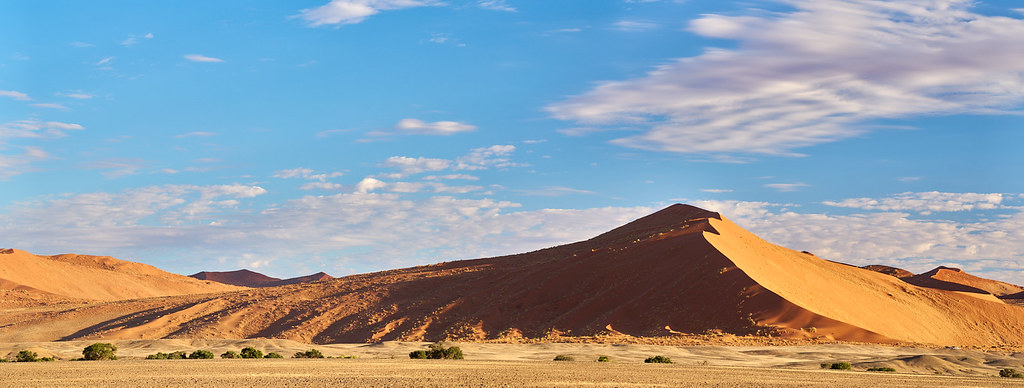
Remote work in popular culture has developed a reputation for being a little theatrical. You have probably seen the staged photos of people typing on laptops balanced precariously on sand dunes or sitting in beach loungers with sea spray blowing into their keyboards. The unvarnished reality of working from Namibia is much more sensible, practical, and liberating. The desert wind does not care about your laptop. Trying to work from an open dune guarantees that glare will blind your screen, the midday sun will overheat your battery in twenty minutes, and fine red sand will grind into your charging port. Leave the laptop at the apartment.
What matters for your work routine is straightforward: a comfortable chair, cool shade, and an internet connection that never drops during a client presentation. In Namibia, the national power grid operated by NamPower is remarkably dependable. Unlike across the border in South Africa where scheduled load shedding disrupts daily calls, urban power outages in Windhoek and Swakopmund are rare exceptions. That stability is worth knowing before you arrive.
For connectivity on the go, picking up an MTC SIM card at Hosea Kutako Airport works nicely. MTC’s weekly Aweh bundles offer affordable 4G data along major paved corridors. Urban apartments and cafes deliver uncapped optical fiber through Paratus or MTC Spectra with speeds between 30 and 50 Mbps.
The real magic of basing yourself in Namibia happens when Friday afternoon arrives and you close your computer. You are not stuck in city traffic. Within hours, you can head into Damaraland for tracking desert elephants in Namibia along dry riverbeds, wander the colossal dunes featured in our guide to the most incredible deserts in Africa, or see how Namibia stacks up in our overview of top African destinations for remote workers. Pack less. Wash more. The rest can stay behind at home.