Tracking wild cheetahs across Botswana offers one of the most thrilling wildlife encounters in Southern Africa. The country harbors nearly 1,700 wild cheetahs, representing roughly a quarter of the world’s remaining population.
Unlike lions or leopards, cheetahs rely on expansive open spaces and keen daylight vision to hunt. Finding them requires understanding their unique habits, preferred habitats, and the field craft of expert local trackers.
Prime Cheetah Habitats Across Botswana
Cheetahs thrive in open savannahs, fossil river valleys, and floodplains where they can reach top sprinting speeds. Dense woodlands and thick mopane forests hinder their movement and make hunting nearly impossible.
In Botswana, the best tracking areas lie across three distinct ecosystems: the arid Central Kalahari, the southern Okavango floodplains, and the ancient Makgadikgadi salt pans.
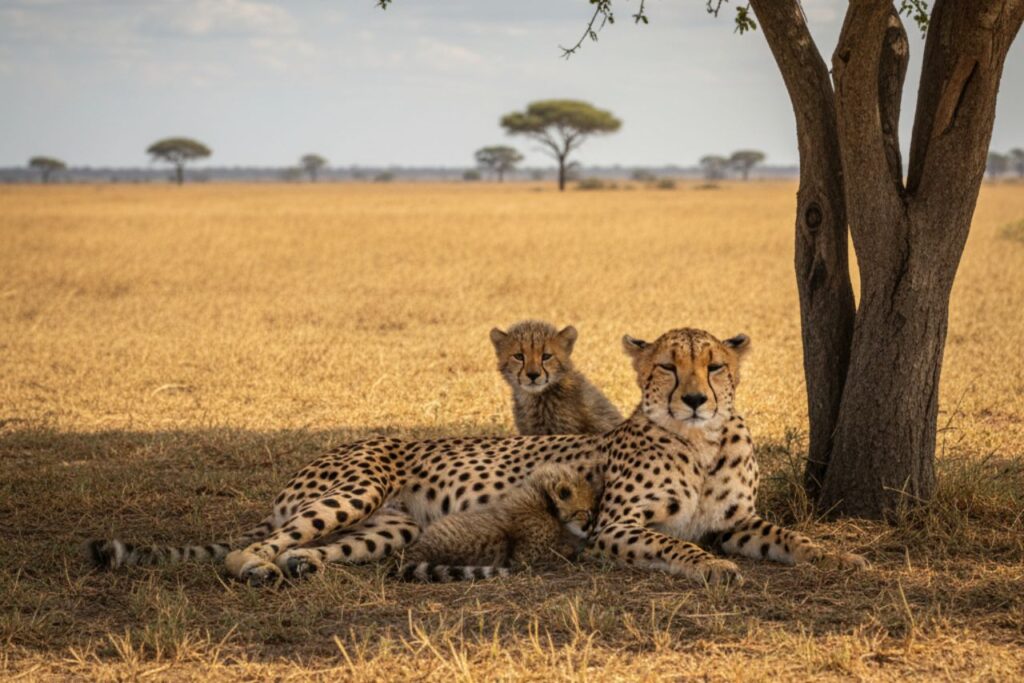
Central Kalahari Game Reserve and Deception Valley
The Central Kalahari Game Reserve is the ultimate cheetah stronghold in Botswana. Its famous Deception Valley and Passarge Valley feature vast, flat plains that provide ideal terrain for high-speed pursuits.
During the summer green season, thousands of springbok gather on the sweet grasses of the valley floor. Cheetahs follow these herds closely, offering visitors frequent daylight sightings and dramatic hunting sequences.
Unlike dense savannah woodlands, hunting in fossil river valleys reflects the open terrain typical of epic African desert landscapes, where speed and unobstructed vision determine survival.
Chitabe Concession and Southern Okavango Delta
While much of the Okavango Delta is dominated by wetlands, the southern concessions like Chitabe feature open grasslands bordered by acacia woodlands. This mix of habitats supports a healthy population of impala and steenbok.
Private concession rules allow expert guides to track off-road responsibly when following fresh tracks. This freedom significantly increases your chances of locating solitary males and mothers with cubs.
Makgadikgadi and Nxai Pan National Parks
The stark white landscapes of Nxai Pan and Makgadikgadi create a dramatic backdrop for wildlife photography. Short scrub and wide-open pans allow you to spot cheetahs from remarkable distances.
When the annual zebra and wildebeest migration passes through the pans, cheetahs capitalize on the abundance of prey along the fringes of the grasslands.
Side by Side: Reserve Ecosystems & Tracking Dynamics
Choosing the right destination depends on the time of year you travel and the type of safari experience you prefer. Each reserve offers different terrain, tracking regulations, and predator concentrations.
| Reserve / Concession | Primary Ecosystem | Cheetah Density | Optimal Window | Tracking Style |
|---|---|---|---|---|
| Central Kalahari (CKGR) | Fossil river valleys & semi-arid scrub | Very High | December to April | 4×4 Game Drives (Designated tracks) |
| Chitabe (Okavango) | Open floodplains & acacia savanna | High | May to October | 4×4 Off-Road Tracking & Night Drives |
| Nxai Pan & Makgadikgadi | Fossil lakebeds & saline pans | Moderate to High | December to March | Open Pan Game Drives |
| Linyanti & Kwando | Riverine floodplains & mopane woodland | Moderate | June to October | Private Concession 4×4 Tracking |
Master San Tracking Techniques in the Field
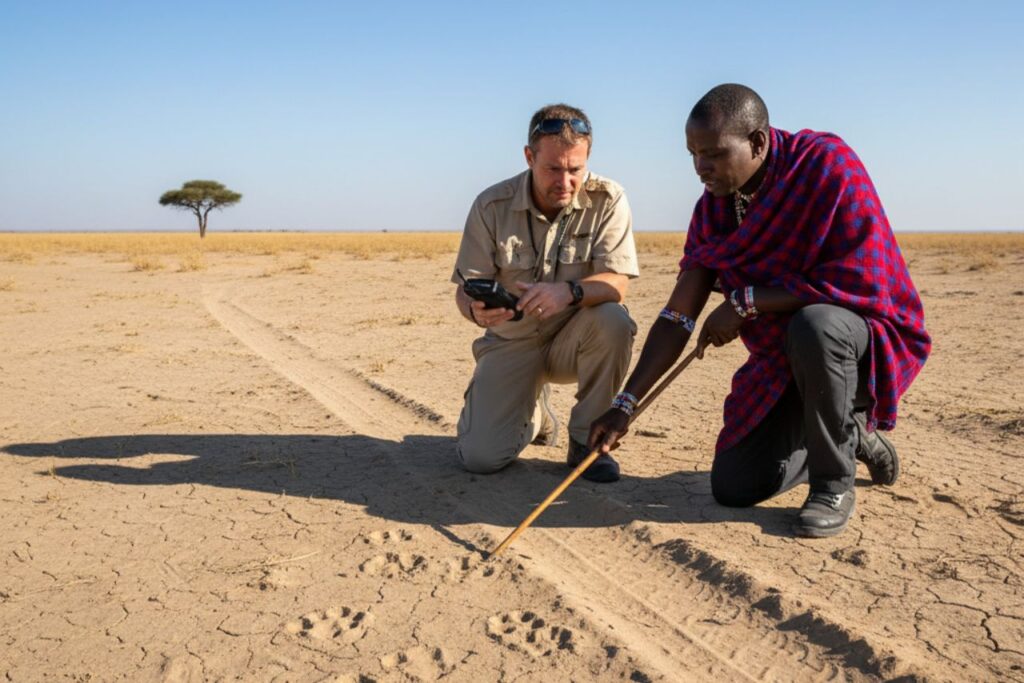
Finding a well-camouflaged predator in a vast wilderness requires ancient tracking wisdom. In Botswana, indigenous San trackers read subtle environmental signs that most safari visitors overlook.
Unlike other big cats, cheetah tracks display distinct semi-retractable claw marks in the sand. Trackers examine the depth and freshness of these prints to determine how recently the cat passed by.
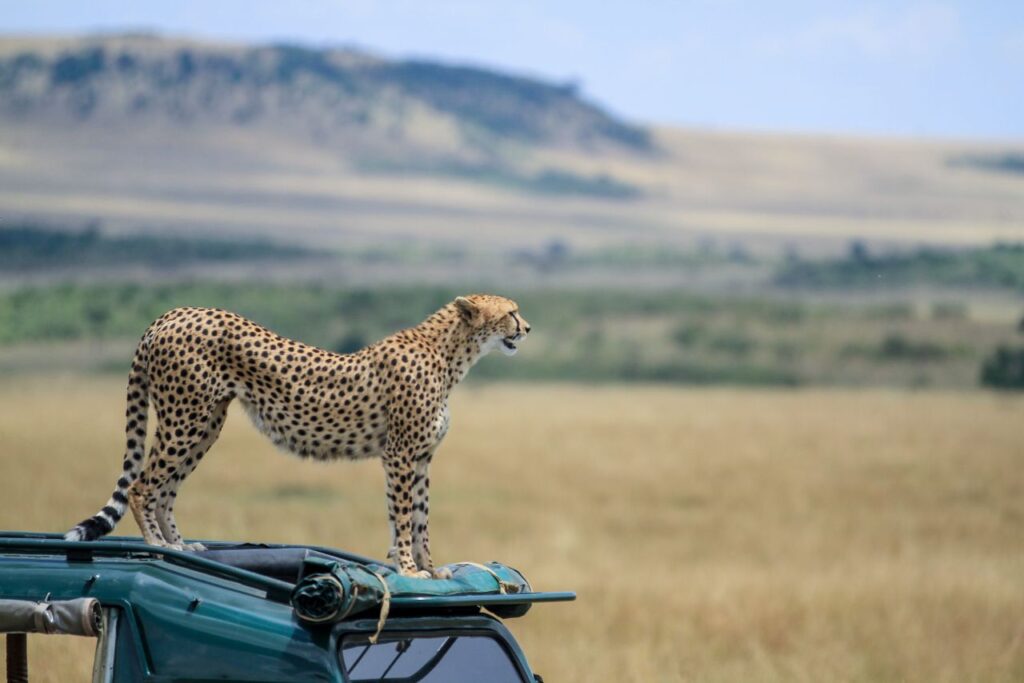
Experienced trackers regularly scan elevated vantage points like termite mounds and camelthorn trees. Cheetahs climb these mounds to gain a panoramic view of potential prey and avoid competing predators.
Alarm calls from prey species also provide vital clues. A sharp bark from an impala or an agitated call from a kori bustard often directs trackers straight to a stalking cheetah.
Diurnal Hunting Windows and Field Realities
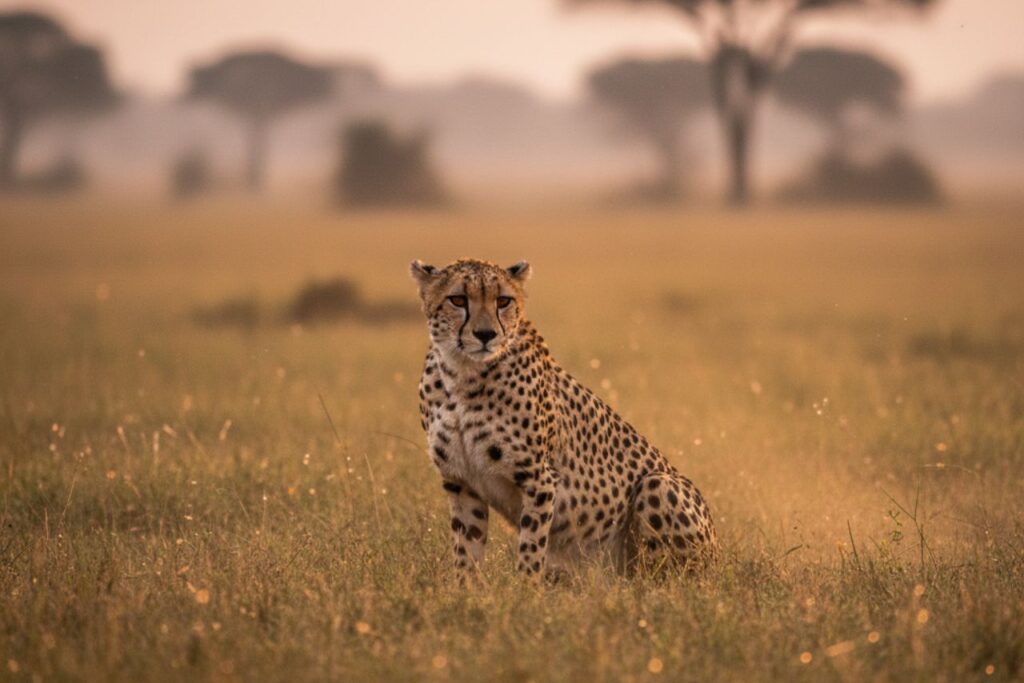
Cheetahs are strictly diurnal hunters, meaning they hunt during daylight hours. This strategy allows them to avoid direct competition with nocturnal apex predators like lions and spotted hyenas.
The most productive tracking windows occur in the early morning between 07:00 and 10:00, and again in the late afternoon from 15:30 until sunset. During the midday heat, cheetahs seek refuge under dense acacia shade.
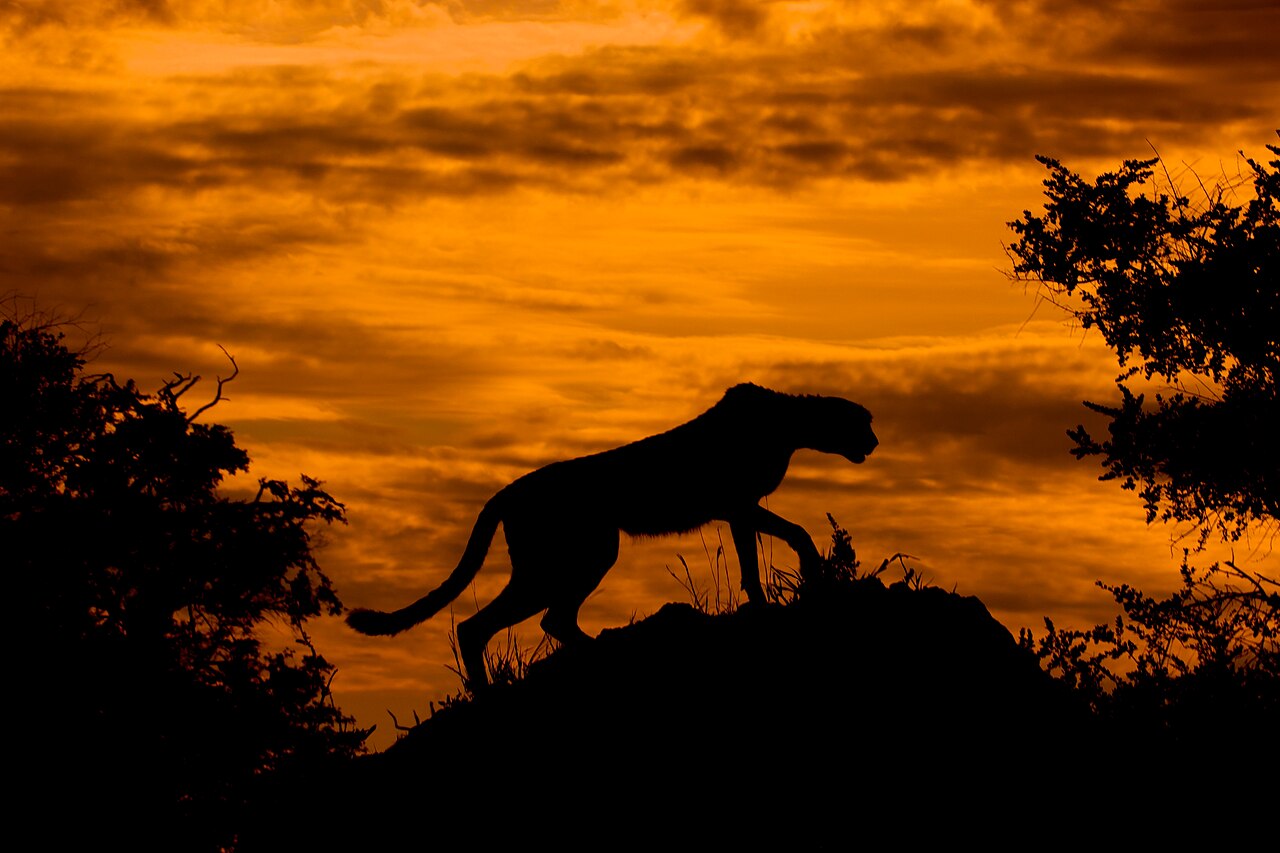
As the late-afternoon sun lowers over the Okavango Delta, cheetahs become active again, patrolling territory margins and waterhole approaches.
Even with skilled trackers, sightings are never guaranteed in unfenced wilderness. A successful cheetah safari requires patience, keen observation, and multiple tracking sessions across varied terrain.
Real-World Safari Benchmarks & Field Logistics
Planning a cheetah tracking expedition in Botswana involves deciding between mobile camping safaris and luxury private concession lodges. Both options offer direct access to prime wildlife corridors.
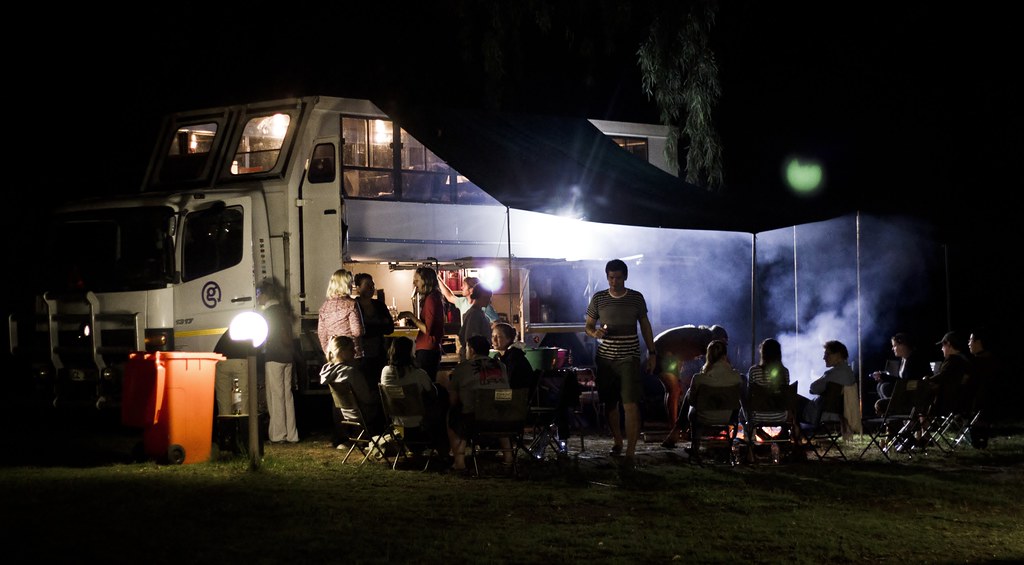
Mobile tented safaris provide an authentic wilderness experience, moving through national parks like the Central Kalahari. Rates typically range from $550 to $950 per person per night.
High-end private concession lodges in the Okavango Delta offer maximum tracking flexibility with off-road driving permits. These luxury stays generally range from $1,100 to $2,200 per person per night, including all guided game drives, meals, and park concessions.
Visitors should pack neutral khaki clothing, high-magnification binoculars, and a telephoto camera lens of at least 400mm to capture distant movement across the pans.
Conservation in Action: Preserving Botswana’s Apex Sprinters
While Botswana remains a global stronghold, cheetahs face ongoing challenges from habitat fragmentation and conflict with commercial livestock farmers. Because cheetahs roam outside protected park boundaries, conservation initiatives play a critical role in their survival.
Organizations like Cheetah Conservation Botswana work closely with local farming communities in the Ghanzi district to promote non-lethal predator control methods, including the use of livestock guarding dogs.
The Botswana Department of Wildlife and National Parks enforces strict ethical wildlife viewing guidelines. Safari vehicles must keep a respectful distance and avoid crowding hunting cheetahs to ensure their natural behaviors remain undisturbed.
Frequently Asked Questions
What is the best time of year to see cheetahs in Botswana?
The best time depends on the region. The Central Kalahari and Nxai Pan offer exceptional sightings during the green season from December to April, while the Okavango Delta is best during the dry season from May to October.
How do trackers distinguish cheetah tracks from leopard tracks?
Cheetah tracks show visible claw marks in the soil because their claws are semi-retractable. In contrast, leopard claws retract fully, leaving smooth paw pad impressions without claw indentations.
Can you track cheetahs on foot in Botswana?
Walking safaris with armed professional guides are permitted in select private concessions and community conservation areas. However, vehicle-based tracking remains the safest and most effective method for covering large distances across open plains.
Why do cheetahs avoid dense forest habitats?
Cheetahs rely on bursts of high acceleration across flat, unobstructed terrain to capture swift prey like springbok and impala. Dense forests restrict their running stride and expose them to ambush from heavier predators like lions.