After a week on dusty tracks in the Maasai Mara or Serengeti, your shoulders ache. All you want is warm ocean water. Almost every trip ends with that same campfire debate on the last bush night: fly down to Diani Beach, or cross the channel to Zanzibar? If you are still shaping the safari leg, start with our guide to East Africa safari circuits.
Both coasts give you powder-soft white sand and clear turquoise shallows.
Once your plane touches down, though, they feel worlds apart. Diani is a compact coastal strip where you can kick off your boots and slow straight down. Zanzibar rewards curious travelers, yet getting around the island asks for patience and extra border paperwork.
Cross-Border Paperwork and Extra Fees
Your choice gets much easier if your safari ends in Kenya. Fly from Keekorok or Mara North to Nairobi Wilson, then hop a 50-minute flight to Ukunda. Forty minutes after landing, you can sit under a palm with a cold Tusker.
No second passport queue awaits you. You keep the same shillings in your pocket, with nothing extra to pay beyond your Kenya Electronic Travel Authorisation.
Crossing to Zanzibar from a Kenyan camp catches many visitors off guard at arrivals. Tanzania charges $50 for most passports, or $100 for United States travelers, just to enter. Zanzibar also requires a $44 state-run policy from the Zanzibar Insurance Corporation, even if you already carry travel medical cover from home.
Add the island’s $5 per person, per night hotel infrastructure tax. Before dinner on night one, a couple easily spends over $300 on entry stamps and local levies.
When You Can Actually Swim at Low Tide
Brochures show deep blue lagoons along the Swahili Coast, yet walking down at noon to dry coral flats surprises many visitors. Ocean tides swing wide on both sides of the border.
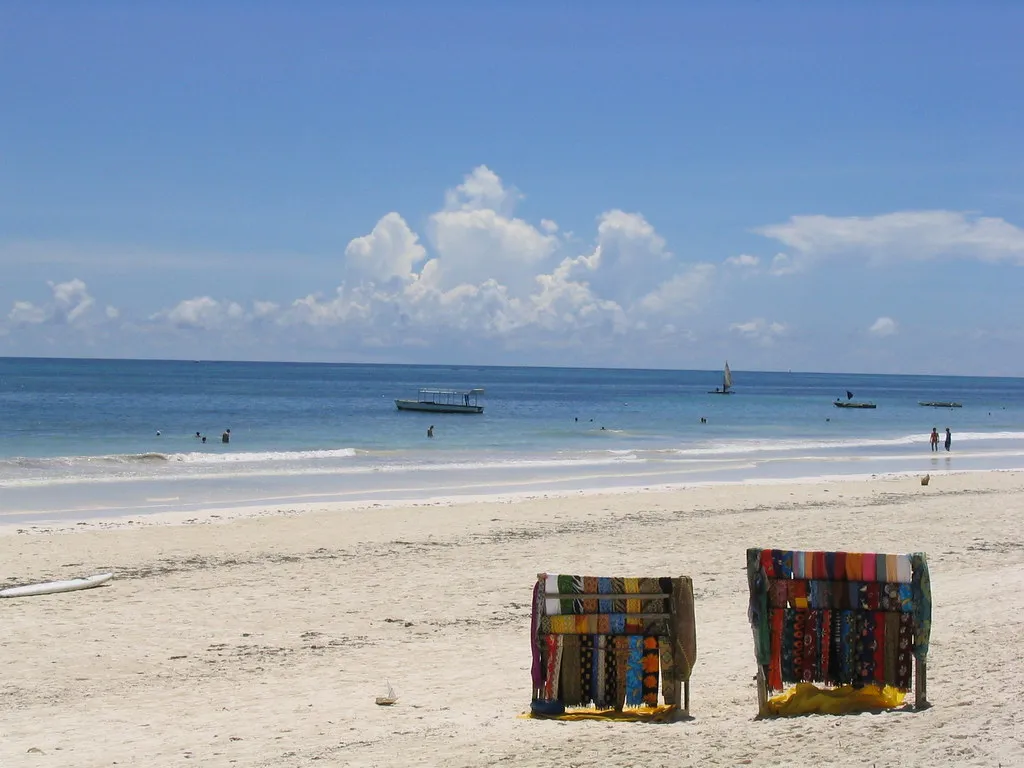
At low tide in Diani, the water pulls back several hundred meters. Shallow sandbars appear, dotted with sea urchins tucked into old coral rock. You will want reef shoes for low-water walks, or simply wait for the four-hour high tide when waves lap right under the palms.
The water sets your daily rhythm.
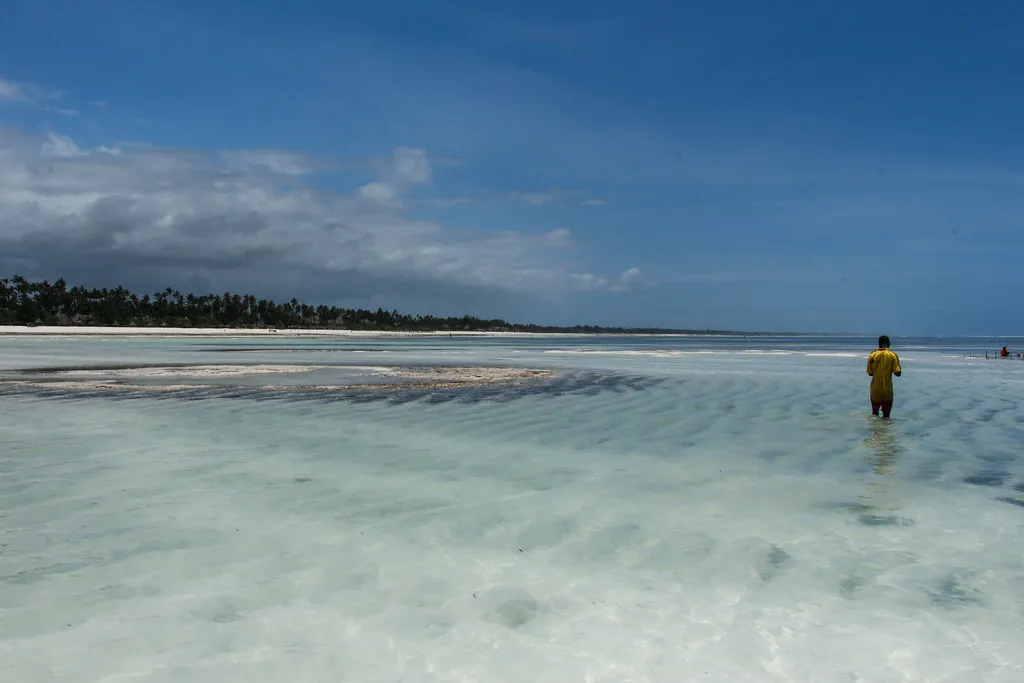
In Zanzibar, swimming depends heavily on which side of the island you pick. Along eastern beaches like Paje and Jambiani, low tide recedes more than a kilometer offshore, leaving warm puddles to kitesurfers and seaweed farmers.
Want deep ocean water whenever the mood strikes? Stay up north in Nungwi or Kendwa, where a steep seabed keeps swimmable waves steps from your towel all afternoon.
Tuk-Tuks in Diani vs. Island Taxis in Zanzibar
After days of dawn game drives, it feels wonderful not to schedule a driver just to grab lunch. That is where Diani quietly spoils you. Most hotels and cafes line a single 15-kilometer paved spine called Diani Beach Road.
Wave from your hotel gate and a tuk-tuk pulls over within thirty seconds. Short rides to roadside bakeries or grilled-fish shacks run 100 to 300 Kenyan shillings, well under two dollars.
Even your wallet gets a rest. Almost every tuk-tuk driver and fruit stall along the road takes M-Pesa mobile money, so you can lock your passport and heavy cash inside the room safe.
Zanzibar moves on a slower, pricier road network. Unguja stretches 85 kilometers from north to south along narrow lanes shaded by coconut palms.
Private taxis between Stone Town, northern Nungwi, and eastern Paje take sixty to ninety minutes each way at $35 to $50 a trip. Switch hotels twice or book a night out in town, and transfers soon cross $150.
Local shared minibuses called dala-dalas cross the island for pennies. Still, squeezing onto crowded benches with safari duffels and camera packs wears thin fast in tropical heat.
Beach Ease vs. Stone Town Atmosphere
What Zanzibar lacks in effortless transit, it pays back in character. If four quiet days beside a pool sounds dull to you, Stone Town wakes every sense right back up.
Inside its winding coral-rag alleys, Swahili and Omani sea heritage still sets the mood. You trace brass-studded teak doors and catch clove smoke at Darajani Market, then drink spiced ginger tea by the sea while wooden dhows catch the dusk breeze.
Leave resort sands, though, and town customs matter deeply. Zanzibar is 99 percent Muslim, so swimsuits and bare shoulders belong strictly inside hotel grounds.
Pack light linen shirts and loose cotton trousers for Stone Town or coastal villages. Modest clothes keep you respectful and spare you unwanted fines.
Diani stays much looser off the sand. You can sail a morning dhow out to Kisite-Mpunguti marine park or stroll straight from the shore to dinner with far fewer dress worries.
Which Coast Fits Your Trip After Safari
Neither shoreline wins by default. Choose the coast that matches how much energy you have left once the bush planes wrap up.
| Travel Factor | Diani Beach, Kenya | Zanzibar, Tanzania |
|---|---|---|
| Safari Departure Point | Best if ending in Kenya (Maasai Mara, Amboseli, Samburu) | Best if ending in Tanzania (Serengeti, Ngorongoro) |
| Cross-Border Admin | None within Kenya (domestic connection via Wilson or Ukunda) | Tanzania visa ($50-$100) + mandatory $44 Zanzibar insurance |
| Daily Transit | Tuk-tuks everywhere (under $2 per ride), easy M-Pesa payments | Private taxis ($35-$50 per cross-island transfer), cash heavy |
| All-Day Swimming | Tide-dependent across all beaches; high tide is best | Tide-dependent in the east; all-day swimming in north (Nungwi) |
| Atmosphere | Relaxed resort strip, water sports, straightforward beach unwind | Rich Swahili-Arab history, spice heritage, conservative town dress |
Pick Diani Beach if your safari wrapped up in Kenya and you simply want to drop your bags and switch off. Direct Ukunda flights and cheap tuk-tuks let you unwind without arranging another transfer.
Pick Zanzibar if your game drives ended in northern Tanzania, or if culture matters as much as sand. Old coral streets, sunset octopus grills, and spice farms easily make up for the extra visa stamps and taxi fares.