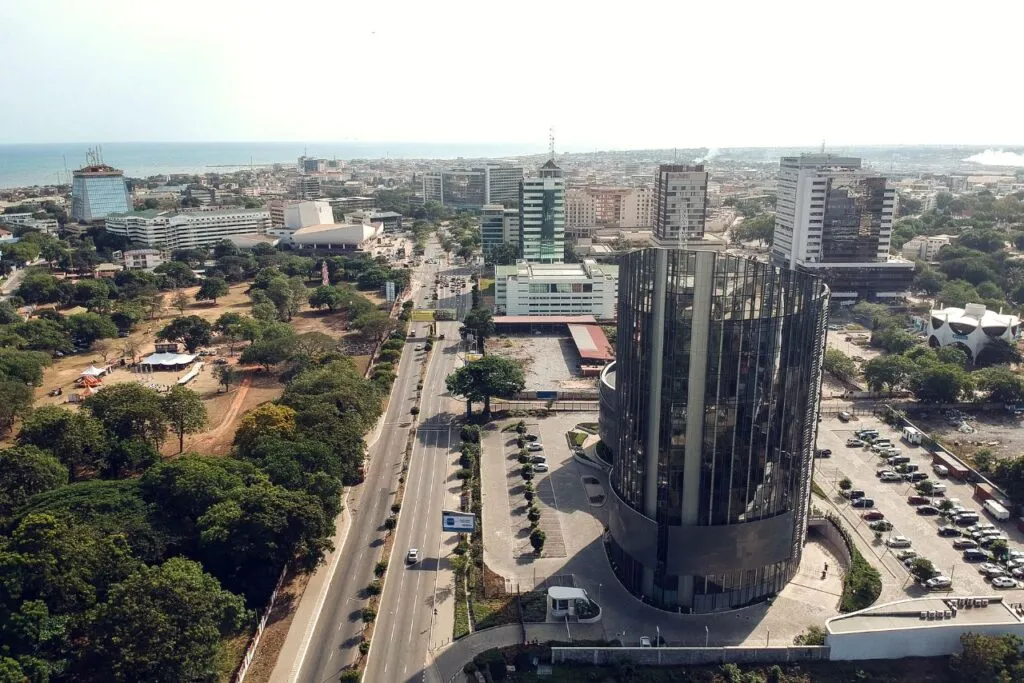
If you are landing in Accra with a crisp hundred-dollar bill in your wallet, its purchasing power depends entirely on where you step.
In one neighborhood, that single note behaves like a week’s worth of comfortable, authentic living. Turn down a different avenue into an expat enclave, and it can vanish in an afternoon.
Cash is still king here, but navigating its value requires understanding the local rhythm.
Currently, a clean $100 USD note converts to approximately GH₵ 1,180 to GH₵ 1,220 at licensed foreign exchange bureaus (BDCs) across central Accra, anchored by the Bank of Ghana baseline rate of GH₵ 11.65. Knowing how to distribute this sum is the secret to exploring the capital with complete confidence.
Planning a broader journey across Ghana? This guide focuses strictly on street-level urban purchasing power in the capital. If you are budgeting for your full vacation—including flights, visas, and savannah safari lodges—explore our comprehensive Ghana travel cost and trip budget breakdown. Before changing cash or using payment cards, consult our practical guide to Ghana ATM fees, BDC bureaus, tourist MoMo rules, and tipping etiquette.
How Do Cedi Volatility and Banknote Rules Affect Your Cash?
The purchasing power of $100 USD in Ghana is shaped by two practical realities: the daily movement of the Ghanaian Cedi (GHS) and local teller inspection rules.
Static exchange rates published in old guidebooks are quickly overtaken by economic shifts. To calculate realistic spending, anchor your budget to licensed bureau rates in central commercial districts rather than official interbank quotes, which trade tighter wholesale spreads.
Physical banknote quality is equally critical. In central Accra’s financial hubs like Osu and Airport Residential, licensed Bureau de Change (BDC) operators enforce a strict hierarchy. Crisp, uncreased post-2013 “blue” $100 bills earn the highest posted market rate.
Arriving with older, creased, or ink-marked notes triggers an immediate penalty. Bureaus routinely discount pre-2013 series bills or smaller denominations ($10, $20, $50) by 10% to 25%, while torn bills are rejected outright.
On a $100 note, that penalty costs you GH₵ 120 to GH₵ 300 right at the counter. That is the equivalent of four to eight full plates of waakye lost before you even leave the bureau.
Inspect every banknote before you leave home. Only pack clean, unmarked bills.
Can You Spend US Dollars Directly in Accra Shops?
The short answer is no. Under the Bank of Ghana Foreign Exchange Act, pricing goods and transacting directly in foreign currency for domestic purchases is strictly illegal.
While an international hotel or safari lodge may quote rates in US Dollars on their booking engine, your on-the-ground transactions—from grocery checkouts and ride-hailing to chop bars and market stalls—must be settled in Ghanaian Cedis (GHS). Carrying local physical currency is essential for everyday exploration.
Daily Budgets in Accra: What Your USD Buys
To help you gauge your daily spending across Accra, here is how different cash amounts perform on the ground:
1. What $20 USD (GH₵ 240) Buys: The Solo Explorer’s Day
Twenty dollars is the sweet spot for an authentic, independent day around the capital. Converted into roughly GH₵ 240, this sum comfortably covers:
- Two generous chop bar meals: a plate of Waakye with fish, egg, and spaghetti for lunch (GH₵ 35), and evening Red-Red with fried plantains (GH₵ 30).
- Three chilled roadside green coconuts hacked open throughout the afternoon (GH₵ 20).
- Four cross-city trotro hops along primary corridors like Circle, Osu, or Kaneshie (GH₵ 40).
- Two large bottles of chilled Club or Star Beer (625ml) at a local neighborhood spot (GH₵ 40).
- You will still head back to your room with over GH₵ 70 in small pocket change.
2. What $50 USD (GH₵ 600) Buys: The Comfortable Urban Day Out
Fifty dollars (approximately GH₵ 600) provides total convenience without feeling like you are counting every cedi:
- Point-to-point ride-hailing via Bolt or Uber for three cross-town journeys in air-conditioned comfort (GH₵ 150).
- A sit-down lunch with drinks at an established Ghanaian restaurant like Buka or Chez Clarisse (GH₵ 180).
- Non-resident admission to the Kwame Nkrumah Memorial Park (GH₵ 120).
- A local physical SIM card loaded with a 15GB high-speed mobile data pack (GH₵ 80).
- Evening craft refreshments along Oxford Street (GH₵ 70).
3. What $100 USD (GH₵ 1,200) Buys: The Divide Between Two Economies
A $100 bill highlights the sharp economic contrast of Accra. In local hands, GH₵ 1,200 can easily cover an entire week of groceries, street meals, and trotro transit.
Yet in expat enclaves like Cantonments or Airport Residential, that same $100 will evaporate in 24 to 48 hours. A single dinner with craft cocktails at Skybar25 or Santoku can easily reach GH₵ 800 to GH₵ 1,200 per person.
Balance your spending by mixing local dining with evening lounges. You get the best of both worlds.
4. What $500 USD (GH₵ 6,000) Buys: The Regional Travel Buffer
Five hundred dollars (GH₵ 6,000) transforms from an urban spending purse into a substantial regional travel fund.
This amount covers executive coach tickets on VIP or STC to regional cultural hubs like Kumasi or Cape Coast, several nights in quality private guesthouses, guided heritage tours through Ashanti craft towns, and fresh seafood dining along the Gulf of Guinea.
What Are the Essential Daily Expenses When Landing in Accra?
Beyond restaurant dining and sightseeing tickets, every newcomer incurs three non-negotiable daily living expenses:
- Mobile Data & Connectivity: Staying connected is essential for hailing rides and mobile payments. A local tourist SIM with a 10GB to 25GB monthly data bundle on MTN costs GH₵ 50 to GH₵ 120 ($4 to $10 USD).
- Safe Bottled Drinking Water: Tap water in Ghana is not potable for international visitors. A 1.5L bottle of Voltic or Bel-Aqua mineral water costs GH₵ 8 to GH₵ 12 ($0.70 to $1.00 USD). A full carton of 500ml sachet water (“pure water”) for your guesthouse runs just GH₵ 12 to GH₵ 15.
- Daily Transport Choices: Shared trotros run GH₵ 5 to GH₵ 15 per trip. Off-peak Bolt rides across the capital cost GH₵ 40 to GH₵ 70, making app-based rides affordable for mid-range travelers.
Having reliable mobile data on your phone makes moving around Accra effortless.
Itemized Spending: $100 in Accra
To put a $100 note (approximately GH₵ 1,200) into concrete perspective, here is how that conversion distributes across daily goods, transit, and experiences in the capital:
Spending Category Item or Local Experience Typical Price Range (GHS) Quantity Securable with $100 (GH₵ 1,200) Street Food & Dining Generous plate of Waakye with fish, egg & wele GH₵ 30 – GH₵ 45 26 to 40 complete meals Street Food & Dining Banku with fresh grilled tilapia & hot pepper GH₵ 40 – GH₵ 60 20 to 30 hearty seafood meals Fresh Refreshments Chilled street-cut green coconut GH₵ 6 – GH₵ 8 150 to 200 coconuts Bottled Water 1.5L bottle of chilled Voltic / Bel-Aqua mineral water GH₵ 8 – GH₵ 12 100 to 150 large bottles Mobile Connectivity MTN High-Speed Mobile Data Bundle (15GB – 20GB) GH₵ 70 – GH₵ 90 13 to 17 full data packages Public Transit Shared trotro hop across central urban corridors GH₵ 5 – GH₵ 15 80 to 240 cross-city trips Ride-Hailing Off-peak Bolt / Uber trip (Osu to Airport or Labone) GH₵ 40 – GH₵ 70 17 to 30 private door-to-door rides Social Life & Drinks Large bottle of Star or Club Beer (625ml) at a local spot GH₵ 18 – GH₵ 25 48 to 66 cold beers Upscale Nightlife Craft cocktail at a lounge in Cantonments or Osu GH₵ 120 – GH₵ 200 6 to 10 premium cocktails Cultural Tourism Kwame Nkrumah Memorial Park entry (non-resident) GH₵ 120 10 admission passes Artisanal Keepsakes Handwoven Kente-strip scarf or brass bead bracelet GH₵ 40 – GH₵ 80 (bargained) 15 to 30 authentic keepsakes
When Do Markets and Bureaus Open? Navigating Local Time in Ghana
Planning your cash runs and market exploration requires understanding the rhythm of local business hours.
Ghana operates on Greenwich Mean Time (GMT / UTC+0) year-round. Because Ghana sits near the equator, daylight hours remain remarkably constant, with sunrise around 6:00 AM and sunset around 6:00 PM.
Licensed BDCs around Danquah Circle and Oxford Street in Osu generally open between 8:30 AM and 5:30 PM, Monday through Saturday. Major bank branches operate from 8:30 AM to 4:00 PM on weekdays.
Open-air markets like Makola hum with peak commercial energy between 9:00 AM and 3:30 PM. Visit markets in the morning when temperatures are cooler and fresh produce has just arrived.
What Can 100 Ghana Cedis (GH₵ 100) Buy in Accra Today?
If you find yourself holding a single GH₵ 100 banknote—equivalent to roughly $8.20 to $8.50 USD—that note still carries substantial real-world purchasing weight on the street.
In central Accra, a single GH₵ 100 note easily purchases:
- Two to three full plates of Waakye or Red-Red with protein and sides at a neighborhood chop bar.
- OR a 15km to 20km cross-town ride-hailing trip across Accra on Bolt during off-peak hours.
- OR twelve to sixteen chilled green coconuts from a roadside vendor.
- OR a 10GB to 12GB high-speed mobile data pack on MTN, keeping your smartphone connected for over a week.
- OR four large bottles of cold Club Beer to share with friends at a neighborhood pub.
It is practical, accessible, and provides a genuine taste of everyday Ghanaian life.
Connecting Your Regional Journey
Navigating Accra successfully comes down to blending local and formal economies. Using trotros and authentic chop bars during the day keeps your spending low, leaving plenty in your pocket for Accra’s celebrated live music venues and cultural monuments.
When you are ready to venture beyond the capital, your cedis will stretch even further. Ghana’s cultural heartland in the Ashanti Region offers substantially lower living costs; explore our in-depth Kumasi travel guide to Ashanti heritage and Kejetia Market to plan your overland route. Likewise, if your journey leads west along the Atlantic coastline toward the historic slave castles and canopy walkway, explore our Cape Coast travel guide to castles and Kakum for verified entry fees and transit advice.
And if your itinerary takes you across the wider West African corridor, compare purchasing power, nightlife, and flight logistics in our Lagos vs. Accra holiday travel guide.
Travel with curiosity, keep crisp notes in reserve, and enjoy every cedi’s worth of the journey.