
Travel across the African continent is undergoing a profound transformation. Beyond traditional bucket-list circuits, emerging infrastructure, policy reforms, and community-led conservation are redefining how global explorers experience the region.
According to research from UN Tourism, international arrivals across Africa are expanding alongside a surge in intra-continental travel. From modernized rail links to solar-powered wilderness retreats, understanding these shifts allows travelers to plan richer, more immersive journeys.
How Regional Infrastructure Shifts Alter Route Costs and Transit Windows
Evaluating the practical trade-offs between legacy travel patterns and emerging alternatives helps pinpoint the right approach for your itinerary.
| Travel Shift | Key Epicenters | Real-World Advantage | Planning Realities & Bottlenecks |
|---|---|---|---|
| Slow & Extended Stays | Kenya, Tanzania, South Africa | Deeper cultural immersion and reduced transit fatigue. | Requires flexible schedules and advance lodge booking. |
| Modern Rail Corridors | Morocco (Al Boraq), Tanzania (SGR) | Fast, low-carbon overland city-to-park transit. | Station transfers and peak-season ticket availability. |
| Secondary City Hubs | Kumasi, Gisenyi, Kisumu, Bobo-Dioulasso | Lower daily costs and authentic regional heritage. | Fewer direct international flights and English guides. |
| Community Conservancies | Namibia, Botswana, Rwanda | Concession fees directly fund local welfare and anti-poaching. | Premium permit fees and strict visitor quotas. |
| Dark Sky & Astro-Tourism | NamibRand (Namibia), Karoo (South Africa) | Zero light pollution and pristine stargazing conditions. | Requires clear weather windows and remote 4×4 access. |
| Bush Remote Work | Kenya, South Africa, Mauritius | Low-latency Starlink connectivity in off-grid reserves. | Occasional weather dropouts and power backup needs. |
Longer Stays Enable Slow and Meaningful Travel
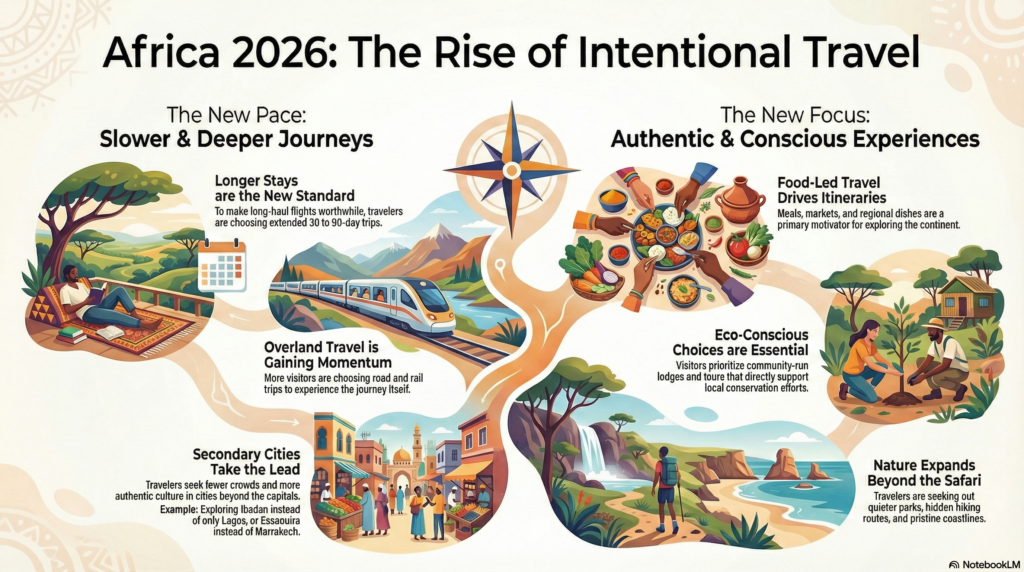
Rushing through four national parks in six days is increasingly giving way to slow travel. Discerning travelers now choose single-region base camps for seven to ten days, allowing daily life to unfold naturally.
Staying longer in one ecosystem reduces carbon-heavy domestic flights and deepens local engagement. It also unlocks opportunities for guided walking expeditions, as outlined in our breakdown of safari formats and walking safari guidelines.

Modern Rail Networks and Overland Corridors Gain Ground
Expanding railway infrastructure is creating scenic alternatives to domestic air travel. High-speed rail in Morocco and Standard Gauge Railway lines in East Africa offer smooth overland connections between major cultural centers.
These overland corridors lower overall trip emissions while providing sweeping window views of diverse rural terrains. Travelers can pair vibrant urban medinas with remote wildlife parks in a single seamless train journey.
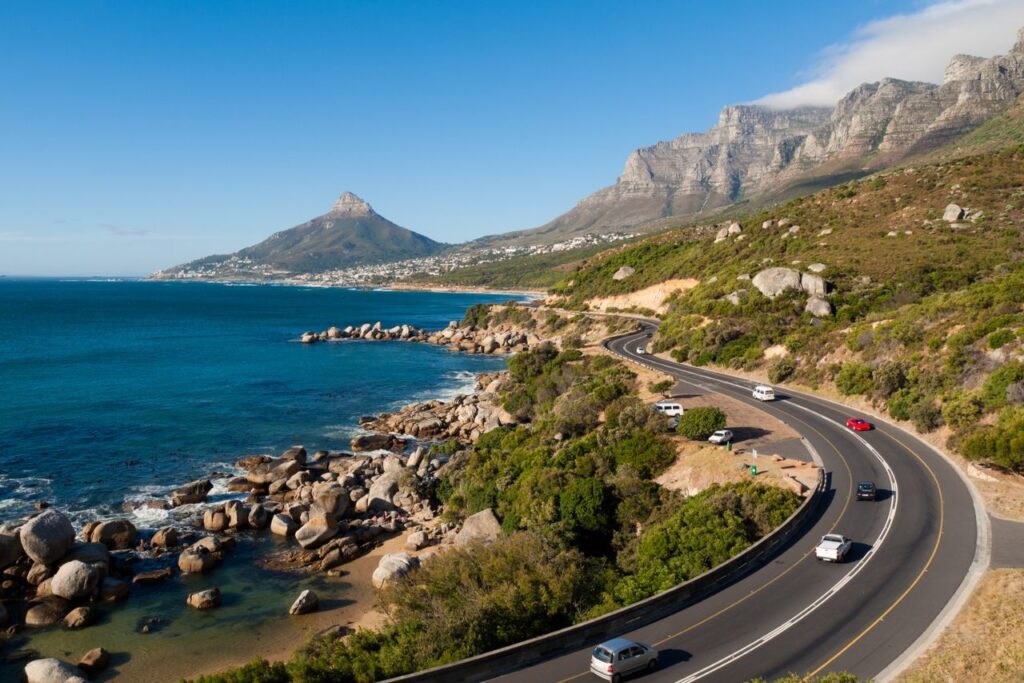
Secondary African Cities Take Center Stage
While primary metropolises like Nairobi, Cairo, and Johannesburg remain essential transit gateways, secondary cities are capturing independent traveler interest. Regional centers offer relaxed pacing, distinct architectural legacies, and vibrant arts scenes.
Cities such as Kumasi in Ghana, Gisenyi on Lake Kivu, and coastal island towns like those explored in our guide to fairytale historic settlements and island medinas showcase rich regional heritage without urban congestion.
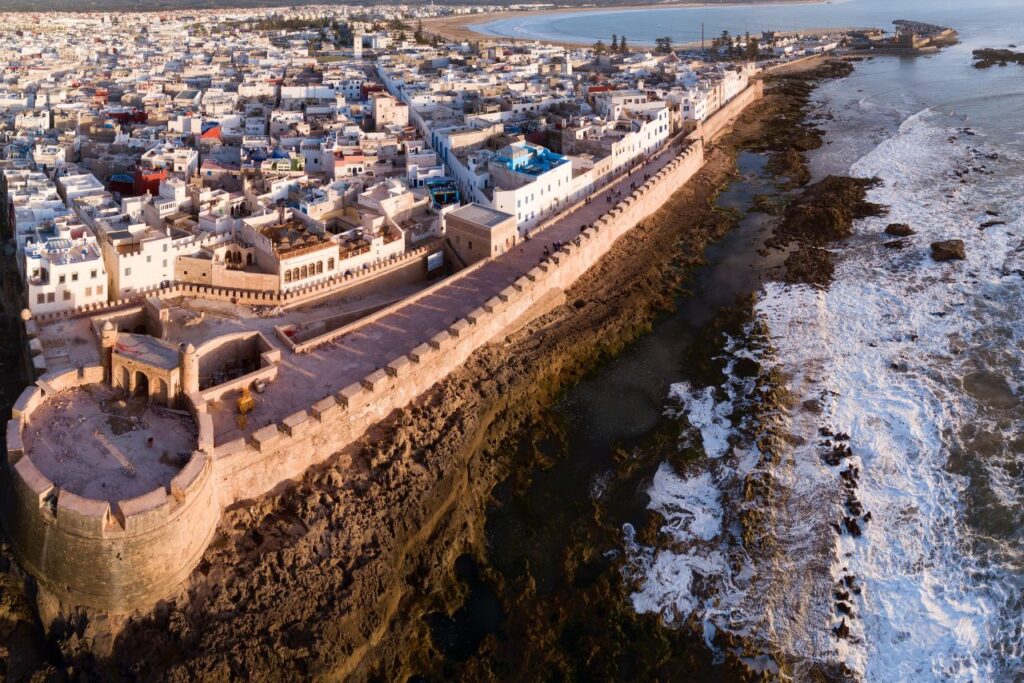
Eco-Conscious Tourism Shapes Conservation Lodges
Hospitality providers across the continent are moving beyond surface-level sustainability claims. Leading safari lodges now operate entirely on off-grid solar arrays with high-capacity battery storage systems.
Eliminating noisy diesel generators protects tranquil wildlife habitats while delivering silent luxury. Concession fees are increasingly channeled into community-managed trusts that fund local healthcare, education, and anti-poaching units.

AI and Digital Tools Enhance Expedition Planning
Digital expedition platforms and mobile booking tools are simplifying safari logistics. Travelers can now model complex multi-country transit schedules, visa protocols, and seasonal wildlife migrations with greater clarity.
According to aviation updates from the African Airlines Association, streamlined digital ticketing is improving cross-border connections. Real-time conservation apps also allow visitors to track park capacity and support ethical wildlife monitoring.
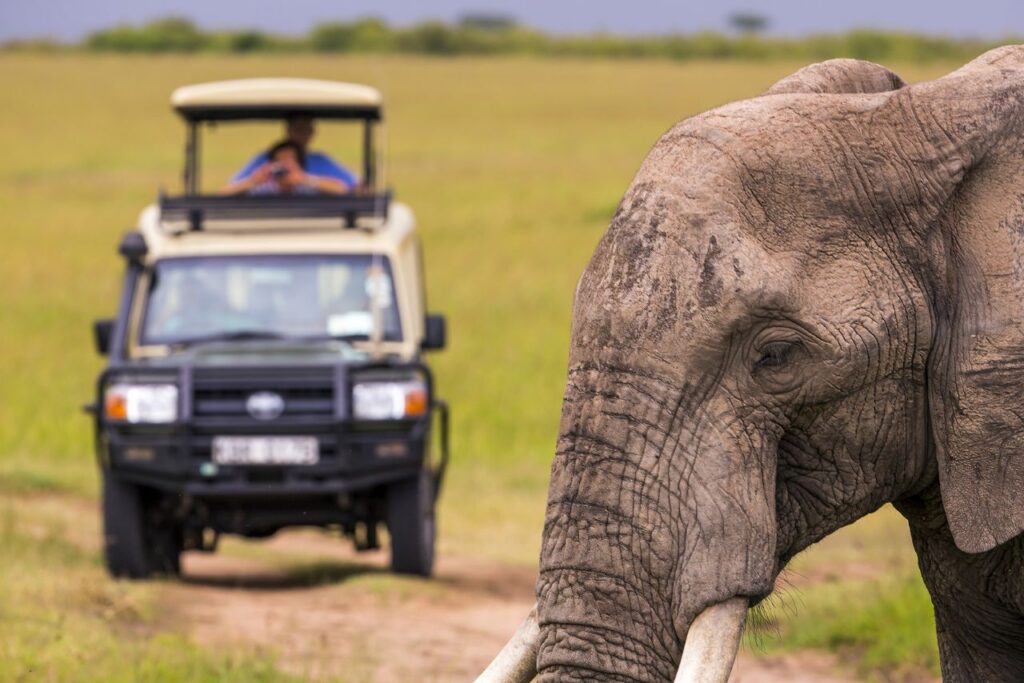
Dark-Sky Tourism and Nighttime Wilderness Exploration
Africa contains some of the world’s most pristine dark-sky preserves, offering exceptional stargazing and astrophotography. Sanctuaries certified by DarkSky International, such as the NamibRand Nature Reserve, provide unobstructed celestial views across desert horizons.
Guided night game drives and infrared spotlight walks reveal elusive nocturnal species, from aardvarks to leopard prowls. Exploring remote landscapes like the most incredible deserts in Africa under starlit skies adds an entirely new dimension to wildlife travel.

Remote Work and Nomad Visas Extend Stays in Nature
The global shift toward location-independent work has sparked dedicated nomad visa programs across several African nations. Remote professionals are combining productive workweeks with weekend safari and coastal excursions.
Low-latency satellite internet services like Starlink now provide reliable connectivity across remote bush camps. Reviewing our breakdown of digital nomad hubs and visa realities across Africa helps clarify monthly costs and tax rules.

Culinary Heritage and Regional Gastronomy Tours
Food-focused exploration is emerging as a primary motivator for cultural travelers. From traditional Ethiopian coffee ceremonies to Swahili coastal seafood feasts, regional dishes tell powerful stories of trade and heritage.
Travelers actively seek hands-on cooking workshops, organic spice farm tours, and indigenous foraging experiences. Exploring neighborhood street food culture offers an authentic window into local traditions.

Adventure Travel Expands Beyond Traditional Safaris
While classic savannah game drives remain popular, travelers are diversifying into active outdoor pursuits. Volcano trekking in the Virungas, multi-day desert dune hikes, and Atlantic coastal surfing are gaining widespread popularity.
These active pursuits distribute tourism revenue across diverse rural regions. Engaging with specialized local trekking guides ensures safe navigation while supporting community livelihoods.

Traveler Persona Matchmaker: Which Travel Shift Fits Your Journey?
Choosing the right travel approach depends on your primary travel style and logistical priorities:
- If you seek deep wildlife immersion without vehicle crowds: Prioritize 4- to 7-night stays in community conservancies offering guided walking safaris and night tracking.
- If you are a remote worker or creative professional: Choose eco-lodges equipped with low-latency satellite internet and solar battery backups in certified nomad visa hubs.
- If you love overland discovery and scenic vistas: Plan journeys along modernized rail corridors connecting historic medinas directly to mountain valleys.
- If you value authentic heritage and lower daily costs: Base yourself in secondary cultural cities and coastal fishing villages rather than primary capital transit hubs.
Macro Misconceptions vs. Ground Realities
Navigating modern African travel requires separating common travel myths from practical on-the-ground facts:
- Myth: Single visas cover the entire African continent.
Field Reality: While regional single visas like the East Africa Tourist Visa (Kenya, Uganda, Rwanda) and KAZA UniVisa (Zambia, Zimbabwe) streamline borders, most nations maintain independent visa or electronic travel authorization (ETA) portals. - Myth: Remote wilderness camps lack reliable communication.
Field Reality: Low-latency satellite internet networks now provide strong connectivity across remote safari camps, though severe tropical storms can cause brief intermittent disruptions. - Myth: Eco-conscious lodges are entirely cost-prohibitive.
Field Reality: Mid-tier community guesthouses and conservancy camps offer sustainable solar setups and fair-wage employment at accessible price points.
Essential Travel Quick-Reference
Key technical specifications and practical protocols to keep in mind when organizing your itinerary:
- Regional Single-Visa Corridors
- East Africa Tourist Visa ($100 across Kenya, Uganda, Rwanda) and KAZA UniVisa ($50 across Zambia & Zimbabwe for up to 30 days).
- High-Speed Rail Travel Times
- Morocco Al Boraq (Tangier to Casablanca in 2h 10m at 320 km/h); Tanzania SGR (Dar es Salaam to Dodoma in 3h 25m).
- Off-Grid Internet Latency
- Starlink satellite dishes in safari lodges deliver 50–220 Mbps download with 35–60ms latency, enabling high-definition video calls.
- Dark-Sky Certifications
- NamibRand Nature Reserve (Gold Tier International Dark Sky Reserve) with SQM light readings exceeding 21.8 mag/arcsec².





One Response
Perfect piece of work you have done, this site is really cool with superb info .