
Slide a crisp $100 bill under the glass at a downtown Dar es Salaam forex window today and you walk out holding roughly 265,000 to 268,000 Tanzanian Shillings. That thick stack easily buys three days of Swahili street plates alongside clean guesthouse beds.
Yet that exact same hundred-dollar note barely stretches past lunch once you step into Zanzibar ferries or Serengeti park gates. Tanzania runs on two separate price tracks, and knowing which bills belong in local shillings keeps your trip calm.
Converting Dollars Without Getting Hit by Note Haircuts
Official Bank of Tanzania reference quotes trade near 2,678 to 2,685 TZS per dollar, keeping local exchange markets far steadier than erratic cash windows elsewhere in East Africa. Even with a calm central bank anchor, the print year and crispness of your paper notes still decide your payout along Samora Avenue or Kariakoo.
Pristine $50 and $100 bills printed after 2009 command full downtown buying rates around 2,650 to 2,680 TZS per dollar. Smaller denominations tell a very different story.
Small bills suffer steep haircuts.
Hand a cashier $5, $10, or $20 notes, or anything torn and older than 2009, and clerks routinely drop the quote toward 1,500 to 2,400 TZS per dollar. Check every greenback under good light before leaving home, because counters inside Julius Nyerere International Airport also trim several percent off downtown rates.
| Amount Changed | Bank of Tanzania Mid (~2,679 TZS) | Dar es Salaam Bureau Cash | What It Covers Locally |
|---|---|---|---|
| 10,000 TZS (~$3.75 USD) | 10,000 TZS | Street Note | Two plates of chips mayai plus several short daladala hops |
| $20 USD (Small Bills) | ~53,580 TZS | ~42,000 to 48,000 TZS (discounted) | Evening street dinner for two or prepaid Vodacom data top-up |
| $50 USD (Crisp Post-2009) | ~133,950 TZS | ~132,500 to 134,000 TZS | Four SGR economy rail seats to Dodoma plus local rides |
| $100 USD (Crisp Post-2009) | ~267,900 TZS | ~265,000 to 268,000 TZS | Three full days of guesthouses, street meals, and city hops |
| $500 USD ($100 Bills) | ~1,339,500 TZS | ~1,325,000 to 1,340,000 TZS | Multi-island Stone Town boutique stay plus intercity rail travel |
If you withdraw shillings from a bank ATM instead of carrying paper dollars, decline any screen prompt asking to lock in your home currency. Always pick “Without Conversion” so your home card network settles near interbank pricing instead of adding an expensive machine markup.
Pick up a local mobile line on day one too, because Tanzanian shops rely heavily on M-Pesa alongside Tigo Pesa and paper cash. A bare Vodacom prepaid SIM costs 1,000 to 5,000 TZS inside city branches, whereas airport booths bundle tourist starter kits for 10,000 to 30,000 TZS.
Budget roughly 10,000 to 20,000 TZS for a generous 10 GB data bundle. Carry your physical passport at registration, since biometric fingerprint scans are required by law.
Stretching 268,000 Shillings Across Dar es Salaam
Mainland street life is where your converted shillings do heavy lifting. Breakfast starts cheap with warm coconut vitumbua rice cakes or fried mandazi pastries costing 200 to 500 TZS apiece beside spiced morning chai.
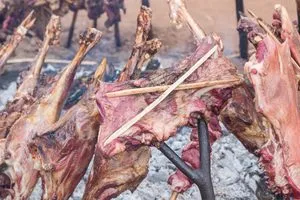
Around midday, neighborhood Mama Lishe kitchens spoon generous plates of rice mixed with beans and stewed beef for modest local prices. Evening roadside pans sizzle with chips mayai potato-and-egg omelettes at 1,500 to 3,000 TZS, backed by charcoal-grilled mishkaki skewers at 1,000 to 2,000 TZS per stick.
Those dishes sit right at the heart of wider East African street food, where a handful of small notes covers an entire day of hot meals. Moving across town stays equally gentle on your wallet when you choose the right ride.
Crowded blue-stripe daladala minibuses carry commuters between residential neighborhoods for 400 to 800 TZS per leg. When midday traffic stalls or heat wears you down, Bolt covers central Dar es Salaam and Arusha cleanly at 3,000 to 6,000 TZS for short hops or 10,000 to 25,000 TZS for cross-town and airport runs.
Simple en-suite guesthouses in downtown Dar es Salaam or Kariakoo run $15 to $40 (40,000 to 107,000 TZS) a night. Modern mid-range business hotels out in Mikocheni or Masaki step up to $60 to $130.
One unexpected bargain runs on brand-new steel rails.
Tanzania Railways Corporation operates electric Standard Gauge Railway departures through the TRC SGR booking portal, charging just 13,000 TZS (~$4.85) in Economy to Morogoro and 31,000 TZS (~$11.55) to Dodoma. Keep your original passport handy for ticket checks, and reach Magufuli Station two full hours early to clear security smoothly.
Crossing to Stone Town and Forodhani After Dark
Stepping onto the ferry wharf for Zanzibar marks the exact point where dollar billing returns to the foreground. Non-resident one-way fares on Azam Marine and Kilimanjaro Fast Ferries stay pegged strictly in USD, starting at $35 Economy or $40 Business before climbing to $60 VIP and $100 Royal.
Buy your seat straight from the terminal window or carrier website rather than reseller portals that add booking markups. Once the boat docks in Zanzibar, app rides behave very differently than on the mainland.
Leave Bolt closed on the island.
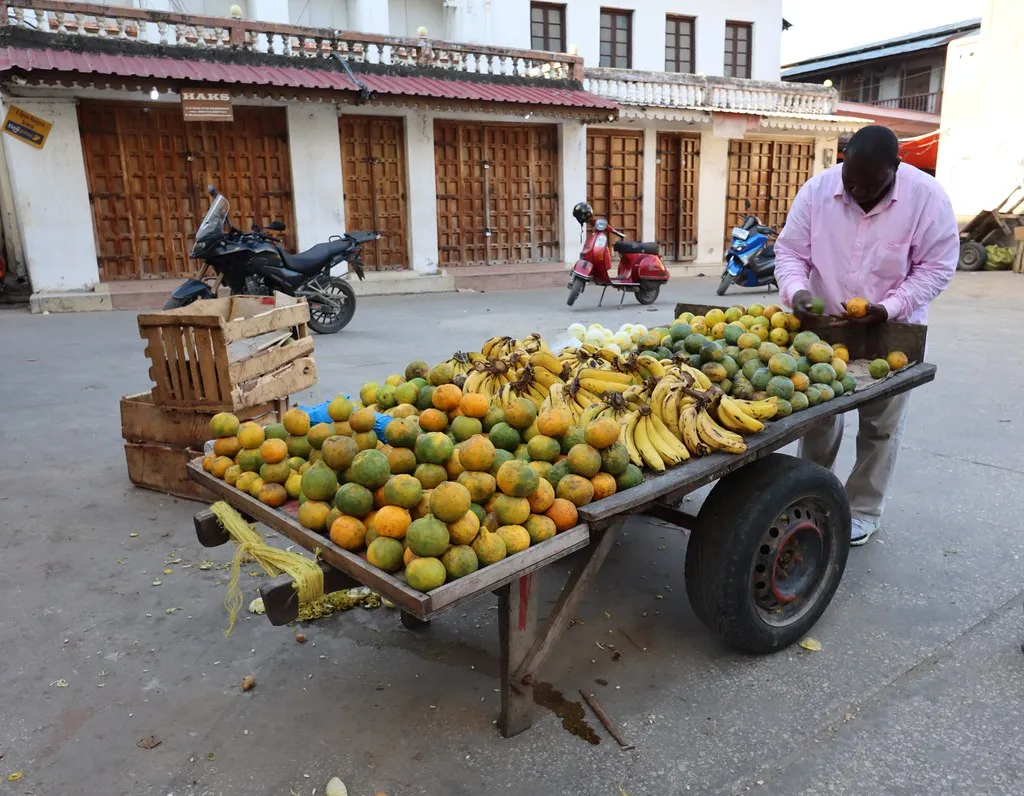
Ride-hailing apps run unevenly around Stone Town due to local taxi union rules, so negotiate your fixed cab fare before your bags enter the boot. Inside the coral-stone lanes, however, shilling prices immediately feel friendly again.
Simple backpacker guesthouses inside restored Omani buildings start around $10 to $35 (27,000 to 94,000 TZS) per night, whereas historic courtyard hotels with pools run $50 to $120.
At dusk, skip tourist restaurants and walk straight to Forodhani Gardens on the waterfront—just remember how we framed the vibe in our Diani Beach versus Zanzibar comparison.
Freshly griddled Zanzibar pizza sells for 5,000 to 10,000 TZS alongside pressed sugarcane juice with ginger at 1,000 to 2,000 TZS, while steaming bowls of spiced urojo soup land between 2,000 and 5,000 TZS. Charcoal-grilled fish or octopus skewers cost 5,000 to 15,000 TZS, whereas whole lobster platters jump to 25,000 to 50,000+ TZS by weight.
Lock your total price before anything hits the grill.
Point at each skewer so the vendor confirms the exact shilling bill upfront. Picking crowded stands with quick turnover also keeps seafood coming off fresh and hot.
| Everyday Item or Ride | Where You Pay | Typical Price (TZS) | Approx. USD (~2,680 TZS) |
|---|---|---|---|
| Mandazi or Vitumbua Breakfast Pastry | Roadside stalls nationwide | 200 – 500 TZS | $0.08 – $0.20 |
| Daladala Short Urban Minibus Hop | Dar es Salaam & Arusha | 400 – 800 TZS | $0.15 – $0.30 |
| Grilled Beef or Goat Mishkaki | Street corners & Forodhani | 1,000 – 2,000 TZS | $0.35 – $0.75 |
| Chips Mayai (Potato & Egg Omelette) | Mainland street kitchens | 1,500 – 3,000 TZS | $0.55 – $1.10 |
| Urojo (Spiced Zanzibar Mix Bowl) | Stone Town & Dar corners | 2,000 – 5,000 TZS | $0.75 – $1.85 |
| Bolt Ride Across Central Neighborhoods | Dar es Salaam & Arusha | 3,000 – 6,000 TZS | $1.10 – $2.25 |
| Zanzibar Pizza on the Hot Griddle | Forodhani Night Market | 5,000 – 10,000 TZS | $1.85 – $3.75 |
| Vodacom Prepaid SIM + 10 GB Data | Downtown brand shops | 11,000 – 25,000 TZS | $4.10 – $9.35 |
| TRC SGR Electric Train (Dar to Morogoro) | Magufuli Station / online | 13,000 TZS | ~$4.85 |
| TRC SGR Electric Train (Dar to Dodoma) | Magufuli Station / online | 31,000 TZS | ~$11.55 |
| Clean Budget Guesthouse Room | Dar es Salaam / Stone Town | 27,000 – 107,000 TZS | $10 – $40 |
| Mid-Range Swahili Boutique Hotel | Stone Town / Mikocheni | 134,000 – 350,000 TZS | $50 – $130 |
Where Dollar-Priced Entry Rules Outpace Local Cash
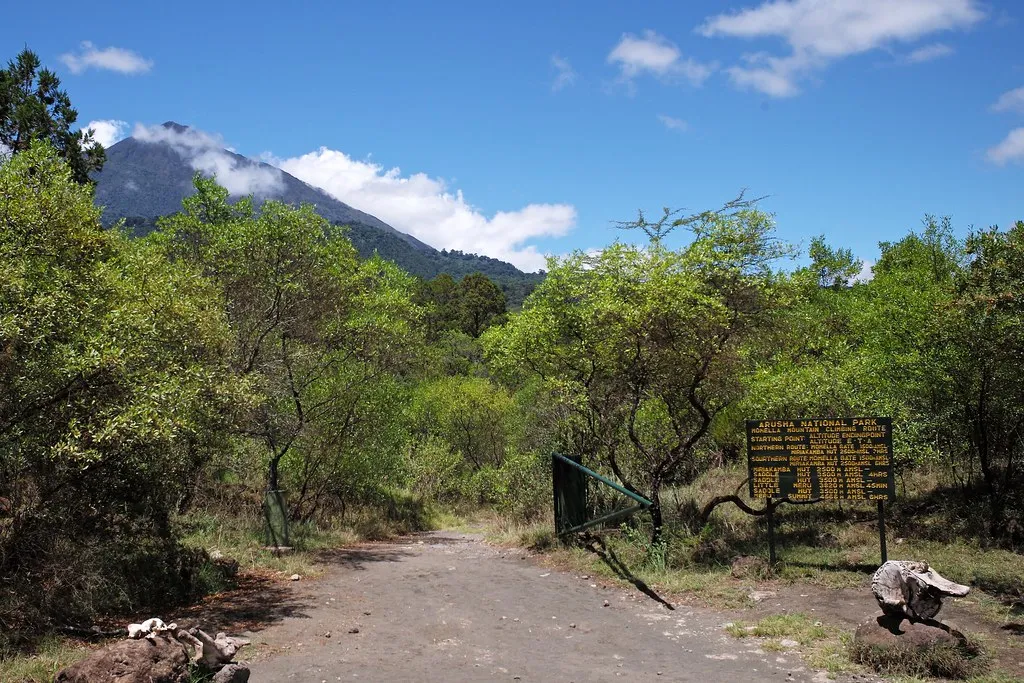
Back on the northern mainland circuit, Arusha softens your landing before wildlife conservation rules rewrite the math.
Clean backpacker lodges and guesthouses around Arusha cost $10 to $40 (27,000 to 110,000 TZS) a night, making the city almost as affordable as Dar es Salaam for food and short rides.
Then statutory tourism rules enter the frame.
International visitors entering Tanzania now face mandatory inbound travel insurance costing $44 USD per adult for stays up to 92 days—bought via the official Visit Zanzibar portal through ZIC if flying into Zanzibar first, or via NIC when landing on the mainland.
Buying it once at your first point of entry covers travel between Zanzibar and mainland Tanzania, though you should still keep your private medical policy active because the state policy only covers basic emergencies.
Add tourist e-Visa charges—$50 single-entry for most UK, EU, Canadian, and Australian citizens, and $100 for US passport holders—and over half of your first $100 note disappears at immigration before your first street meal.
- Mandatory Inbound Travel Insurance
- $44 USD per non-resident adult (valid up to 92 days via NIC on the mainland or ZIC when landing directly in Zanzibar).
- Tanzania Tourist e-Visa
- $50 USD single-entry for most UK, EU, Canadian, and Australian passports; $100 USD mandatory multiple-entry for US citizens.
- Azam Fast Ferry (Dar to Zanzibar)
- $35 USD Economy, $40 USD Business, $60 USD VIP, and $100 USD Royal one-way for non-residents buying directly at the terminal.
- TANAPA Serengeti Gate Fee
- ~$82.60 to $83 USD per adult every 24 hours (including 18% VAT), collected cashless by bank card at park gates.
Safari gates sit in an entirely separate price universe from urban street markets.
Conservation entry into Serengeti National Park costs roughly $82.60 to $83 USD per adult every 24 hours including 18% VAT, paid strictly cashless by card at the gate or bundled inside tour invoices.
Our breakdown of African safari budgets from overland trucks to fly-in lodges shows how quickly 4×4 vehicle rentals, guide wages, and park fees dwarf everyday city living.
Compared with Nairobi, where what $100 buys across Kenya also splits sharply between matatu street life and national park gates, Tanzania gives urban travelers generous shilling buying power once statutory dollar bills are settled.
How Far $100 Actually Stretches by Travel Style

A crisp hundred-dollar note stretches remarkably far or vanishes by midday depending on how you split your nights and transfers. Three grounded travel profiles show how the numbers land on the ground.
Independent City Explorer in Dar and Stone Town (3 Days)
Combine $15 to $25 guesthouses with daladala buses, Mama Lishe stews, and Forodhani street skewers. At 268,000 TZS, your $100 covers roughly three full days plus a local Vodacom SIM.
Coast and Electric Rail Traveler (1 to 1.5 Days)
Pair an Azam $35 Economy ferry crossing with a $55 Stone Town boutique room or SGR rail leg, and you still keep enough shillings in reserve for Bolt rides and evening seafood. One relaxed full day fits comfortably inside that cushion.
Northern Safari Circuit Visitor (Under 1 Day)
Between Arusha lodges at $80 to $200 per night and an $83 Serengeti 24-hour conservation gate pass, $100 functions strictly as pocket shillings for tips and cold drinks. Keep it ready alongside our Africa $100 purchasing power hub before crossing borders.