If you tell friends you are booking a flight to Monrovia, you will almost certainly be met with a long silence or a concerned look. Most people outside the region only know Liberia through twenty-year-old war documentaries or sensationalized health headlines. You’re thinking right to wonder what daily life actually feels like on the ground today.
What I can tell you is that the second you step out into the sea breeze at Mamba Point, Monrovia disarms you completely. This is not an over-curated, plastic resort destination. It is a proud, soulful coastal capital where crumbling Afro-American settler architecture meets booming Afrobeats lounges, where yellow keke tricycles buzz past Atlantic surf, and where an afternoon spent eating grilled red snapper by the waves feels like a warm personal welcome.
It asks you to slow down. That changes everything.
Providence Island: Where the Reconnection Began
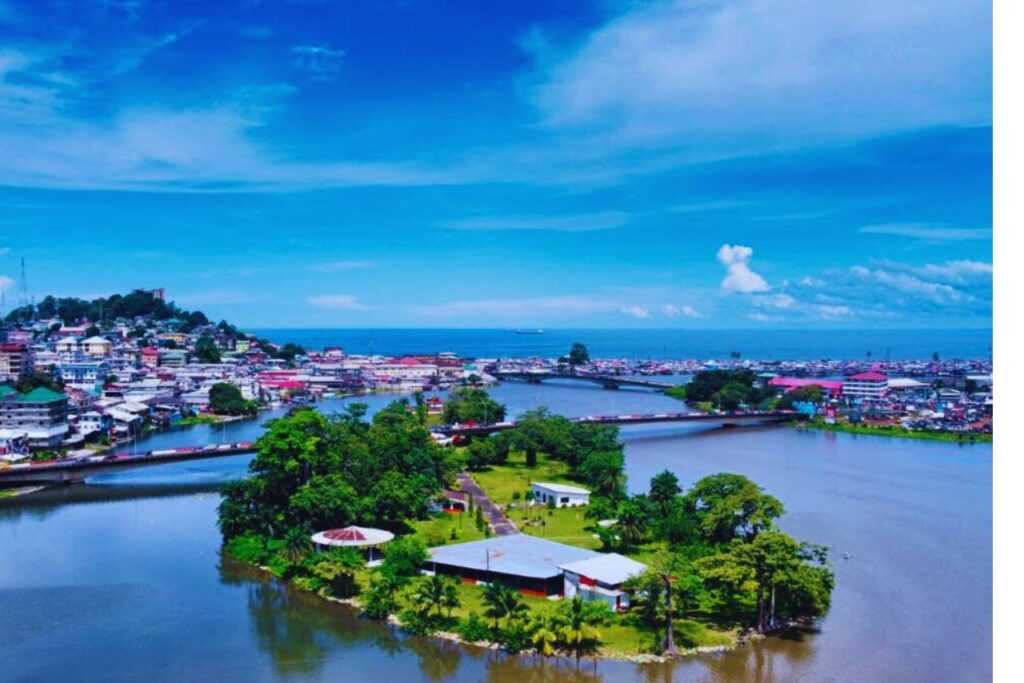
Photo source: MCCTV
To understand Monrovia, you have to stand where the modern nation began. Providence Island sits quietly across the downtown waterfront, sheltered by mangroves and the Mesurado River. It was here in 1822 that the first freed African-Americans stepped ashore after crossing the Atlantic to build a new life.
The island today is a calm, shaded retreat of stone memorials, ancient cotton trees, and sweeping views back toward the city skyline. Visit early in the morning. The Atlantic air is cool and smells of salt and tidal earth. There is no artificial tourist gloss here—just raw historical weight and genuine quiet. Take your time. Bring drinking water.
The Liberia National Museum: Carved Memory and Living Art
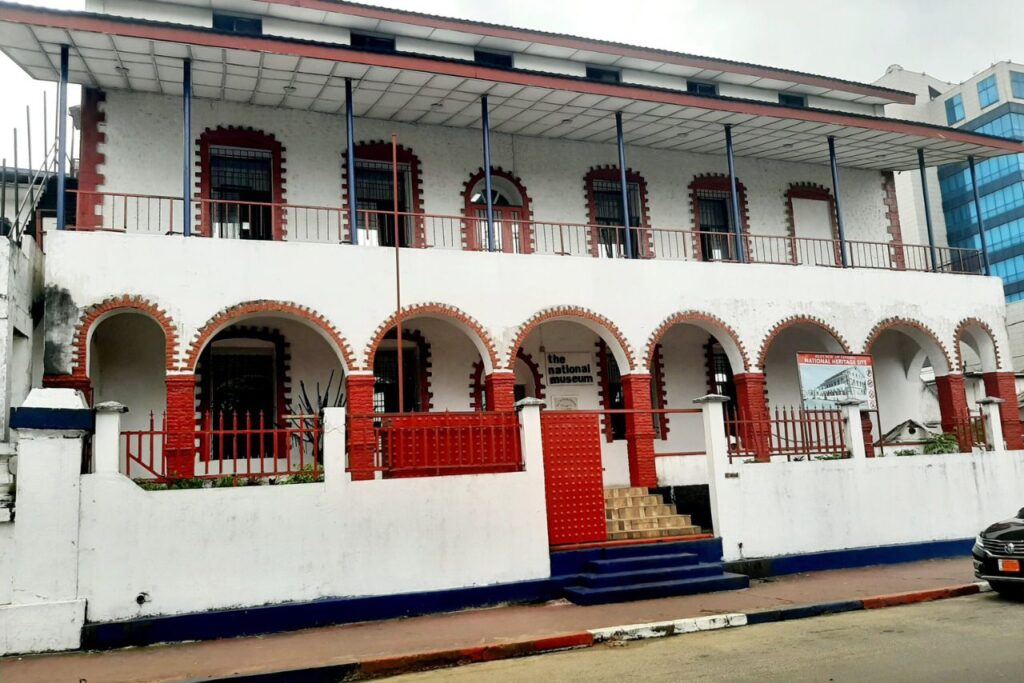
Photo source: Museum explorer
A short walk inland brings you to Broad Street, where the three-story Liberia National Museum occupies one of the city’s historic colonial-style buildings. Inside, the exhibits trace the complex tapestry of Liberia’s sixteen indigenous ethnic groups alongside the settler migration.
You will find ceremonial masks, century-old treaties, musical instruments, and candid photographic records documenting the country’s recent resilience. If you are lucky, you might walk in during an afternoon rehearsal of traditional drummers on the ground floor. Entrance is modest, the guides speak with deep pride, and you leave with a grounded understanding of how this republic pieced itself back together.
Coastal Rhythm: From Mamba Point to Thinkers Beach
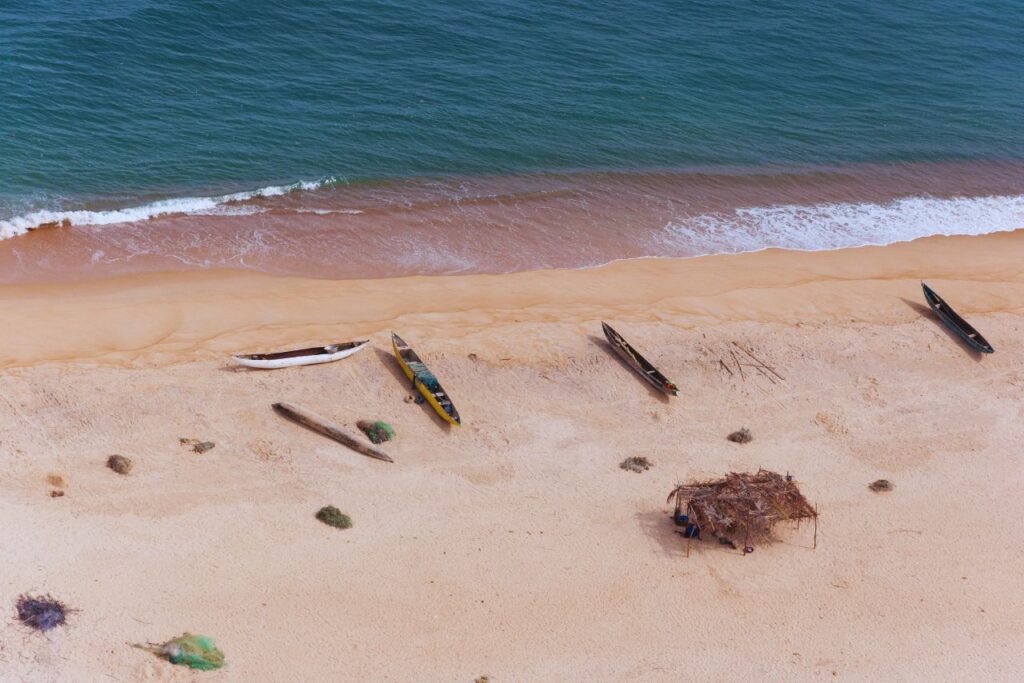
Water shapes everything here. Monrovia sits on a peninsula flanked by coastal lagoons, mangrove estuaries, and the open Atlantic Ocean. Mamba Point Beach, tucked just beneath the diplomatic quarter, is where the city comes to breathe. At dawn, local fishermen launch hand-carved wooden canoes through the breaking surf; by late afternoon, the sand fills with neighborhood football matches and families walking along the tide.
If you want wilder Atlantic coastline, head east along the Robertsfield Highway toward Thinkers Beach or CeCe Beach. Here, the crowds thin out, palm trees lean over golden sand, and open-air bamboo shacks serve chilled coconuts and grilled pepper fish. A practical word on swimming: the Atlantic undertow along this coast is formidable. Always check with local lifeguards or vendors before diving in. Sometimes the smartest move is simply wading in the shallows with a cold drink.
Waterside Market: The Raw Heartbeat of the City
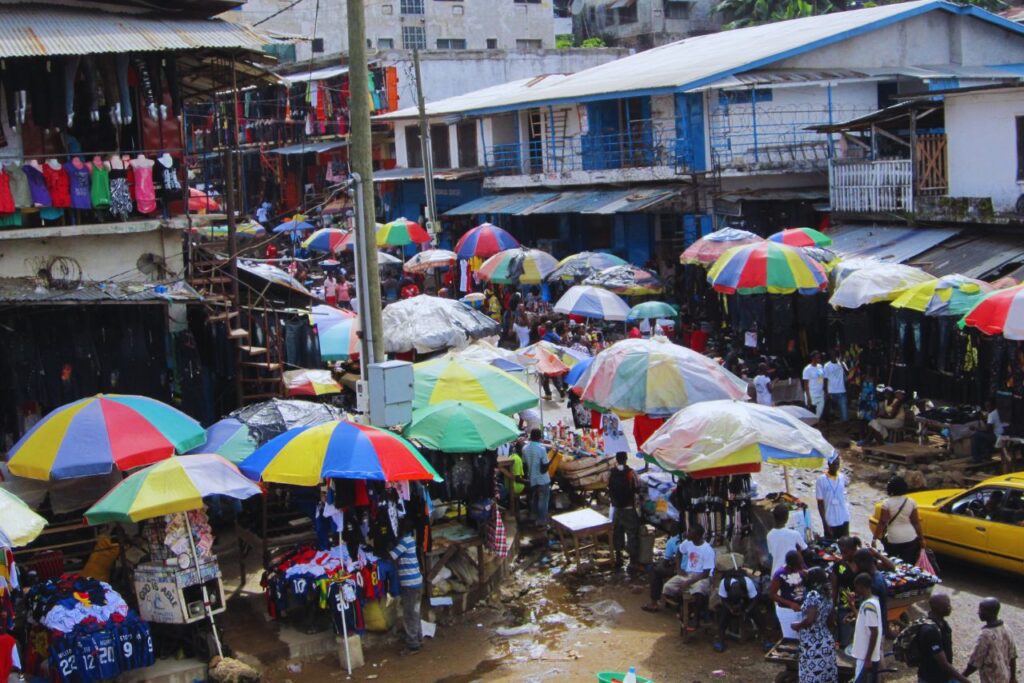
Photo source: liberiana
If you want to experience Monrovia at full volume, plunge into Waterside Market. Sprawling beneath the Gabriel Tucker Bridge, this is the commercial engine of the capital. Piles of fiery habanero peppers and fresh ginger sit next to bolts of vibrant country cloth, handmade leather sandals, and towers of sweet pineapples.
It can feel overwhelming for the first five minutes. Keep your phone in your front pocket, wear sturdy walking shoes, and engage with a smile. Bargaining is expected, but keep it light and good-natured. Stop by a wooden bench to try warm cassava bread straight from the griddle or fresh fried plantain chips. The market is loud, friendly, and utterly unforgettable.
READ ALSO: Freetown Travel Guide (Sierra Leone): History, Food, and Island Hopping
Monkey Island: Chimpanzee Sanctuaries in the Mangroves
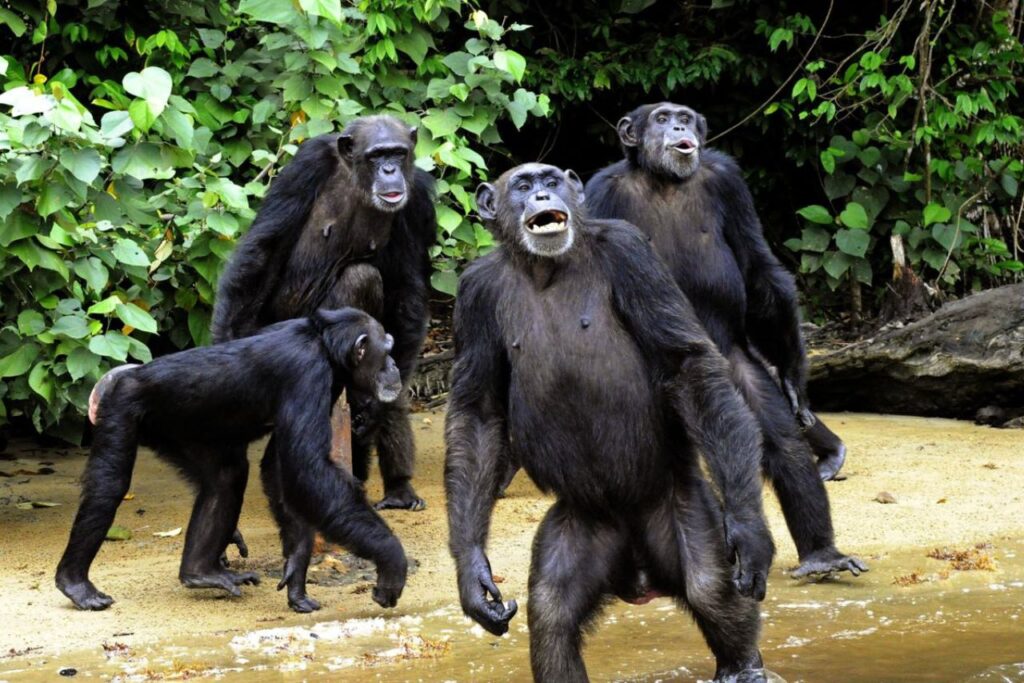
Photo source: atlasobscura
Just outside the city along the Farmington River lies one of West Africa’s most remarkable wildlife stories. Monkey Island is a chain of six mangrove islands that serve as an open-air sanctuary for chimpanzees retired from biomedical research labs decades ago.
Because the chimpanzees live freely across the islands, you do not walk among them. Instead, you take a motorized wooden boat with local caretakers who have looked after these animals for years. As your boat glides toward the shoreline, the chimpanzees emerge from the forest canopy to greet the caretakers and receive fresh fruit. It is a poignant, humbling reminder of human responsibility and wildlife care. You will need to arrange a trusted local driver and boatman in advance from Monrovia.
The Ducor Hotel: Sunset Views Above the Peninsula
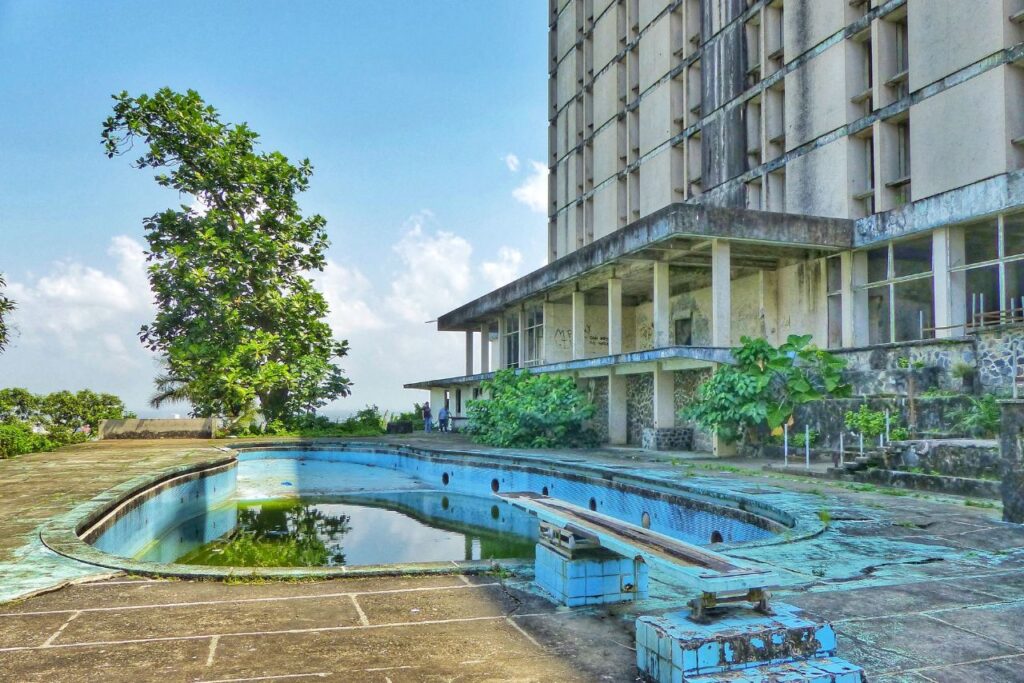
Photo source: whirled-away
Perched high atop Snapper Hill overlooking downtown Monrovia, the Ducor Palace Hotel was once one of the grandest luxury destinations in West Africa. Opened in 1960, it welcomed presidents, international diplomats, and celebrities to its Olympic-sized pool and rooftop lounge before closing during the civil conflict.
Today, the concrete shell stands as a haunting, majestic open-air monument. A small gate fee to local security lets you walk up to the old pool deck and terraces. The 360-degree panorama of the Atlantic Ocean, the sprawling city rooftops, and the Mesurado River mouth at sunset is unmatched anywhere in the country. It is quiet, breezy, and deeply moving.
Nearby on Broad Street, visit the historic Sacred Heart Cathedral, celebrated for its quiet courtyards and graceful brick arches. If you are in town when the national football team or a local league plays at the Antoinette Tubman Stadium, grab a ticket. The drumming, singing, and pure community joy in the stands will be one of the highlights of your entire trip.
Libassa Wildlife Sanctuary: Forest Rescues Along the South Coast
Located roughly an hour southeast of Monrovia along the coast, Libassa Wildlife Sanctuary is Liberia’s premier rescue center for native wildlife. Set inside a lush coastal tropical forest, the sanctuary cares for rescued pangolins, dwarf crocodiles, crowned monkeys, and forest antelopes confiscated from the illegal pet trade.
Knowledgeable guides walk you along raised wooden boardwalks beneath towering jungle trees, explaining the rehabilitation process and how animals are released back into protected national parks. Visiting supports genuine grassroots conservation, and the attached eco-lodge offers one of the best peaceful weekend retreats in the country.
READ ALSO: Lomé City Guide (Togo): Beaches, Markets, and Traditional Vibes
What to Eat: Cassava Gravy, Palm Butter & Atlantic Seafood
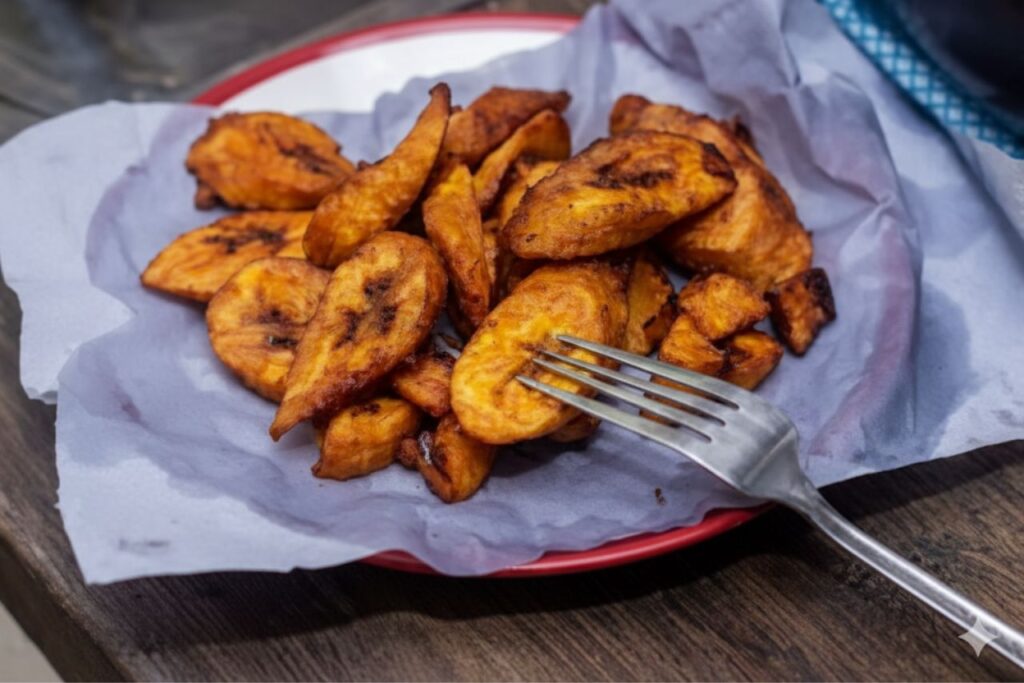
Photo source: enjoyliberia
Liberian cuisine is rich, comforting, and packed with bold flavor. At its heart are slow-simmered sauces cooked with habanero chili, smoked fish, and ginger, served over mounds of steaming country rice or smooth pounded cassava fufu.
Three signature dishes belong on every traveler’s table:
- Palm Butter Soup: A silky, intensely flavorful stew extracted from boiled palm nuts, simmered with smoked crab, fish, and beef.
- Cassava Leaf Gravy: Tender cassava greens pounded and simmered with red palm oil, habanero peppers, and shredded chicken or dried fish.
- Liberian Jollof Rice: Unlike Nigerian or Ghanaian versions, Liberian jollof features a darker, rich tomato base often packed with mixed vegetables, shredded dried fish, and sweet fried plantains on the side.
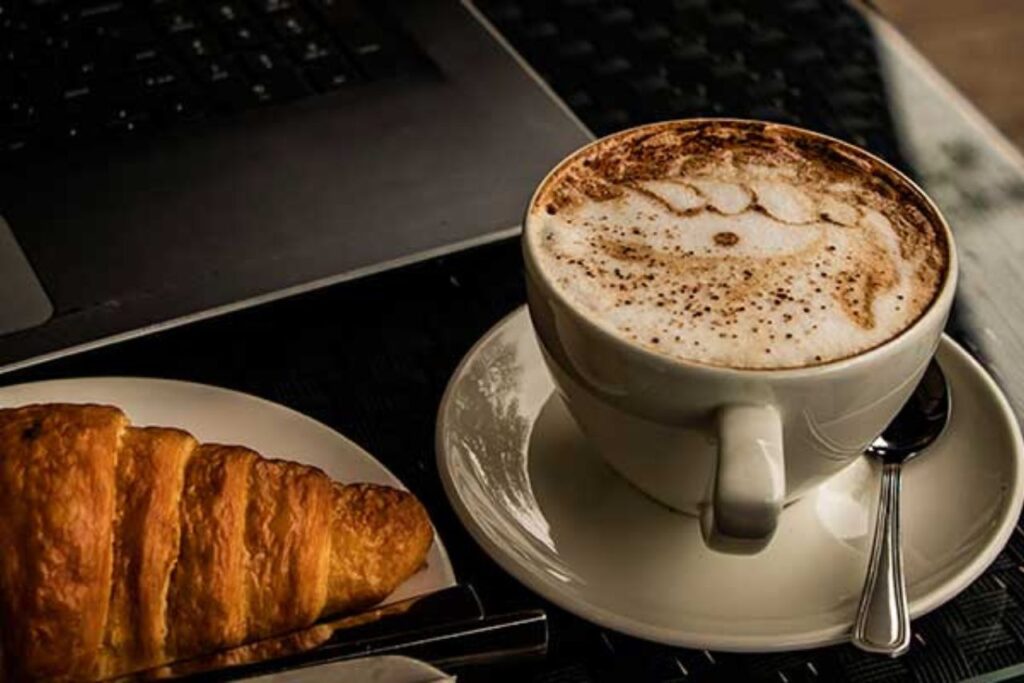
Photo source: mambapointhotel
For sit-down dining, sink into the restaurants around Sinkor and Mamba Point. Evelyn’s Restaurant is legendary for authentic, homestyle Liberian dishes cooked fresh daily. For beachside evenings, order a platter of whole grilled grouper seasoned with country pepper and lime at the open-air beachfront cafes along Thinkers Beach. Cold Club Beer in hand, warm Atlantic breeze on your face—this is where Monrovia really shines.
READ ALSO: Where to Go in Africa in 2026
Where to Stay and Getting Around in Reality
Monrovia’s hotel scene is straightforward once you understand the neighborhoods. For convenience, safety, and coastal ocean views, most international travelers base themselves in either Mamba Point or Sinkor.
Mid-range guest houses such as Miss Emily’s Place offer clean, friendly stays starting around $60 to $75 per night. If you want full-service amenities, backup power, and swimming pools, established hotels like The Cape Hotel, Royal Grand Hotel, or the Mamba Point Hotel operate in the $180 to $220 range. Book well ahead if you are traveling during the dry season between November and February.
For getting around the city:
- Yellow Kekes: These bright yellow three-wheeled tricycles are the quickest way to navigate downtown traffic for short hops. Agree on the fare before hopping in.
- Private Taxis: For evening dinners or day trips to Monkey Island and Libassa, hire a dedicated private car and driver through your hotel. Expect to pay $60 to $100 for a full day.
- Dual Currency: Liberia operates on both US Dollars and Liberian Dollars (LRD). Carry small US bills ($1, $5, $10) for hotels and larger restaurants, and keep a stash of Liberian Dollars for street food, fruit stalls, and keke rides.
- Airport Transfer: Roberts International Airport (ROB) is located roughly 50 kilometers (31 miles) southeast of Monrovia. The drive takes 1 to 1.5 hours depending on traffic. Always arrange your airport pickup in advance through your lodge.
The Part of Monrovia You Take Home
Monrovia does not try to impress you with glossy theme parks or synchronized fountains. It offers something much rarer: a raw, honest, and profoundly resilient human spirit. In an era where so many world travel destinations feel increasingly identical, Liberia’s capital remains completely itself.
Give it time. Walk the coastal sands, listen to the afternoon music echoing from open storefronts, and share a table with locals over pepper soup. You will arrive with questions, but you will leave with deep respect and friendships you never expected to find.