Spend ten days on a lodge circuit in East Africa and you might assume everyone eats pasta buffets at sunset. Walk onto a smoky corner outside a Kenyan butchery or a hot pan in Kampala and that assumption ends in thirty seconds.
The buffet is built for transit schedules. Daily life happens over charcoal embers.
Knowing what locals order turns three guessing games a day into the easiest highlight of your trip. You also keep half your food budget in your pocket.
This field guide walks through street prices, ordering habits, and unspoken table rules from Nairobi and Stone Town to Addis Ababa and Kampala.
Kenya: Butcher-Counter Nyama Choma and Kibanda Lunches
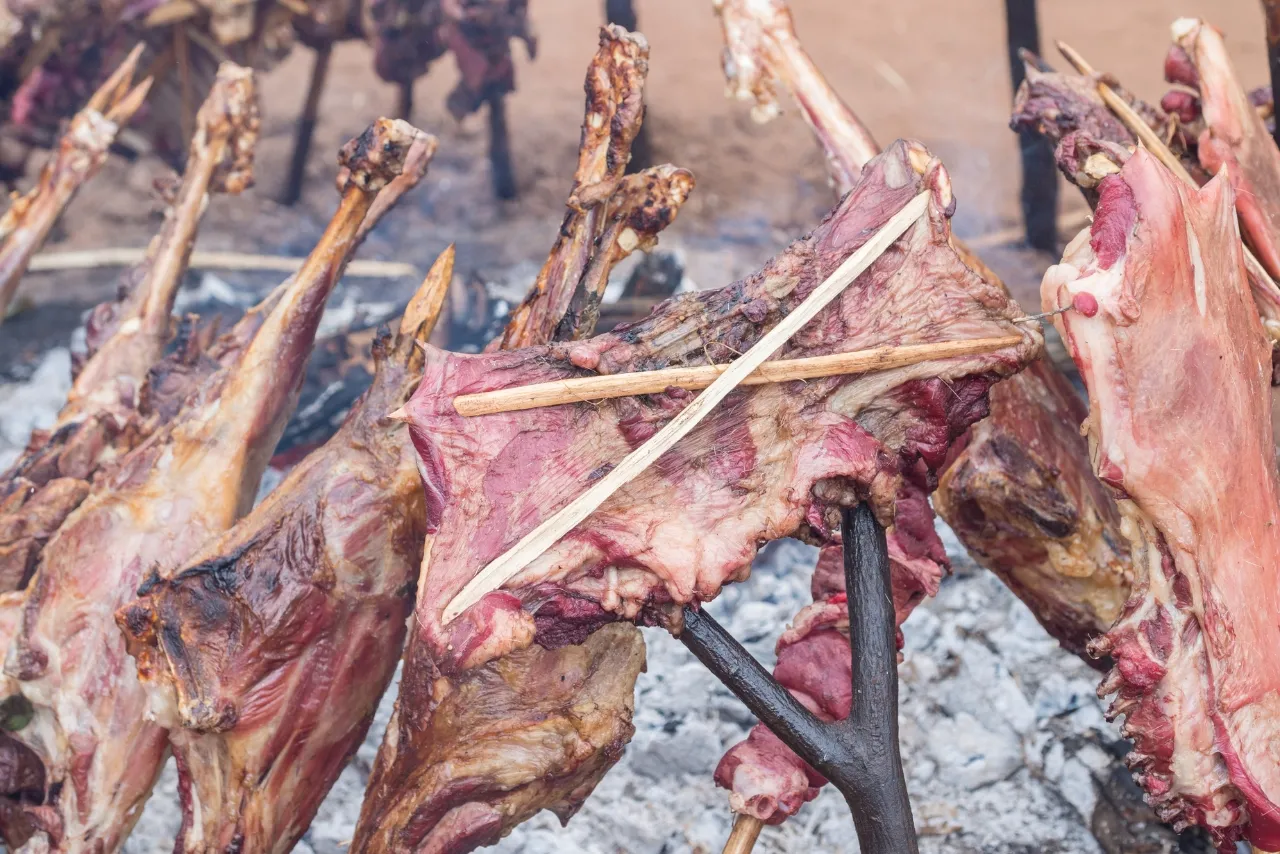
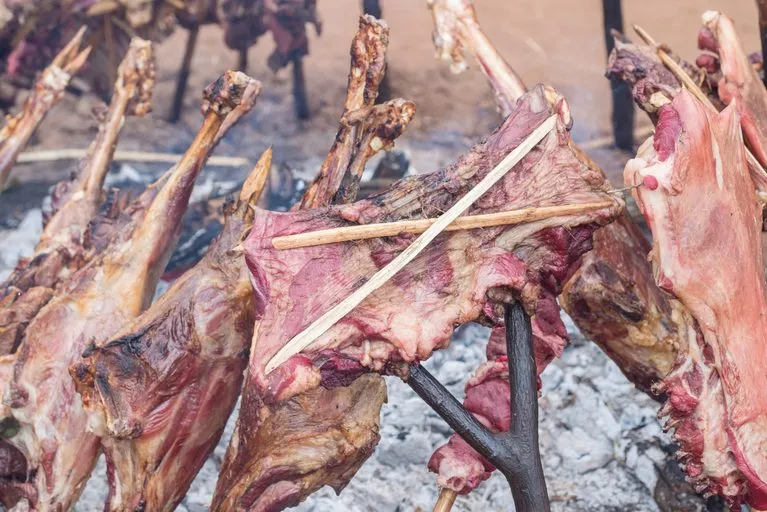
Kenyan dining revolves around meat roasted slowly over acacia charcoal. Even so, the ritual starts at the butcher counter rather than a printed menu.
At neighborhood institutions like Njuguna’s in Westlands, Nairobi’s downtown City Market, or weekend joints along Kamakis, you point to raw goat ribs or beef shoulder hanging on the hook. The butcher weighs your cut, asks how much salt you want, and sends it onto the coals.
The grill never rushes.
Proper nyama choma takes forty-five to sixty minutes over open fire. Order a cold drink and hot samosas while you wait.
Seasoned Nairobi diners watch out for two clear red flags. Suspiciously cheap choma near transit stages can turn into a meat-substitution gamble where you pay for goat and get something tougher.
Wrap the meat in foil or greaseproof paper and you also ruin the smoke bark. Eat it straight off the wooden chopping board instead.
Plan on KES 500 to KES 1,200 ($4 to $9 USD) per kilogram at local butcheries. Expat-oriented grills around Nairobi charge KES 1,500 to KES 3,000+ ($12 to $23+) per plate, while showcase rooms like Carnivore run KES 2,500 to KES 4,000+ per person.
Your roast meat arrives alongside warm maize ugali and fresh tomato-onion kachumbari. Plenty of locals also pair Kenyan-style spiced pilau or flaky layered chapati with sukuma wiki greens right beside the grill.
Weekday office workers rarely spend choma money at lunch. Most duck into an informal neighborhood kibanda, where KES 150 to KES 300 ($1.15 to $2.30 USD) buys a plate of ugali or chapati ladled with beef wet fry or coconut ndengu lentils, paid in seconds via M-Pesa.
Smoke thickens again after 5 PM outside neighborhood butcheries when evening mutura comes off the grate. This spiced Kenyan blood sausage costs just KES 20 to KES 50 ($0.15 to $0.40 USD) per chopped portion, and high foot traffic is your best freshness cue — check our first-time Nairobi street and neighborhood tips to time your evening stops cleanly.
Zanzibar and the Swahili Coast: Pilau and Reading Forodhani
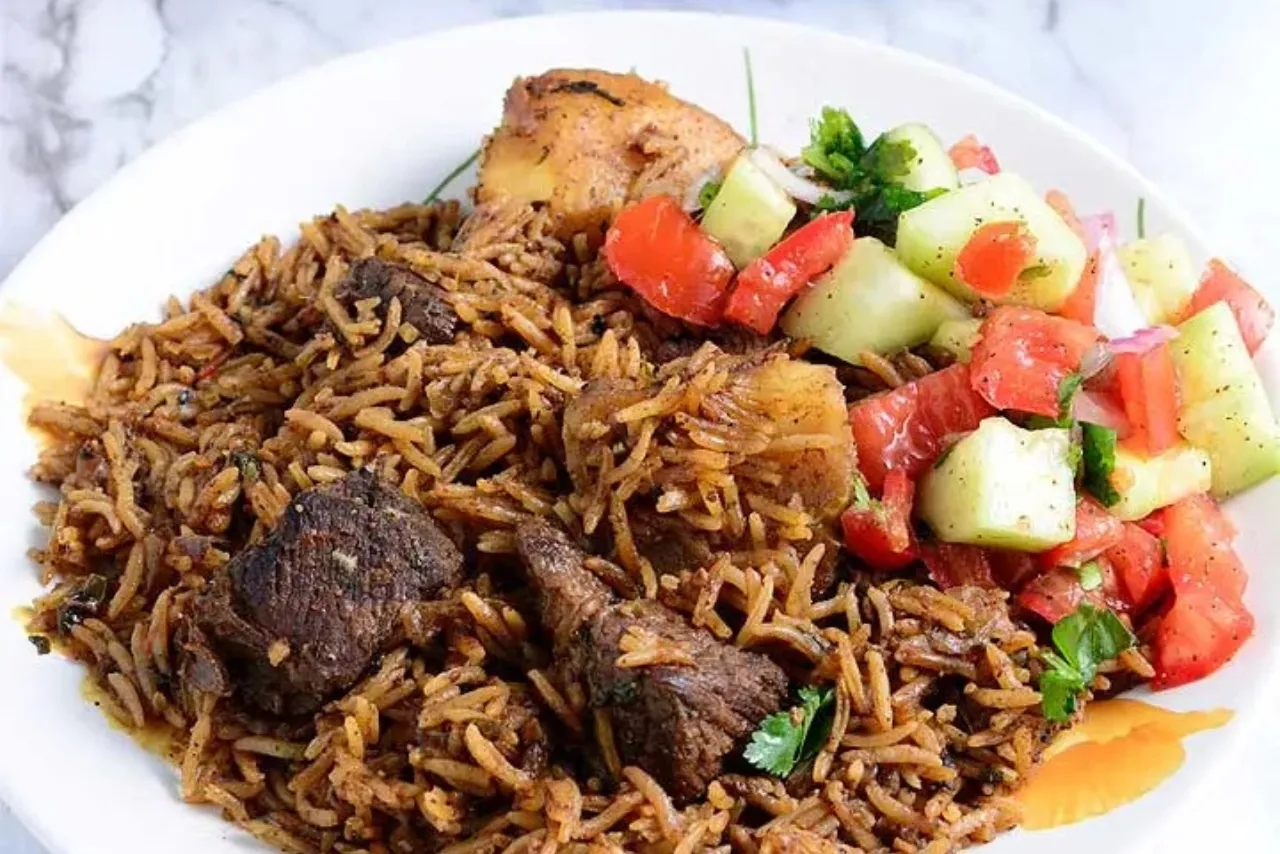
Drop down to the Indian Ocean coast and plain woodsmoke gives way to whole cloves, cardamom, cinnamon bark, and fresh coconut milk. Tanzanian pilau cooks fragrant basmati rice with tender beef or chicken, tasting closer to coastal biryani than highland fare.
Every sunset in Stone Town draws crowds toward Forodhani Gardens by the sea wall. The waterfront scene looks lively, though veteran coastal travelers warn against ordering blindly.
Skip pre-cooked skewers sitting cold under heat lamps. Walk past aggressive touts, follow Zanzibari families, and order strictly from pans bubbling fresh.
Fresh mishkaki beef skewers cost TZS 1,000 to TZS 2,000 ($0.40 to $0.80 USD) apiece. A savory or sweet folded Zanzibar Pizza griddled live runs TZS 5,000 to TZS 10,000 ($2 to $4 USD).
Eat that Zanzibar Pizza right beside the cart. Carry it back to your hotel and the steam turns crisp dough limp in ten minutes.
Full octopus, prawn, or spiced pilau plates at the night market jump to TZS 10,000 to TZS 25,000+ ($4 to $10+ USD). Agree on your exact total in shillings before seafood touches the grates.
You get sharper flavor and zero haggling two alleys back near Darajani Market. Order Urojo, known locally as Zanzibar Mix, a tangy turmeric-and-mango broth loaded with crisp chickpea bhajias, boiled potato, chutneys, and a sliced egg for TZS 1,000 to TZS 3,000 ($0.40 to $1.20 USD) — easily paired with the coastal routes in our Diani Beach and Zanzibar comparison.
Ethiopia: Pure Teff Injera Beyond the Tourist Platter
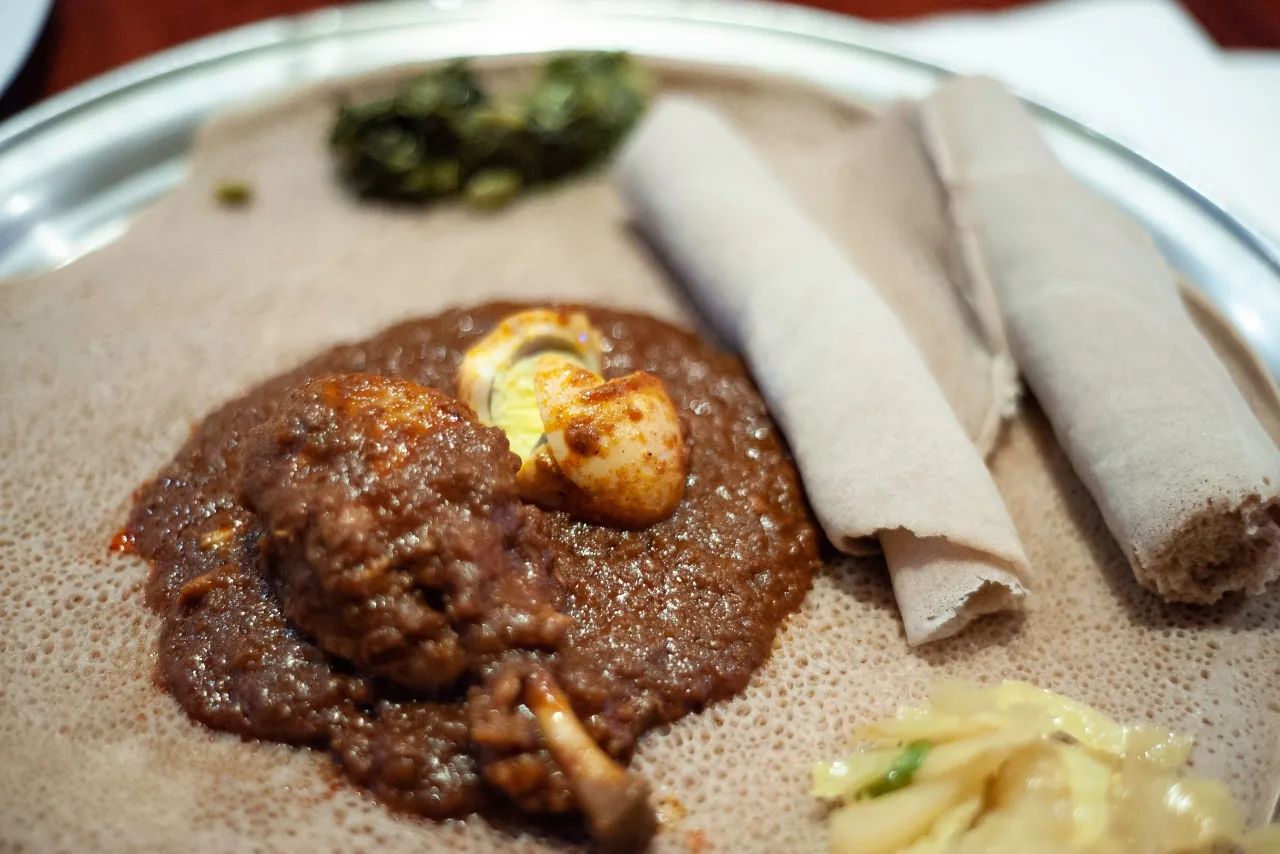
Cross north into Ethiopia and communal meals switch to a sharp fermented rhythm. Food arrives spread over a wide tray lined with injera, a spongy sourdough flatbread acting as both plate and utensil.
One detail separates an average meal from a memorable one in Addis Ababa. Cheaper batters cut with wheat or barley sit heavy in your stomach, whereas requesting 100 percent pure teff injera yields a lighter, nutty flatbread that is naturally gluten-free.
Watch the regional distinction if you travel across the Horn of Africa too. Somali spiced bariis rice plates shine along the eastern coast, while thinner Somali breakfast canjeero tastes sweeter than highland Ethiopian teff injera built for fiery berbere stews.
A neighborhood injera house serves slow-simmered doro wat chicken or a vegan beyaynetu tasting platter for ETB 200 to ETB 400 ($1.60 to $3.20 USD). Mid-range dining rooms in Bole charge ETB 500 to ETB 1,200 ($4 to $9.50 USD) for larger mixed platters with sizzling tibs beef.
Everyday lunches in Addis Ababa carry a pleasant surprise beside traditional stews. Decades of shared urban habits put fresh pastasciutta pasta and pulled macchiato espressos on neighborhood corner menus alongside shiro and kitfo.
Even quick meals often finish with raw green coffee beans toasted beside your table in a flat metal pan. When someone pours dark coffee from a black clay jebena pot, plan to sit for all three rounds.
Uganda and Rwanda: Roadside Rolex and Highland Matoke
Ask anyone in Kampala what feeds the city fast and nobody names a hotel dining room. They point to a street-corner chapati pan turning out a Ugandan Rolex.
Short for rolled eggs, a Rolex pairs a two-egg omelette packed with shredded cabbage and tomatoes wrapped inside hot griddle chapati. Ugandans routinely joke that a Rolex cooked in a home skillet never hits like one seared on a well-seasoned roadside sheet.
A basic single-egg roll costs UGX 1,500 to UGX 3,000 ($0.40 to $0.85 USD). Loaded double-egg or minced-meat upgrades reach UGX 4,000 to UGX 7,000+ ($1.10 to $1.90+ USD), and ripe avocado slices tucked inside make the whole wrap richer.
Daytime kitchens shift toward steamed highland matoke mashed smooth beneath salted groundnut sauce. On weekends or family gatherings, rich beef or chicken luwombo arrives steamed inside tied banana leaves that lock in every drop of broth.
Across neighboring Rwanda, smoky brochette meat skewers with roasted plantains anchor casual Kigali evenings. Taken together, these highland plates fill out our broader map of standout dishes across Africa alongside our West African food guide and Southern African braai and bunny chow guide.
Regional Staples and Meal Budgets Across East Africa
Street pans and neighborhood canteens cost a fraction of resort menus across the region. Compare everyday local rates against tourist zones before ordering.
| Sub-Region | Everyday Dishes | Core Seasoning & Base | Local Spot vs. Tourist Hub |
|---|---|---|---|
| Kenya | Nyama Choma, Kibanda ugali plates, Mutura, Chapati | Acacia charcoal smoke, tomato kachumbari, maize flour | Kibanda KES 150–300 ($1.15–$2.30); Choma KES 500–1,200/kg ($4–$9) vs. KES 1,500–4,000+ ($12–$30+) |
| Tanzania & Zanzibar | Tanzanian Pilau, Urojo soup, Mishkaki, Zanzibar Pizza | Cloves, cardamom, cinnamon, coconut milk, green mango | Urojo or Mishkaki TZS 1,000–3,000 ($0.40–$1.20); Forodhani seafood TZS 10,000–25,000+ ($4–$10+) |
| Ethiopia | Pure teff Injera, Doro Wat, Beyaynetu, Jebena coffee | Fermented teff batter, smoky berbere chili spice, spiced butter | Local houses ETB 200–400 ($1.60–$3.20) vs. Bole mid-range platters ETB 500–1,200 ($4–$9.50) |
| Uganda & Rwanda | Roadside Rolex, Steamed Matoke, Luwombo, Brochettes | Green cooking bananas, groundnut sauce, griddle wheat chapati | Street Rolex UGX 1,500–3,000 ($0.40–$0.85); loaded rolls or luwombo UGX 4,000–15,000 ($1.10–$4.10) |
Practical Table Etiquette and Market Rules
Four small local habits keep communal dining smooth and spare you tourist markups.
- Injera & Hand-Washing Etiquette
- Wash your right hand at the table basin and put your phone completely away before tearing injera—never scroll mid-meal with clean fingers. Eat solely with your right hand from the wedge in front of you without licking your fingertips, and welcome a gursha bite offered by a host.
- Ethiopian Fasting Days
- Wednesdays and Fridays are Orthodox fasting days all year across Ethiopia. Order beyaynetu on those afternoons for peak vegan lentil and chickpea variety cooked without butter.
- Kenyan Choma Wait & Payments
- Raw choma cuts need 45 to 60 minutes over coals, so order snacks upfront. Carry small cash or M-Pesa for kibandas, and decline foil wrapping if you want crisp smoke flavor.
- Zanzibar Night Market Pricing
- Skip idle pre-cooked platters in favor of live-griddled stalls with local lines. Agree on the total shilling figure before prawns or octopus hit the grill.