Landing in Ghana with an international wallet can feel a little confusing at first. You step off the plane into the tropical heat of Accra, and within an hour you will hear locals talking about “cedis,” “MoMo,” and why the card terminal at your hotel just failed to connect.
While Ghana is digitizing its everyday commerce at astonishing speed, navigating money here is not quite like traveling in Western Europe or North America.
The short reality is simple: no single payment method will carry you through your entire trip.
To travel smoothly, you will need to balance physical cash, Mobile Money (MoMo), and international bank cards. Knowing where each option works—and where it falls completely flat—will save you from frozen bank accounts, predatory exchange spreads, and awkward moments at checkout counters.
Planning Your Broader Trip Budget: Wondering how much a full vacation in Ghana costs from flights to safaris? Explore our comprehensive Ghana travel cost and trip budget breakdown. To see how far cash stretches once on the ground, consult our street-tested guide on what $100 buys in Accra markets and chop bars.
The Payment Landscape at a Glance
Daily spending in Ghana moves through three distinct channels. Each has its time and place:
| Payment Method | Where It Works Best | Reliability for Visitors | Key Watchouts |
|---|---|---|---|
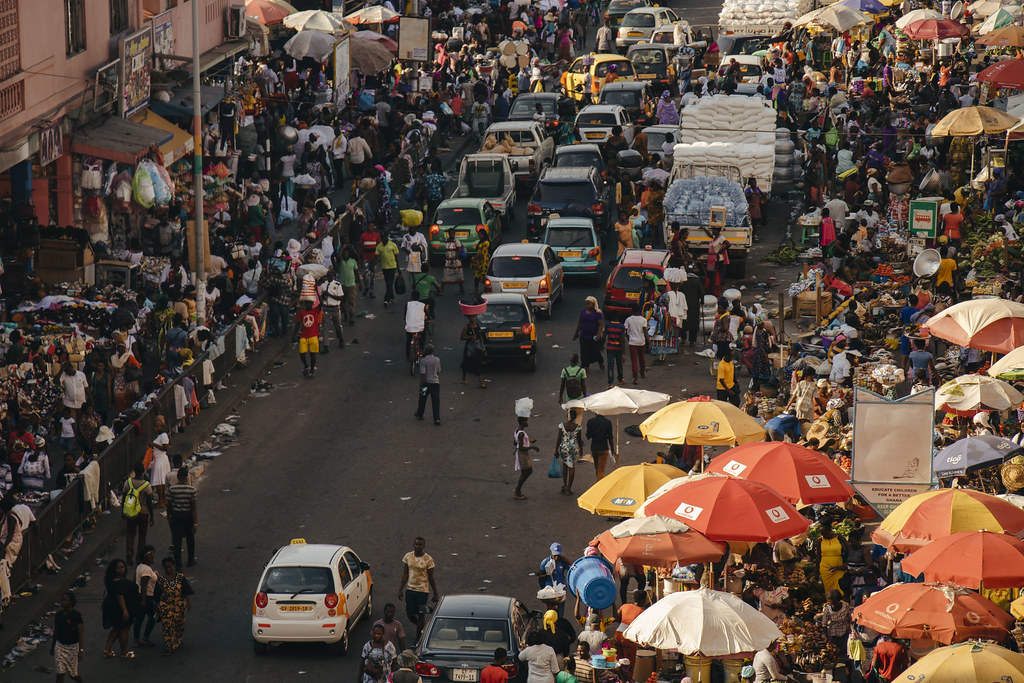
| Physical Cash (GHS Cedis) | Trotros, street food, open markets (Makola / Kumasi’s Kejetia Market), roadside fruit, beach bars | 100% accepted nationwide | Keep small denominations; foreign banknotes face intense teller inspection |
| Mobile Money (MTN MoMo / Telecel) | Neighborhood cafes, pharmacies, boutique craft vendors, tour guides | The preferred everyday rail | KYC rules require a Non-Citizen Ghana Card ($120) for independent Tier-1 wallets |
| International Cards (Visa / Mastercard) | Supermarkets (Shoprite, Koala), major hotels, Bolt / Uber rides, airport lounges | Reliable in formal venues | Local ATM access fees (GH₵ 20–40) and steep 7%–12% DCC conversion markups |
Currency Exchange: Bureau de Change vs. Kotoka Airport Spreads
The Ghanaian Cedi (GHS) moves within an active corridor. In formal interbank reporting, rates sit around Bank of Ghana benchmarks (approximately GH₵ 11.65 per USD). But as a traveler trading physical banknotes, you operate in the retail Bureau de Change (BDC) market, where clean bills trade around GH₵ 11.80 to GH₵ 12.20 per USD.
Where you exchange your money makes an immediate difference to your wallet:
- The Airport Arrival Penalty: Exchange desks inside the arrivals hall at Kotoka International Airport (ACC) charge the widest margins in the country, often discounting your money by 6% to 10% compared to town. Change only a modest sum ($20 to $50) at the airport to cover your first taxi ride or mobile data.
- Central Accra Licensed BDCs: For your main foreign exchange conversions, head to licensed exchange bureaus around Oxford Street and Danquah Circle in Osu, or commercial clusters in Airport Residential. These bureaus operate with tight competitive spreads and issue official printed transaction slips.
- Avoid Street Money Changers: Never do business with aggressive individuals waving banknotes outside bank doors or hotel gates. These informal curb trades carry substantial counterfeit risk, sleight-of-hand counting tricks, and legal headaches.
Stick to licensed tellers with receipts. It is not worth risking your travel funds.
The “Clean Blue $100” Hierarchy
Ghanaian foreign exchange tellers enforce strict physical standards on foreign banknotes. If you arrive with older or crumpled bills, prepare for steep discounts or outright rejection.
Here is how the hierarchy works at the counter:
- Series 2013+ $100 Bills (“Blue Notes”): Pristine, uncreased post-2013 hundred-dollar bills earn the highest posted market rate.
- Older and Smaller Bills ($10, $20, $50, pre-2013): Smaller denominations and older series bills incur an automatic 10% to 25% discount. Bureaus discount them due to higher handling effort and lower domestic commercial demand.
- Marked or Torn Notes: Any bill with tiny tears, folded creases, ballpoint pen marks, or ink stamps will be flatly pushed back across the counter.
Check every hundred-dollar note at your home bank before you fly. Only pack crisp, unmarked bills.
The Tourist Mobile Money (MoMo) Playbook
Mobile Money—universally called MoMo—is the beating heart of Ghanaian commerce. From roadside chop bars to ride-hailing drivers, almost everyone accepts instant mobile payments via MTN MoMo or Telecel Cash.
Yet for international visitors, getting access to MoMo involves a clear regulatory hurdle.
By law, all SIM cards in Ghana must be biometrically registered. While citizens register using their national Ghana Card, short-term foreign travelers can register a local SIM using their physical passport and entry stamp at corporate telecom offices. This tourist registration is valid for a 30-day window.
The KYC Wallet Barrier: Under Bank of Ghana financial regulations, opening a fully independent Tier-1 MoMo wallet strictly requires linkage to the national identity database. For non-Ghanaians, that means acquiring a Non-Citizen Ghana Card, which costs $120 USD. Unless you are staying in the country long-term, spending $120 just to activate a mobile wallet rarely makes financial sense.
Sensible Workarounds for International Travelers
You do not need an independent MoMo account to travel smoothly in Ghana. Here is how experienced travelers handle everyday transactions:
- Put Your Rides on In-App Cards: Add your international Visa or Mastercard directly to your Bolt or Uber app. Your transportation across Accra and Kumasi stays entirely cashless without needing a local wallet.
- Visit a Corporate Service Center: Rather than buying a random SIM from a street umbrella, visit an official MTN or Telecel office (like the branch at Accra Mall or Oxford Street Osu). Inquire whether temporary visitor wallet privileges can be enabled on your passport.
- Beware Data-Only Travel eSIMs: Popular travel eSIM apps (like Airalo or Holafly) provide convenient data roaming, but they do not provide a local Ghanaian phone number. They cannot receive SMS confirmations or run Mobile Money.
- Rely on Your Host or Guide: For craft markets, remote park fees, or tour balances where cash is awkward, travelers frequently ask their hotel host, apartment manager, or trusted tour guide to send a MoMo transfer on their behalf, reimbursing them immediately with cash.
Ghanaians are exceptionally resourceful and hospitable. If you are stuck without MoMo, someone nearby is almost always willing to help you process a payment for cash.
ATMs and Card Safety in Accra
Cash machines are widely available across Accra, Kumasi, and regional capitals, but drawing money with a foreign card requires basic hygiene:
- Use Bank-Branch ATMs: Always withdraw cash from ATMs physically attached to a staffed bank branch (such as Ecobank, Stanbic Bank, Absa, or Standard Chartered). Avoid standalone roadside ATM kiosks in dimly lit nightlife areas where skimmers and maintenance failures are far more common.
- Local Bank Access Fees: Ghanaian banks charge an independent foreign ATM access fee—typically GH₵ 20 to GH₵ 40 ($1.70 to $3.50 USD) per transaction—on top of whatever fees your home bank assesses. Withdraw larger amounts less frequently to minimize these repetitive charges.
- Decline Dynamic Currency Conversion (DCC): When an ATM or point-of-sale terminal asks whether to bill your transaction in US Dollars or Ghanaian Cedis (GHS), always choose Cedis. Opting for your home currency gives the local operator permission to apply a predatory 7% to 12% exchange rate markup.
Always let your home bank handle the foreign conversion. Never let the machine do it.
Sensible Tipping Etiquette in Ghana
Tipping in Ghana is an appreciated expression of gratitude rather than an aggressive, mandatory surcharge. Hospitality wages are modest, and thoughtful tips make a genuine difference to local service workers.
Here are realistic, street-tested benchmarks for day-to-day encounters:
| Service Category | Typical Gratuity | Practical Guidance |
|---|---|---|
| Bolt / Uber Drivers | GH₵ 10 – GH₵ 20 | Optional but warmly appreciated, particularly when navigating heavy traffic or carrying luggage. |
| Casual Chop Bars | Round up change | Leaving GH₵ 5 to GH₵ 10 on a casual table is generous and well received. |
| Sit-Down Restaurants | 5% – 10% | Check your bill first. If a 10% service charge is already included, no additional tip is expected. |
| Hotel Luggage Porters | GH₵ 20 – GH₵ 50 | Handed directly to the porter assisting with heavy suitcases at check-in. |
| Full-Day Tour Guides | GH₵ 100 – GH₵ 200 | Per day for dedicated, knowledgeable guide services across cultural and historical sites. |
Street Smarts: Avoiding Common Scams
Accra is one of the safest and most welcoming capital cities in Africa. Violent crime against travelers is rare, but street-level financial hustles do occur around tourist hubs:
- The Unofficial Airport Helper: Upon exiting customs at Kotoka, uniformed or assertive individuals may seize your luggage cart and wheel it twenty paces to your pickup zone, demanding $10 to $20 USD. Politely but firmly decline assistance: “Thank you, I’ve got my bags.”
- Spurious “Spot Checks”: Plainclothes individuals flashing unofficial badges around transport hubs or markets have zero legal authority to search your wallet. Real Ghana Police Service officers wear visible uniforms and conduct official inquiries at registered stations or checkpoints.
- Artisanal Market Overpricing: At the Accra Arts Centre or roadside souvenir stalls, initial asking prices for carvings, fabrics, and beads are frequently inflated by 200% to 300%. Polite, smiling negotiation is part of the culture. Start your offer around half the quoted price and settle amicably.
Keep your cash split across different pockets, never flash large rolls of bills in public, and walk with relaxed confidence.
Ghana is an extraordinary place to explore. Master these basic financial ground rules, and you can focus entirely on enjoying the music, the flavors, and the people.